



How American Sports Leagues Shaped Fantasy Sports

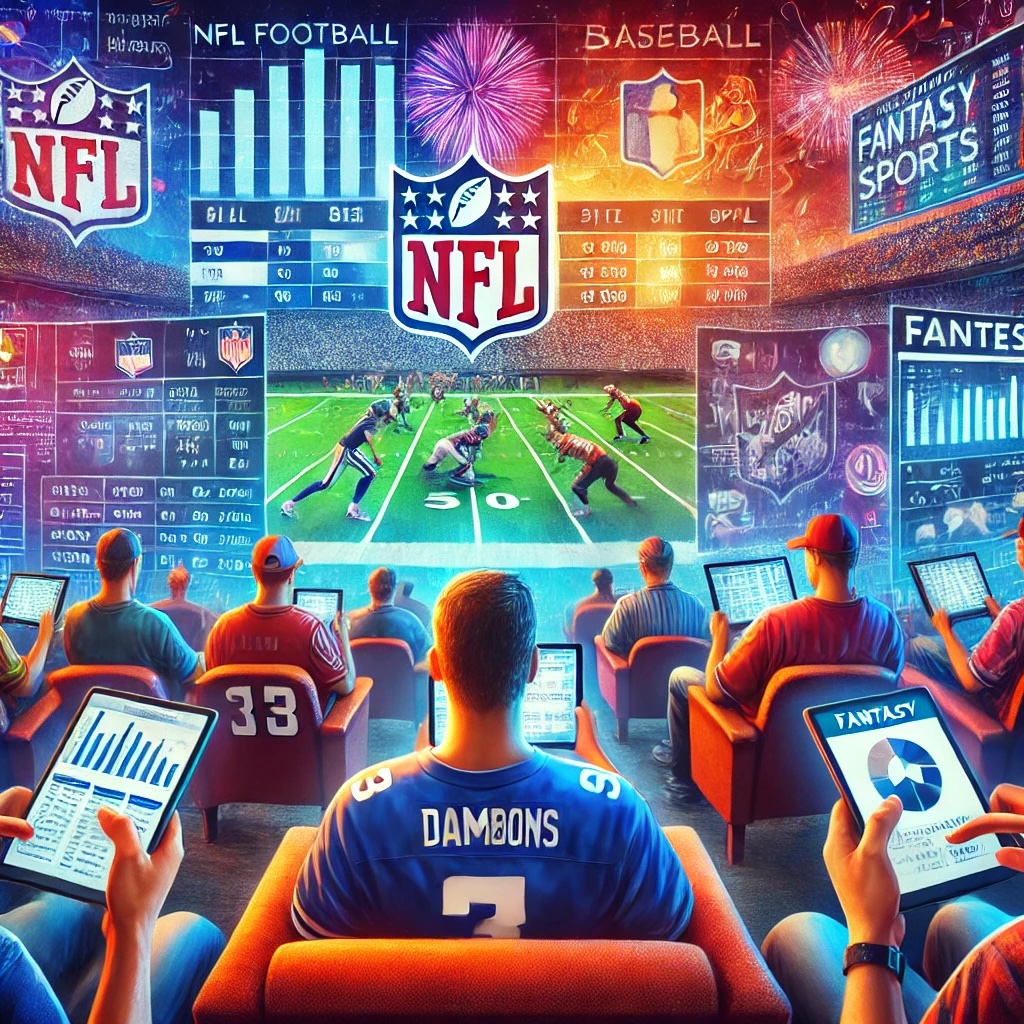
Remember when watching sports was limited to supporting your preferred team? These days seem nearly archaic now. Fantasy sports have let fans become armchair general managers, fixated on player metrics and worrying over lineup choices. But have you ever given any thought on our path here?
American sports leagues have transformed how people connect with their preferred sports, much as Jetx has rocked online gaming with its adrenaline-pushing, crash-style gameplay. This is a tale of creativity, fan involvement, and yes — a great lot of number crunching. Let us thus dissect it and see how these leagues created the fantasy sports scene we know today.
The beginning of a phenomena
Football kicks off
Visualize this: Early in the 1960s, some guys are seated around presumably drinking drinks when someone asks, “Hey, what if we could pick our own teams?” And fantasy football originated precisely like that. With weekly games and easily tracked analytics, the NFL was the ideal habitat for this new fixation.
But here's a question none appears to probe: Football why? Not baseball, the pastime of America at the time? Football's once-weekly schedule, then, produced the ideal balance of expectation and strategic planning time. For fantasy gamers, it resembled Sunday Christmas.
Baseball Turns Up to the Plate
Not to be surpassed, baseball soon entered the fantasy party. It was a number geek's dream come true with its daily games and statistic-heavy approach. In fantasy drafts, suddenly obscure middle relievers and platoon players became desirable commodities.
But have you ever thought about how this might have altered our real-life appreciation of athletes? It's a fascinating chicken-or- egg scenario: Did fantasy baseball only appeal to something already there or did it inspire our fascination with statistics?
Slam Dunk: The NBA
Fantasy sports fit the NBA naturally given its quick tempo and star power. Still, it offered special difficulties. How do you weigh the influence of LeBron James and other superstars against the efforts of role players?
This produced an intriguing evolution: category-based fantasy basketball emerged. A guy who shines in blocks or steals could suddenly be just as valuable as a top scorer. It reminds us that occasionally restrictions inspire innovation.
From Embrace to Skepticism
The big leagues first saw fantasy sports with the same mistrust your grandpa views a smartphone. But as fantasy's appeal grew, some executives' headlights went off: “Wait a minute, this could be good for business!”
The NFL jumped right on the bandwagon, then the NBA and MLB. But here's a question: Has this acceptance of fantasy sports altered the way leagues present their athletes? It's not difficult to picture a scenario in which promotional materials highlight player stats just as highly as team success.
The Technology Revolution
Internet Turns the Rules Around
Recall the times when you manually computed fantasy scores from box scores taken from the newspaper? No. Well, believe me, it was really important. The internet transformed all that, standardizing real-time scoring and instantaneous updates.
But here's a point worth considering: Has this quick access to knowledge improved fantasy sports, or only made them more addictive? Although it's interesting to see how your team is performing at any one moment, does it lessen the excitement of seeing real games?
Mobile Apps: Fantasy Right in Your Pocket
Fantasy sports evolved into a 24/7 fixation for cell phones. American leagues were fast to create official applications, therefore providing fans with hitherto unheard-of access to player data and stats.
Let us consider this, though, for a moment: how has our relationship with sports evolved from this continual connection? Are we missing the beauty of the game itself when we're so preoccupied reviewing our fantasy marks?
Travel Globally
American Model on World Stage
It was not lost on anyone when fantasy sports proved successful in America. Soccer leagues, cricket associations, and even niche sports started creating their own fantasy games not too long later.
Here's a fascinating twist: how have other cultures adapted the American fantasy sports concept? In countries where games are more widely allowed, the distinction between fantasy and traditional sports may become blurry.
Cultural Interaction Via Statistics
Fantasy sports developed a special kind of cultural interaction as they grew internationally. Suddenly, a Mumbai child could be pursuing Green Bay's third-string running back's career path. Globally, sports-style.
Legal Conflict and Legitimacy
Legal challenges arose along with fantasy sports. Were these skillful games or only glorified gaming? Fantasy sports were born as official games of skill thanks in great part to American leagues — especially the MLB.
Here's a difficult issue, though: are we headed for another legal conflict as the border between fantasy sports and traditional sports gets blurry? The terrain is shifting quickly; anyone's guess on our final destination is only hypothetical.
More Than Only a Game
A social phenomenon now is fantasy sports. Now as much as tailgating is part of sports culture are draft parties, trash talk groups, and water cooler conversations about fantasy teams.
But let's think about this: Has fantasy sports produced a new kind of enthusiast? Someone who values individual player performance above team allegiance? Investigating this interesting change in sports passion is worth doing.
The Prospect of Fantasy
American leagues are investigating new horizons including virtual and augmented reality as technology develops. Imagine a fantasy game in which your living room shows holographic players. Sounds crazy, correct?
Here's plenty to consider, though: Do we run the danger of losing touch with the human aspect of sports as fantasy sports get more immersive? The grit, the feeling, the erratic nature of athletics that originally appeals so much?
Summary
From modest origins to a worldwide sensation, American sports leagues are intricately entwined with the tale of fantasy sports. These leagues embraced the idea, laid the groundwork, and kept inspiring field innovation.
But considering the future, it's interesting to wonder: what direction fantasy sports might go? Will they keep developing or have we arrived at the height of fantasy? Whatever comes of course one thing is clear: our interaction with sports will never be the same. And really, depending on how your fantasy squad performs this week, either that's good or awful most likely.
Thus, remember the trip the next time you're worrying over your fantasy roster or commemorating a triumph. From a bunch of sports junkies with a crazy notion to a worldwide industry, it's been quite a ride. And who knows? Perhaps the next major fantasy sports breakthrough is just waiting for someone like you to dream it up.
Latest Gaming News
All News