



Laney Berry – The St Christopher’s School Lockdown

[b]Ingmar[/b]: We heard about your influences as a writer before. Now I would like to know who or what has inspired your philosophy as a designer throughout the years.
[b]Laney[/b]: When it comes to inspiration as a designer, I look for examples of people who have dealt with the same problems we are dealing with. One of them being the branching paths. You know what Roger Ebert used to say: how do you write Romeo and Juliet if one of the narrative options is that they will live happily ever after? How believable and concrete is any one plot, if in the parallel universe of your next replay, things can be totally different? How engaged and moved can one be by a plot twist which is only one item in the endless catalog of the possible? I feel that The Walking Dead and perhaps Heavy Rain, on a smaller scale, managed to deliver a moving narrative in spite of the agency given to the player. I find the way Heavy Rain did this very interesting. What causes the deeper impression in the player is the ONE fact which cannot be modified – the reveal of the murderer’s identity. And I think that it is in this constraint where Heavy Rain becomes successful as a story. The same happens with The Walking Dead. One of the moments that gets firmly imprinted into one’s memory (the final scenes between Lee and Clementine) is inescapable. So, I think we need to balance freedom and constraints – it’s necessary in terms of creating a strong narrative.
Another problem with narrative-driven games is how to create a meaningful story which has to be moved by actions. How do you represent inner dramatic conflicts and motives (say guilt, moral revulsion or jealousy) through movements which can be executed by a player? Imagine Hamlet as a first-person shooter! I think that The Path ventured fairly successfully into these areas. Player agency was virtually non-existent, sure, but the inner states and human drives were powerfully portrayed, and one felt they had partaken in a painful rite of passage after playing it.
Another area to look for inspiration and guidance is in the micromanagement of players’ time. You don’t want your game to be a linear, interactive movie with a couple of Quick Time Events. One method games use to keep a player busy is, of course, to put obstacles in their way. This also has the side benefit of allowing for a distribution of rewards throughout the game. So, you can’t enter the room while the guard’s inside, and to get around that, you need to start a fire so he has to go out and get the fire extinguisher. Then, once you get to the room, there is a combination lock waiting for you which will take the next three hours… Or a quick visit to an online walkthrough. But this kind of puzzle can get slightly tedious after a while – not to mention, in an ideal world we would like our game to be walkthrough-proof. Puzzles shouldn’t FEEL like they are just there to drag out gameplay time and give you something to do in between bits of the plot. They should feel organic.
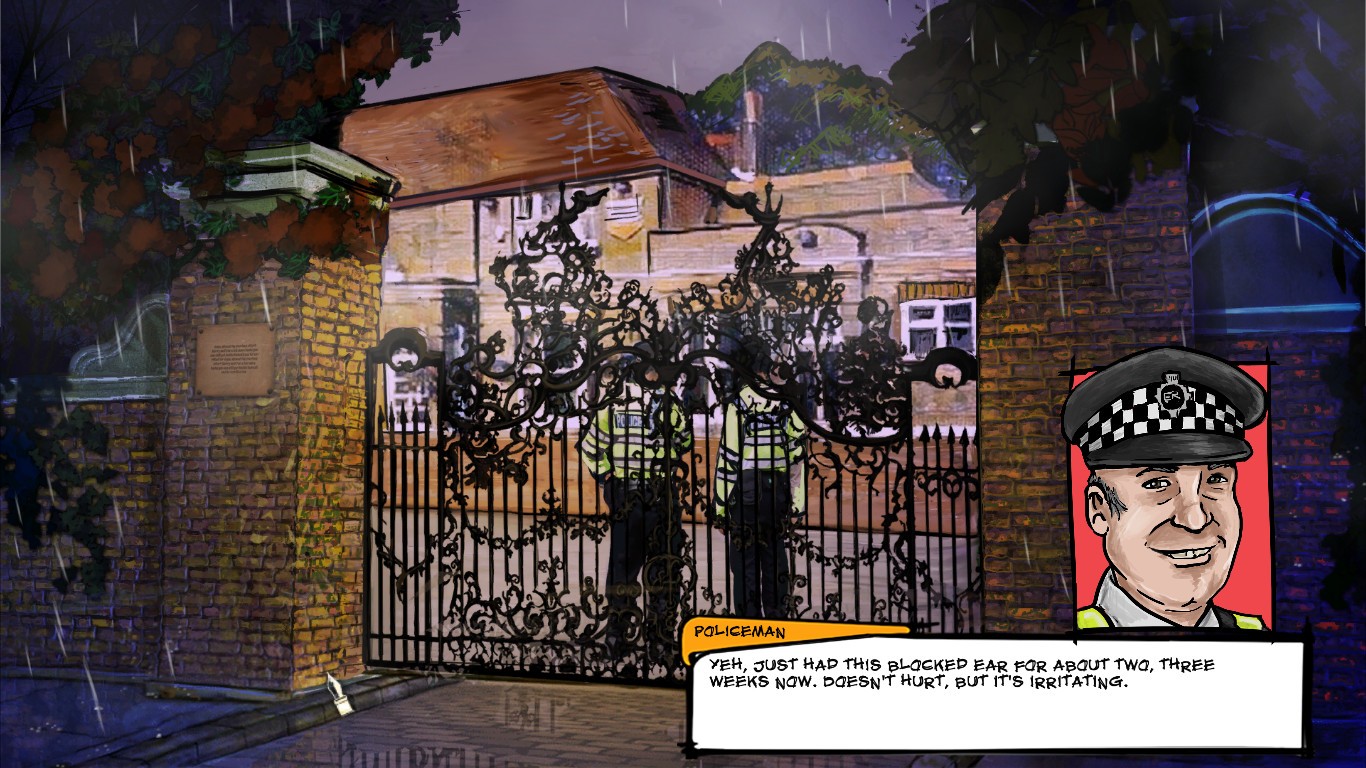
A game series which does this very well is, my opinion, Quest for Glory (which I can’t seem to shut up about). I never found myself stuck on a single puzzle that I can recall; there were always alternate solutions, or even ways to bypass the puzzles themselves. And even if you still had to deal with the puzzle? There was almost always something else you could go and do while you waited for inspiration to come. The game universes were so rich and interesting, there were so many side characters and optional quests, that one could replay it a million times and always be entertained, and you never felt forced into meaningless tasks.
[b]Ingmar[/b]: Tell us about the distinctive art style you chose for this game.
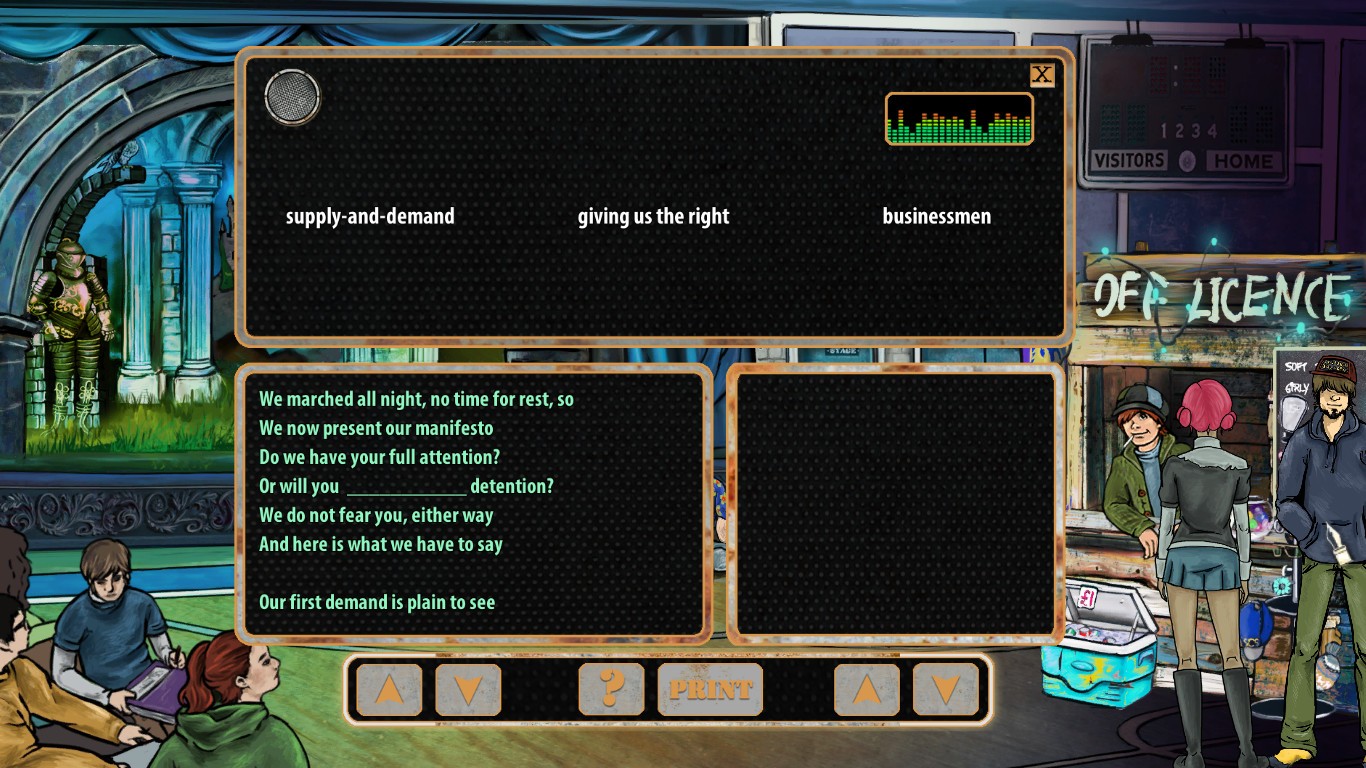
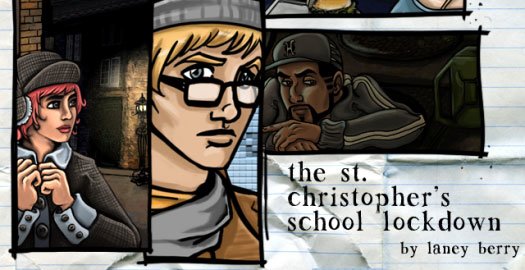
[b]Laney[/b]: Earlier, I mentioned being trained in Visual Communications, but I didn’t state that my concentration was actually in Sequential Art; in other words, comic and graphic novel design. I think I’ve always wanted to tell stories, ever since I was a child, but I am also hugely into graphic art. So, as much as I adore prose and the written word, I wanted the stories I told to have a visual component as well. Eventually, this led me to game design, as you know, but my educational foundation is in comic-styled art. This is clearly very evident in the concept art you can see for our game, and also very intentional. I wanted to give you the feeling that you were interacting with a graphic novel – an approach which isn’t entirely original, but yet hasn’t been touched upon that much, I feel, in adventure games. Gabriel Knight: Sins of the Father had elements of it in its cut scenes, and more recently, A New Beginning took it to another level with full-on comic panels and speech bubbles… There are certainly other examples, but I digress. I just feel like it’s something which would make for a very appealing and accessible aesthetic in the world of St. Chris.
Influences to my art style would mainly be comic book artists such as Chynna Clugston, Bryan Lee O’Malley, Chris Ware, Adrian Tomine, Craig Thompson and Daniel Clowes. I also have to give a shout-out to animes such as Cowboy Bebop and FLCL, both of which employ fantastic visual direction. I can’t deny there’s a little bit of Disney in my style, too – Alejandra complains about that once in a while, saying, “Stop turning Brody into Belle [from Beauty and the Beast]!” Alas!
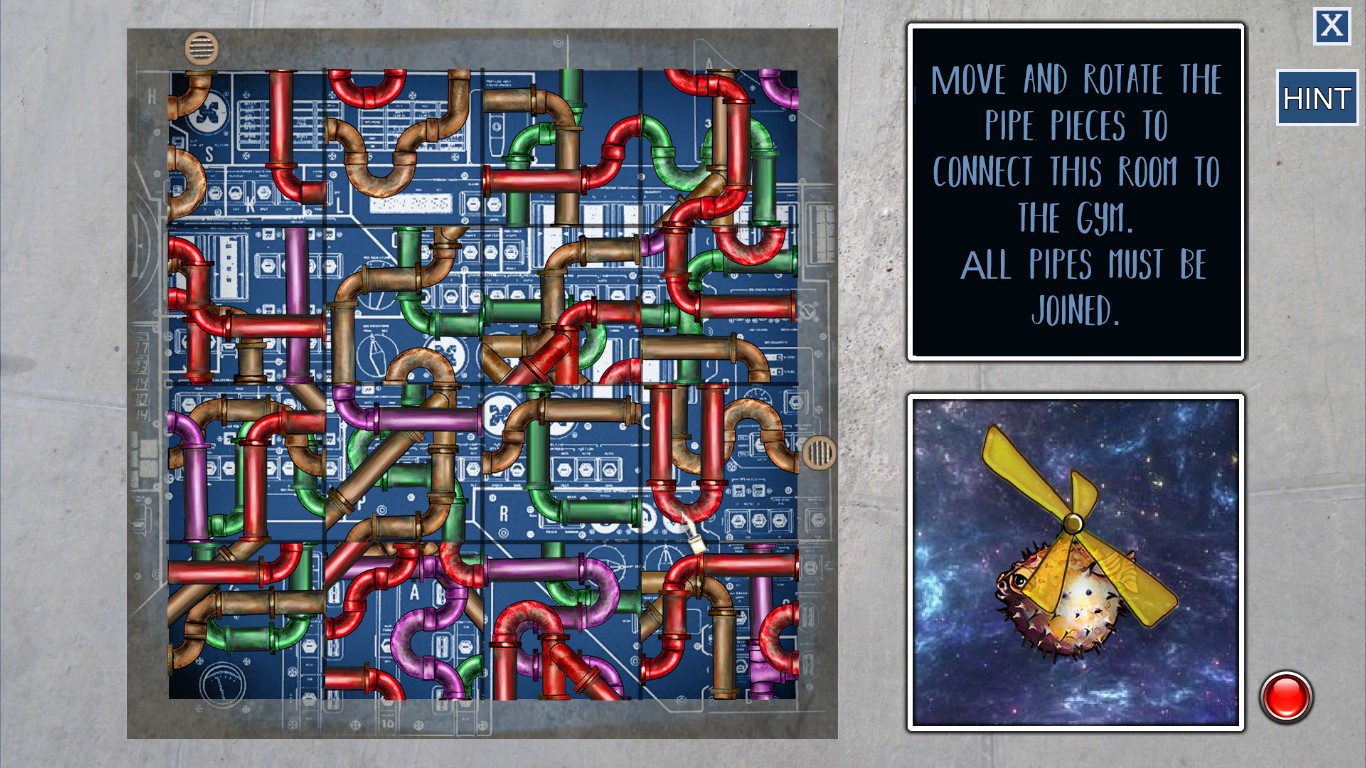
Background art BEFORE being given its hand-drawn 2D comic style, a process Laney says “usually takes almost twice the time it takes (Alejandra) to get the initial render done.”
[b]Ingmar[/b]: Usually we don’t see games that deliver much of a statement on political issues. Since St. Chris contains a strong political aspect, I can imagine it’s hard to do such a game without sharing the political views of its creator. To what degree do you make clearly defined statements about issues in society, politics, etc., and do you see a certain danger of alienating people who might not agree? Or should an indie developer rather feel like “Hey, this is art, and my personal way of expressing myself, which means I should be allowed to express what I feel and to hell with people who have a problem with my views?”
[b]Laney[/b]: This is a big question, and I will try to address it as best as I can. My political views could be best described as post-ideological. Social problems will always be around, but they become more obvious in times of recession, which is where we set the undefined present of this game. But the traditional way people used to influence the course of history (namely politics), for instance, with formal elections, voting, etc., are less clear-cut at the moment. Political parties have come to share a similar discourse, and people are venting their anger outside of the classic political arena (from the time-honored graffiti in the men’s room to the more short-lived Twitter complaints).
The St. Chistopher’s School Lockdown is one case of such spontaneous expression of social unrest, and it has the fate most revolts have – to become a battleground for the opposing forces of Olympian and Dionysian actors. Rigid order vs. wild chaos. Constructive rebellion vs. unleashed rage. You have Roger Spencer, your typical old-school rebellion leader, full of hope, naivete and big words. He truly believes, at least in the beginning, that 273 students can make a world-wide difference, that their example will fuel other equally well-disciplined model students into showing their discomfort, until the Prime Minister and all other governments in the cosmos are deafened by such a quiet but commanding voice. Roger does not seem to acknowledge that he is putting together a mob of acne-ridden, hormone-driven teenagers in a confined situation where soon they will lose whatever little touch they had with rules of civilized coexistence. Under the nihilistic leadership of Martin, soon St. Christopher’s will go from the temple of democracy Roger had envisioned to some messy, trashed party venue, with blocked toilets, no electricity, and pizza boxes all over the place.
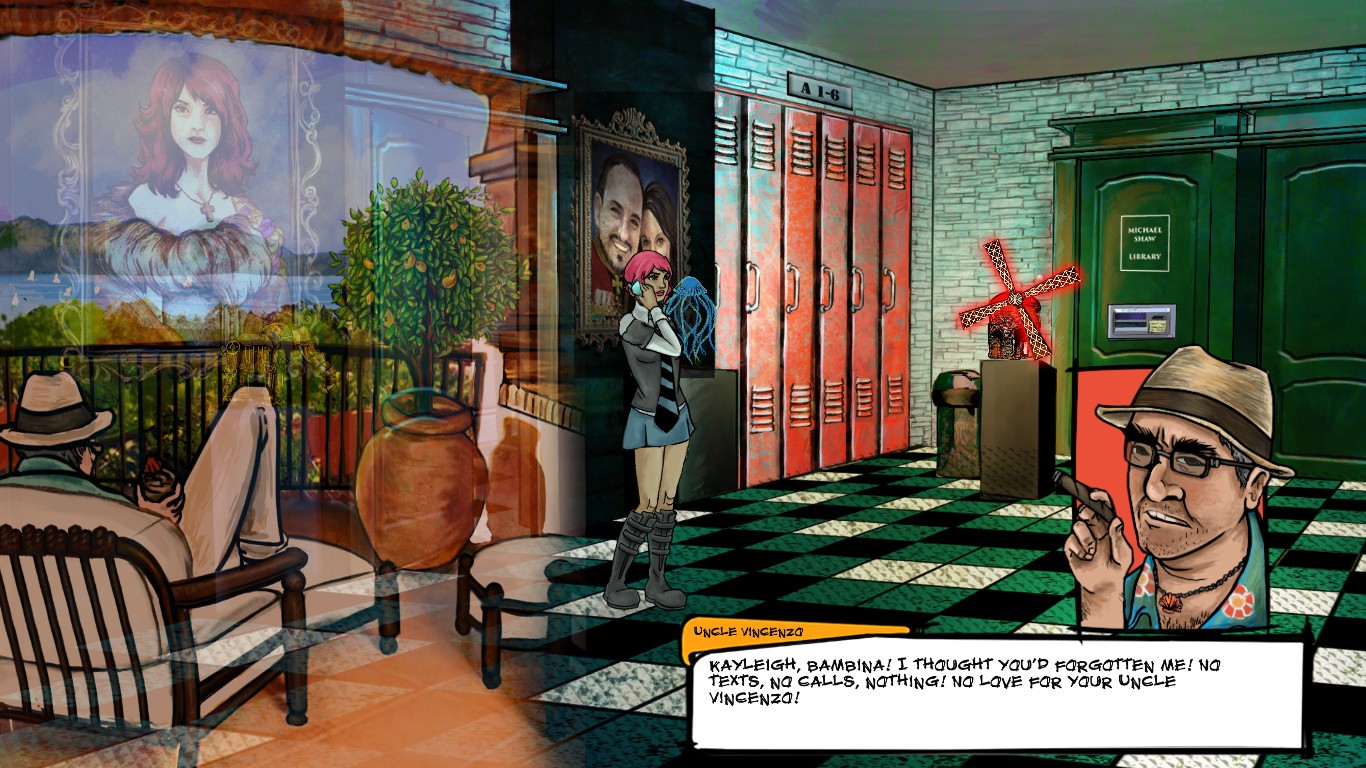
This is not a story about the official repression of some courageous juvenile revolt, which would probably have been far more epic, but a lot less tragic. This is more Lord of the Flies without the pig’s head. And that is the political view that perhaps could enrage our unsuspecting audience – this very bleak interpretation of how rebellions and revolutions typically tend to play out. Do I care that this is the case? Of course I do! I wish it wasn’t. But the question is rather: can I avoid writing it this way? I think not. However, I think players will come to find that the true focus of this game is the smaller scale human drama, with the protest itself as background. I believe that the personal human element, rather than bigger concepts such as democracy, rebellion, communism, etc. is the real way we experience history.
I hope I managed to make sense!
Latest Gaming Articles
All Articles