


Laney Berry – The St Christopher’s School Lockdown

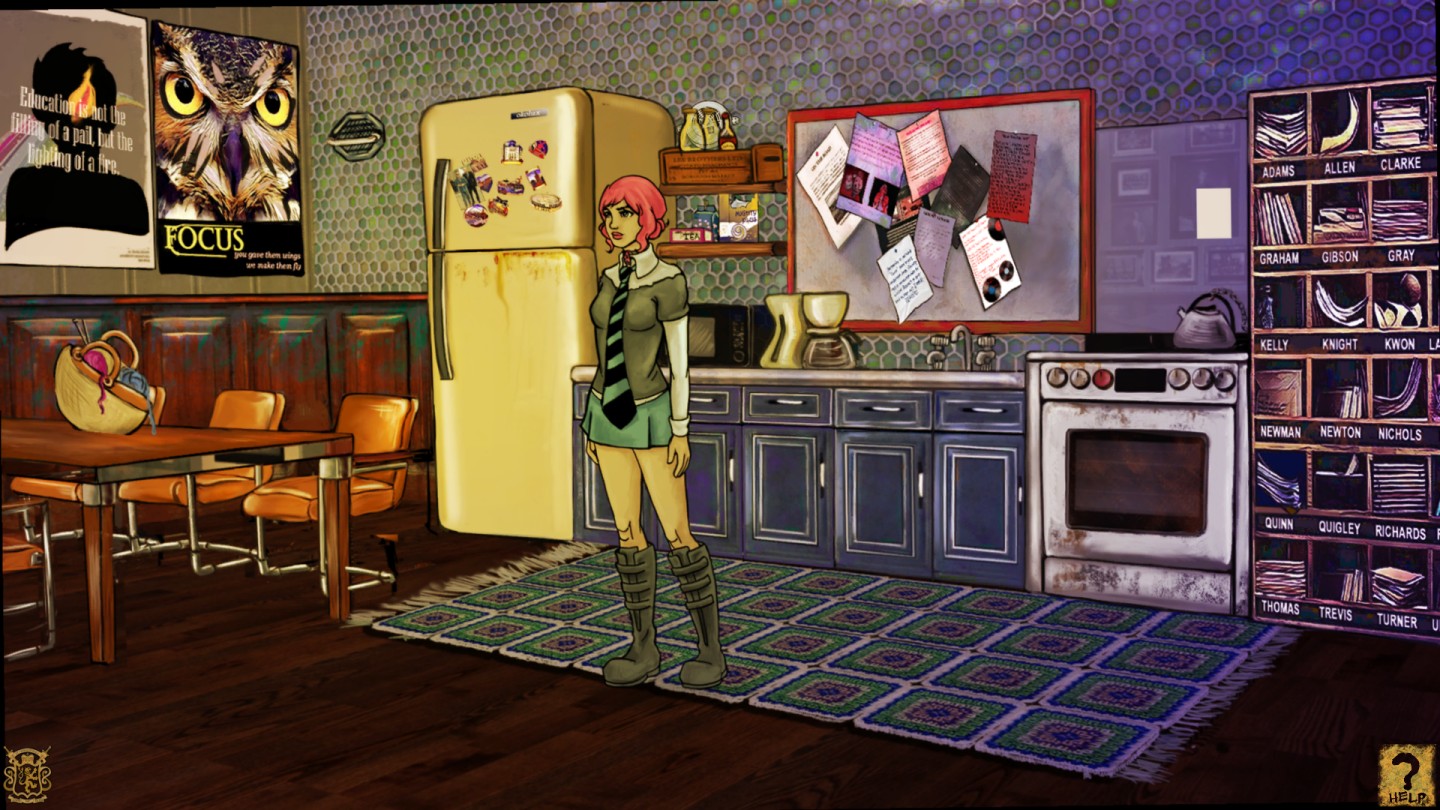
[b]Ingmar[/b]: I would love to hear more about the game’s non-linearity. How exactly do you handle branching paths and in what different ways does that occur?
[b]Laney[/b]: Well, as for non-linearity… Have you ever played one of those table-top RPGs where the game master is far too liberal, so nothing ever happens except for some players making stupid jokes and visiting endless amounts of taverns? This is what happens without SOME narrative framing – we can’t allow for complete non-linearity, in other words, or this would fall apart as a story. Our game is structured in seven chapters arranged in chronological order, and some events are inevitable (mainly those referring to the evolution of the political protest, for example: a certain policeman will always end seriously injured, the kids will always stay for precisely twenty-one days within the school, there is no way to prevent the loss of central heating towards the end, etc.). So, while there is plenty of freedom for the player to move within every given chapter and to decide which of the sub-plots to focus on, there is a narrative backbone which provides context and meaning to those choices. For a decision to have consequences, Episode Six has to be played after Episode Three. Episode Six will be different according to your previous decisions, but structurally, both chapters act as pillars of the narrative.
This is not such an open-ended sandbox that you and the other kids confined in the school could decide to, say, get together and rob a bank. Within the constraints which give meaning to the choices and make the narrative possible, the player is going to uncover the world through agency, so there is a branching path chart behind the scenes which guides the players through the different scenarios. I believe that this adds definite replay value to the game, but more than that, we want the player to build the story as an actor, not a recipient. When art and games are discussed together, very seldom do people approach the existence of agency as the true and original contribution of games to art. I believe the way the meaning of a game is constructed through player agency is by far the most distinctive feature of games as an art form. Therefore, we will make every effort to allow the player to construct his or her own personal game experience.
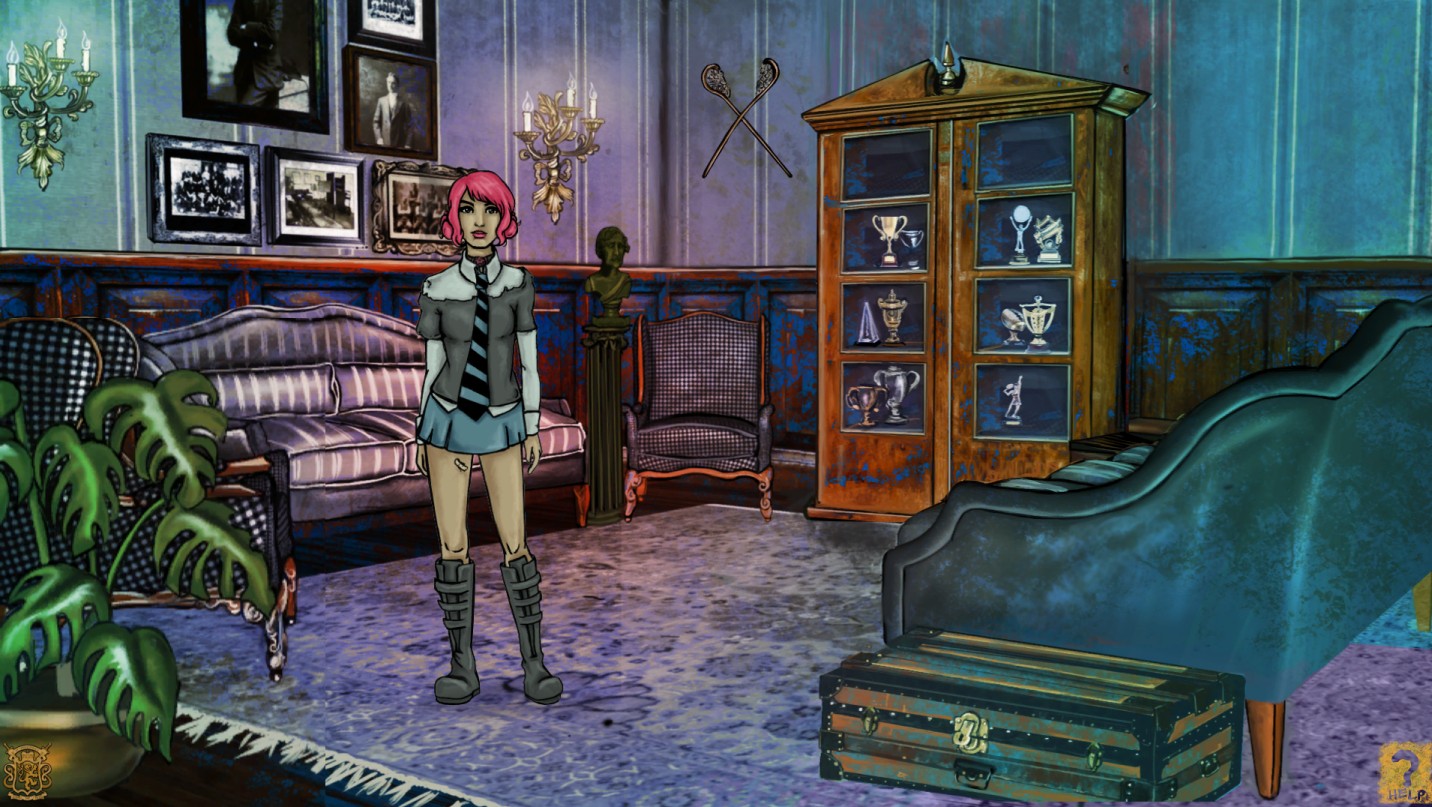
[b]Ingmar[/b]: Is your system of allowing player choices to have an impact on future episodes similar to The Walking Dead, or have you made any refinements to Telltale’s decision-making model?
[b]Laney[/b]: Yes, there are some games out there which beautifully handle the effect of a player’s decision on the game’s outcome. We are great admirers of The Walking Dead and it has inspired us a lot in solidifying some aspects which tend to be complicated for a designer. How much of your narrative authority will you surrender into the player’s hands, and at what cost? What our game has to offer, which we find interesting, is that due to the fact that the episodes are each played by different characters, the choices and their consequences will be seen through different eyes. This will showcase how certain choices, which might seem trivial to one character, can have a butterfly effect in someone else’s universe.
Having said this, the player has the right to make informed decisions which are commensurate with the consequences. Do you remember the “choose your own adventure” books, where if you took the path to the left, you met the dragon and died, while if you took the right road, you became king of the entire land? Those are not choices, those are arbitrary gambles where you are given no agency! Sometimes, in their desire to allow the player to make choices in which the outcomes are not too obvious, huge AAA games can fall into this vice. Think about – Mass Effect spoilers ahead, and I apologize – the infamous mission where one of the two characters you don’t select as a team member ends up dying. I felt so cheated by that. We also intend to try to avoid choices which are, in the end, merely cosmetic changes to an already set situation with a fixed outcome (for example, being given ten dialogue options, which in the end make no difference at all).
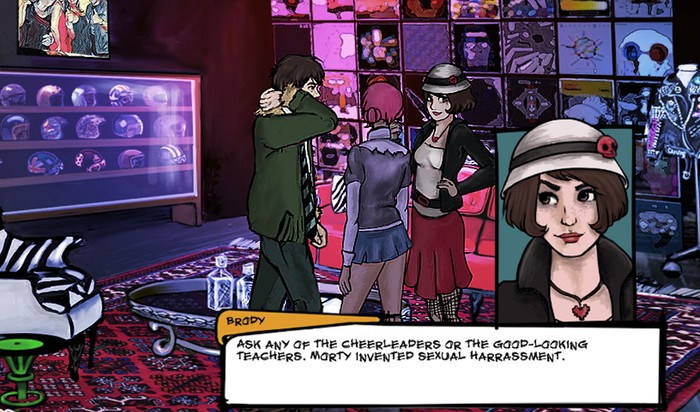
[b]Ingmar[/b]: The personal situations of these characters sounds like a very complex and mature approach that we usually don’t see in games. One of them is suffering from bipolar disorder, for example. Can we get an idea of some of the inner conflicts faced by these kids, and their outlook on life and their current circumstances?
[b]Laney[/b]: Oh, certainly, this is something which is very important to me – depicting these characters as human beings, not just puppets with an inventory and snappy one-liners. I’ve always been very interested in studying people, and the way their minds work: their emotional scars, their personal burdens, their humble victories, their hopes and ambitions. And that’s what lies at the core of St. Chris: real people. No fantastical heroic figure with a swagger and a big smile, just teenagers. Hormonal, frustrated, desperate teenagers. But I like to think it is precisely this which makes them accessible. They aren’t the characters we would LIKE to be, they are the characters we have ALREADY been. Some of us have been Shilling, a little kid with a huge imagination, living in something of a fantasy world to mask the mundanity of “real life”. Some of us have been Brody, downing pain-killers to fight off a hangover while we try to remember how we ended up sleeping on the couch instead of in our bed last night. Some of us have been Hash, always the sidekick or wingman, watching as our more charismatic friend manages to somehow keep getting the beautiful girls, the achievement awards and the admiration of others.
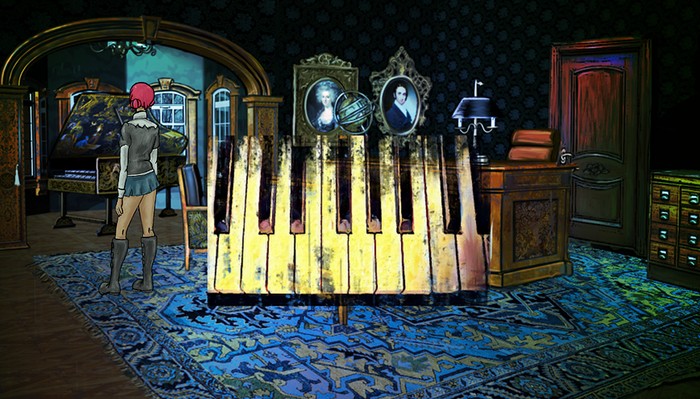
In any case, I do want to keep an element of mystery to these characters, as a lot of the joy in terms of gameplay will be figuring each of them out as people… But we will be tackling themes such as alcoholism and drug abuse, personality disorders (beyond bipolarity, ADHD and eating disorders will be touched upon, with one other which would be too much of a spoiler to reveal at present), blackmail, physical and emotional bullying, gang violence, suicide – you know, all of that really cheery, joyful stuff. I can promise that it won’t get preachy, though, and that I intend to keep things fun for the player. I want to simply present these concepts as they are, without any “lesson” lurking behind it, and without turning them into “issues”, as lots of television shows based around teenagers have a knack for doing. These are just real things which happen to real people, and it’s unavoidable to write about them in a game like this. We don’t want to sugarcoat anything, but at the same time, I refuse to let anything get too heavy – my goal is to maintain a darkly humorous bent to the proceedings. Not quite irreverence, but, well, close. Still, if you’re looking for a family friendly game, you won’t find it here.
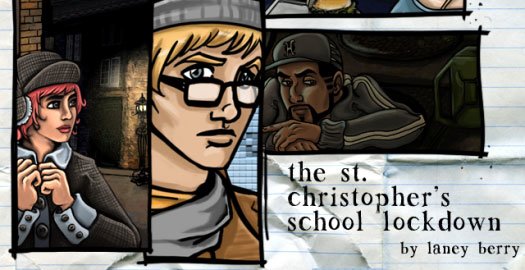
Minor character concepts, plus older versions of playable protagonists Brody and Drake in the upper left and right corners, respectively
[b]Ingmar[/b]: What kinds of influences have helped shape this narrative approach? Is there one particular medium that had the biggest impact on your writing for this project?
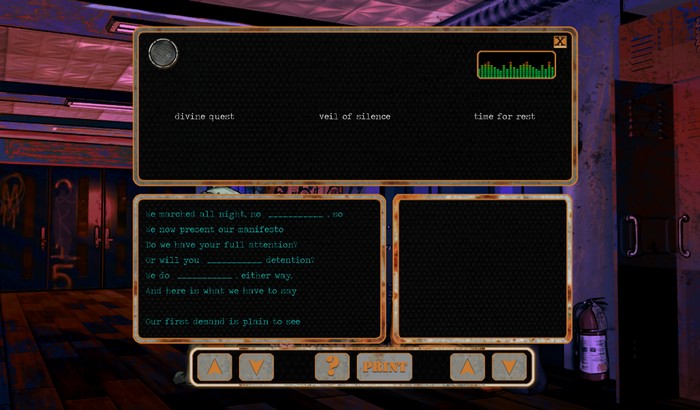
[b]Laney[/b]: When it comes to games such as this one, with branching paths and multiple endings, there is very little to draw from in terms of inspiration aside from video games, interactive fiction, tabletop roleplaying games, and Choose-Your-Own-Adventure books. So, having already discussed non-linearity to a point, now I’ll focus on the more linear aspects of the narrative, in terms of the writing style, the dialogue, the tone, and my influences for all of the above.
I will most likely always bring this up before I mention any other literary inspirations: Golding’s Lord of the Flies. I must have been thirteen when I first read that novel, but something about the incredibly bleak and pessimistic portrayal of human nature and its influence on the foundations of society and politics struck a chord in me. Each of his four main characters functions as a symbol to represent a larger social concept, but they retained complete believability as children. I don’t feel that he ever sacrificed character development to force his point home. Others might disagree with me on that, but that’s how I see it, and that’s what I’m looking to do when I write St. Chris. Roger and Martin are, in fact, almost direct homages to Golding’s Ralph and Jack. The name “Roger” even comes FROM Lord of the Flies, although that isn’t intended to directly reflect anything about my own Roger – if you recall, Golding’s Roger was a sadistic creature who enjoyed hurting small animals and inflicting pain on others. And yet, he always stood out for me as one of the more powerful characters from the novel, despite not getting as much limelight as the four leads – but that’s a whole different subject.
So, we’re looking at teenagers and children, confined together and left to their own devices. Throw drugs, sex, alcohol, dwindling resources and boredom into the mix, and, well, it’s no wonder cabin fever begins to set in.
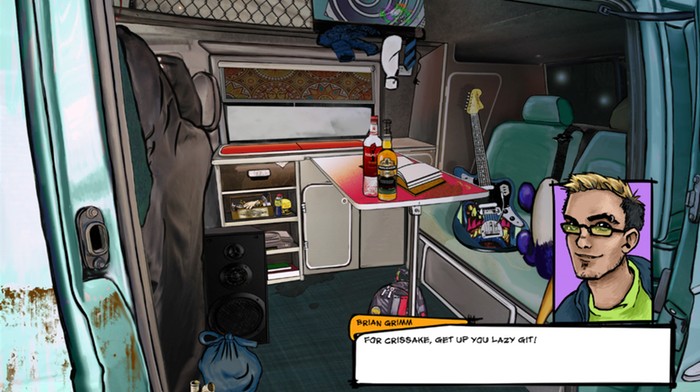
However, where Golding’s style differs from mine is that his approach to the topic was fairly humorless (aside from some instances with Piggy and his asthma, and a few lines which might make one crack a nervous smile simply due to their horrifying implications). I can’t help but look more toward titles like those written by Nick Hornby (How To Be Good, A Long Way Down, High Fidelity), or Edgar Wright and Simon Pegg’s Shaun of the Dead, for instance. While I might not keep it quite as light as they do, I think you’ll be able to sense the underlying influence in terms of my sense of humor. I mean, Hornby can take a plot about four brutally depressed characters who form a suicide pact, and make it laugh-out-loud funny, but touching and emotionally honest at the same time. I could only ever hope to be half as talented as he is!
Latest Gaming Articles
All Articles