



AdventureX 2014 – Part 2: The People

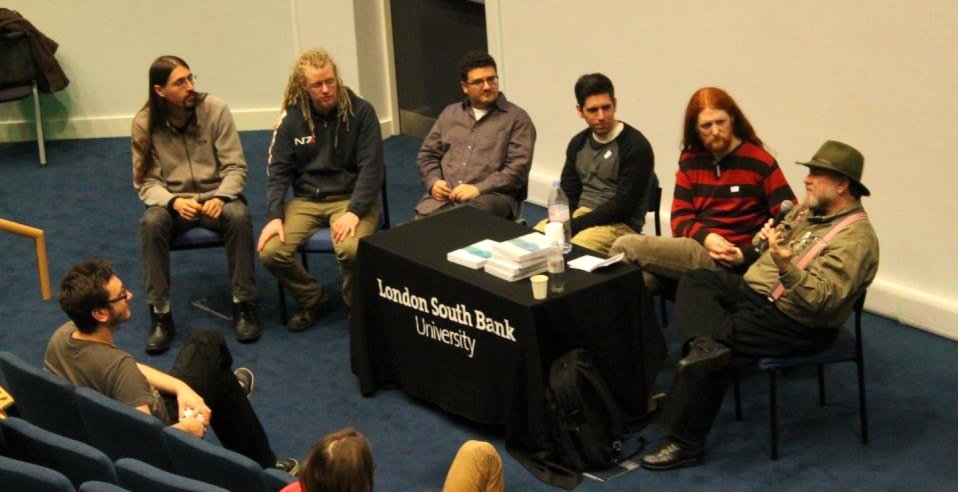
Ernest W Adams – The Future of Computer Entertainment to 2050
As founder of the International Game Developers Association, Ernest Adams could be said to know a thing or two about gaming. Starting as a software engineer in 1989, he waited for the hardware to reach a point where games would be more than just square blobs on a screen. The advent of 256 colours, the Sound Blaster and the 386 processor saw him launch his game career, joining Electronic Arts in 1992. As with many game programmers of the era, he started in the sports division, intending to spend a year or so there. The next six years saw him working continuously on the Madden NFL series of games, ultimately taking the role of game design. Whilst possibly not the most exciting of jobs, the flagship nature of the series at least meant his job was safe when lay-offs were in the cards. In 1999, Adams moved to Bullfrog in the UK and worked there for a year. His immigration status prevented him from getting a new job beyond that, forcing him to become an independent. Now with dual UK/US citizenship, Ernest is a consultant and lecturer in games design theory.
His review of the future of gaming started from where we are now. Graphics have reached a point where near-realistic modelling is perfectly possible, but animation still has a way to go to catch up. This is particularly true when human models physically interact with one another, with the malleability of the body on impact proving tricky to get right. Adams believes that inverse kinematics, where you consider the end result and then work back how you’d get there, may help solve a lot of problems. If nothing else, it prevents someone from designing a smooth animation only to discover that it causes limbs to overlap with the floor when put into action.
Artificial intelligence has also reached something of an impasse. Programmed opponents have started to overcome the limitations of early games. A wall of sandbags or a lone soldier in one corner of the map should not plague games anymore. More difficult is AI for teammates, who are supposed to work alongside the player, reacting to their unpredictable actions almost immediately. Anyone who has ever groaned at the prospect of an escort mission knows just how painful poor teammate AI can be. With headset mikes and fully-voiced games being the norm these days, voice recognition is also a problem. To get a game to recognise any gamer’s accent without training is next to impossible. Even if it can recognise the words, interpreting natural language as opposed to pre-set commands is an unsolved issue at present. Generating natural responses, as opposed to pre-recorded sound clips the player hears repeatedly, is proving equally difficult.
Of course, as games have got more detailed and complicated, the costs in both time and money for creating that content has risen. Pre-rendered procedural content generation is partly an answer to this, especially for objects that largely follow a similar pattern. There are already companies specialising in creating certain sorts of assets for games, such as SpeedTree which solely creates trees and plants. With the essential structure created automatically, game developers only have to tailor the results for the specific content they need. Real-time procedural content generation is the ideal, but doing this requires a lot more processing power than current home devices have.
This will no doubt change in the future, however. Over a very short space of time, the speed, RAM capacity and overall power of home user hardware have increased dramatically. Even mobile devices now contain more computing power than mainframes had less than a lifetime ago. Specialised peripherals have grown in recent years, devices like the Kinect offering new ways of interacting, though as an extra cost add-on at present. Artificial Intelligence hardware is being developed, and parallel processing is already seeing some use. A specialised piece of hardware, the AISeek chip, is also being created with the aim of solving the problem in a smaller package.
Demographic challenges also face developers. With 1.2 billion people owning 57 million PCs and 400 million mobile phones, India is undoubtedly a big market. But for games to be successful in a non-Western market, the games themselves have to adapt to local culture. Gamers will buy games made for a different market if that is all that is available, but locally relevant content will always make better sales. The main problem holding back development in these areas is piracy. There are organisations which, if they can get a gold disc, will within hours make a product virtually indistinguishable from the real thing. Properly enforced legislation is likely to be needed before these markets see their full potential. Alternatively, other business models such as free games with in-game purchases to assist the player may be the way forward. D & D Online saw its revenue go up 500% when it switched from subscription to a fee with in-game purchases. The age and gender of gamers have also seen a shift. The average gamer is now aged 31, and the under-18s are no longer a single child market, but a series of age bands with different demands. At the same time, 48% of players are now female (52% in the UK), so targeting teenage boys is now cutting out a large part of the market.
Ernest thinks that the future will see some things change, but not all. Processors will get better, and specialised processors or parallel processing is likely to be the next big advance. Controllers should also improve, with motion-sensing devices giving precision far in excess of the current Kinect technology. Electronic distribution has made a big difference to the market for smaller games, but downloading epics with gigabytes of content is still too slow. As speed improves, larger games will be offered, and it will even be possible to have on-demand gaming, where the game is only stored locally when it is being played. The growth in online use has also vastly expanded the available display space from the physical shelves in a shop to a practically infinite size. Big publishers can no longer dominate, and niche developers with small markets can now get product to their target audience more easily. Mobile devices have also taken over a lot of gaming, though the multiple platforms and interfaces mean that no single device can yet do everything. Whilst these devices are likely to gain greater functionality in the future, Adams doesn’t think any single platform will be suitable for all gaming. History has shown that the rise of the console has not killed PC gaming, with each being best suited to different types of games.
New approaches have to be found for the games themselves as well. Graphics have reached a state where the level of realism no longer impresses. Instead, developers have had to adopt distinctive art styles, such as the impossible architecture design of Monument Valley. Developers will also need to consider that many of their future customers will not have been brought up on standard gaming conventions. Those who have played many traditional shooter and roleplaying games have got used to the idea that you should break everything you can to look for good stuff inside. The worst example of this for Ernest was in Goldeneye, where shooting an oil tanker caused it to explode, bizarrely leaving a medikit in its wake. To someone unfamiliar with the convention, deliberately shooting a nearby explosive object is extremely irrational behaviour. As doing so produced a useful item, such gamers are effectively penalised for not knowing “the rules” and future game designers need to avoid that.
At the end of a detailed lecture, Ernest Adams left us with this final thought: “It’s not about the technologies. It’s about the human beings. Don’t ask what we can build. We can build nearly anything. Ask what you want to build for whom”.
And that’s it for another year. AdventureX 2014 was another great convention, with a variety of games on show that bodes well for adventure gaming’s foreseeable future. The weekend was intense but fun, and I got the chance to meet some of my gaming heroes along the way. Apologies to those that I didn’t manage to cover. Thanks to the organisers for another enjoyable event, and all those game developers that gave their time to make it worthwhile. (Special thanks to Dave Seaman for providing the paracetamol I sorely needed after two days of intense reporting.)
Looking forward to doing it all again next year. Here’s to AdventureX 2015!
Article teaser photo provided courtesy of Adventure Treff.
Latest Gaming Articles
All Articles