


Ron Gilbert and Gary Winnick – Thimbleweed Park

[b]Marek[/b]: The traditional verb set in adventure games has really been simplified over the years. It started with about ten of them, then went down to three verbs, and now it’s usually just one use-verb. Why are you going back to that original set of nine verbs, even when some of those verbs are infrequently used?
[b]Ron[/b]: One of the geneses of this idea was those true classic adventures. The interface in adventure games, as you stated, has been reduced from this set of verbs down to essentially the use verb. I found it interesting to design with more verbs. If you look at something like Monkey Island, use is still a verb that’s used eighty percent of the time, but with just being able to have those others I do think you can construct some interesting puzzles.
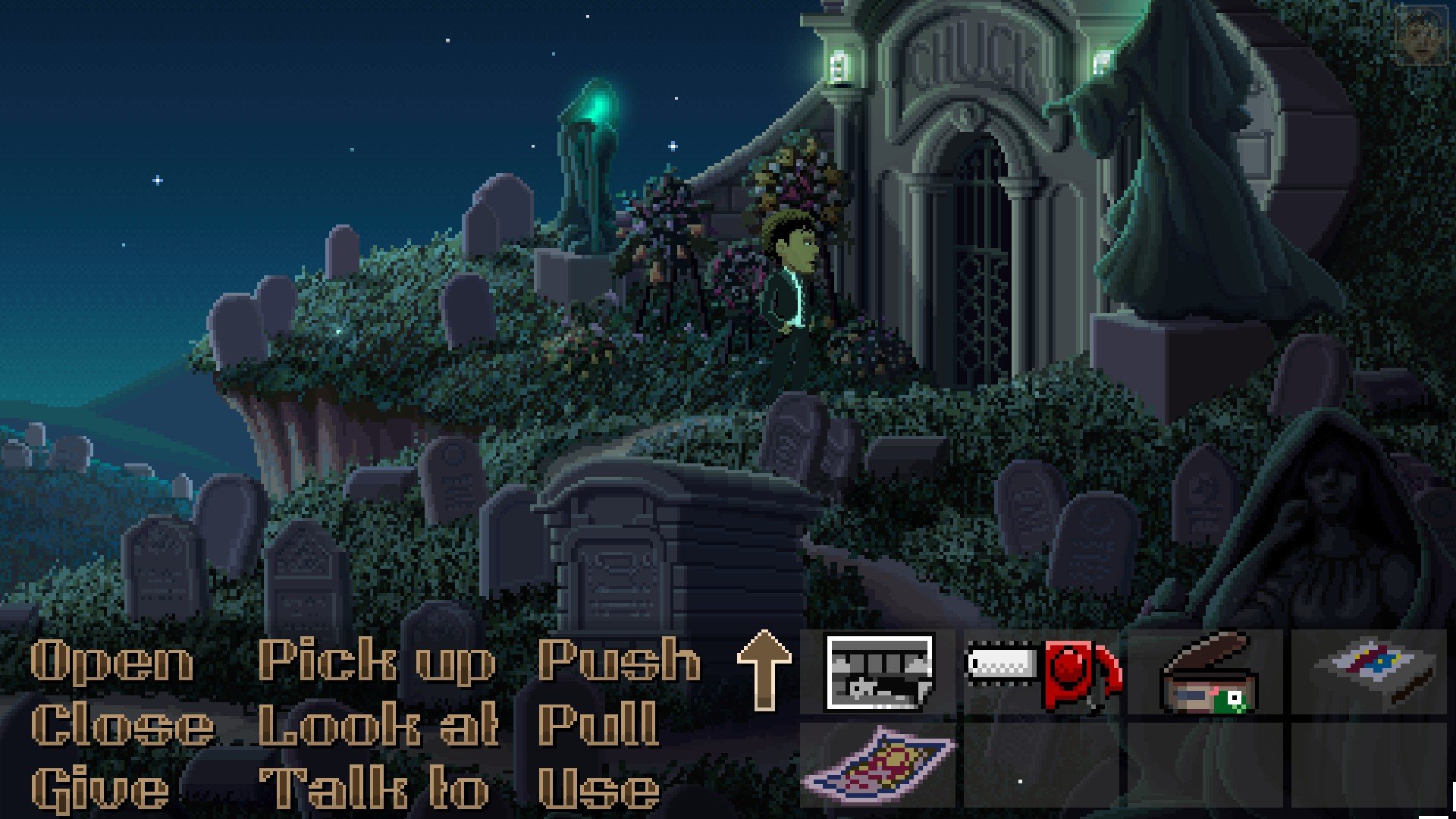
[b]Gary[/b]: We’re actually going to have a graphic interface to show the inventory objects, so you can actually see them. In Maniac Mansion, you didn’t have a can of tuna that was represented as an icon, it just said “a can of tuna”. We’re evolving it a little bit, because that was one of the things in Monkey Island or Monkey Island 2 that made sense.
[b]Marek[/b]: In terms of the game’s tone, I imagine it won’t be on the True Detective end of the scale, but probably not on the full comedy end of the scale either. What tone are you trying to strike with the overall story?
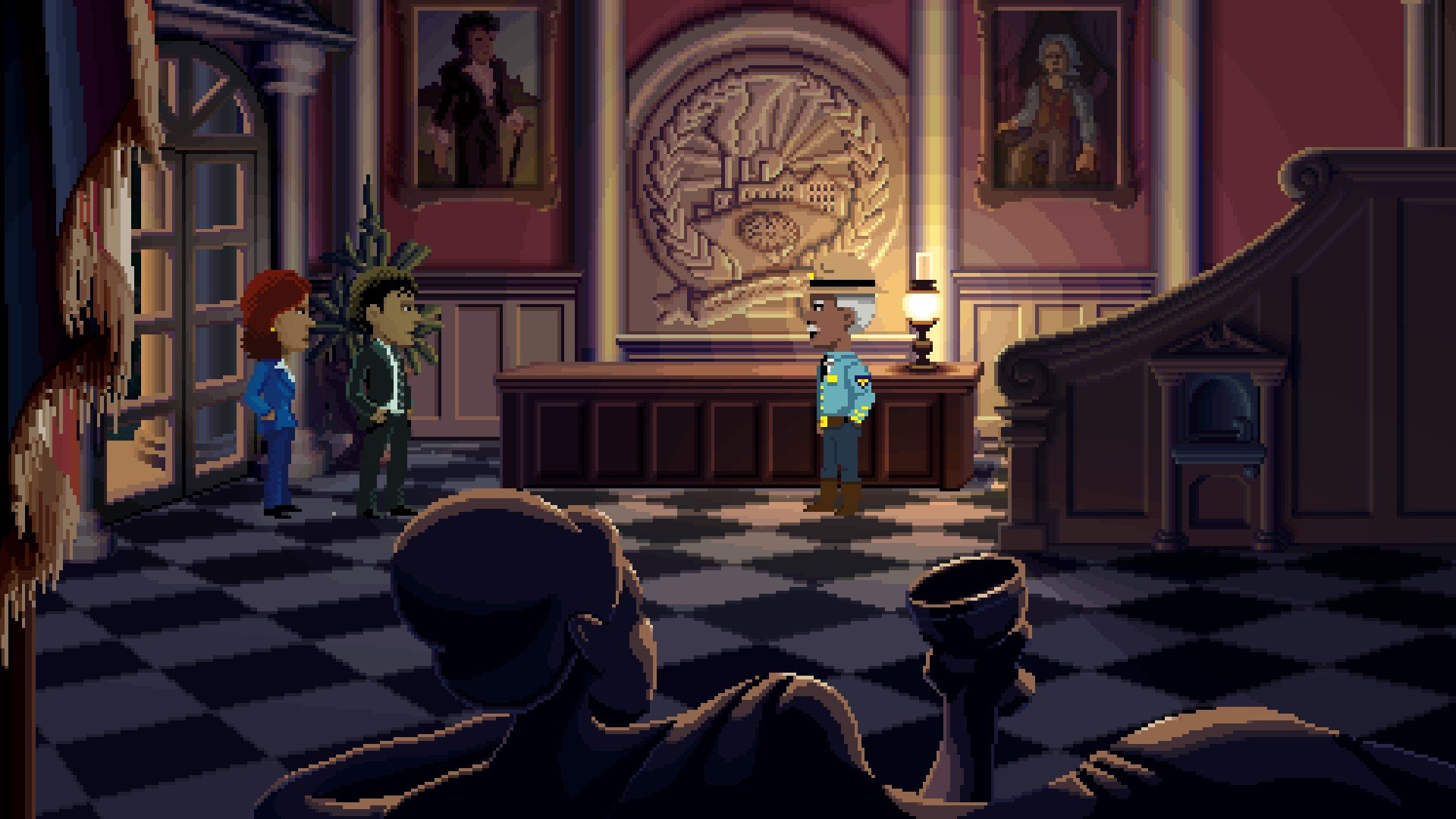
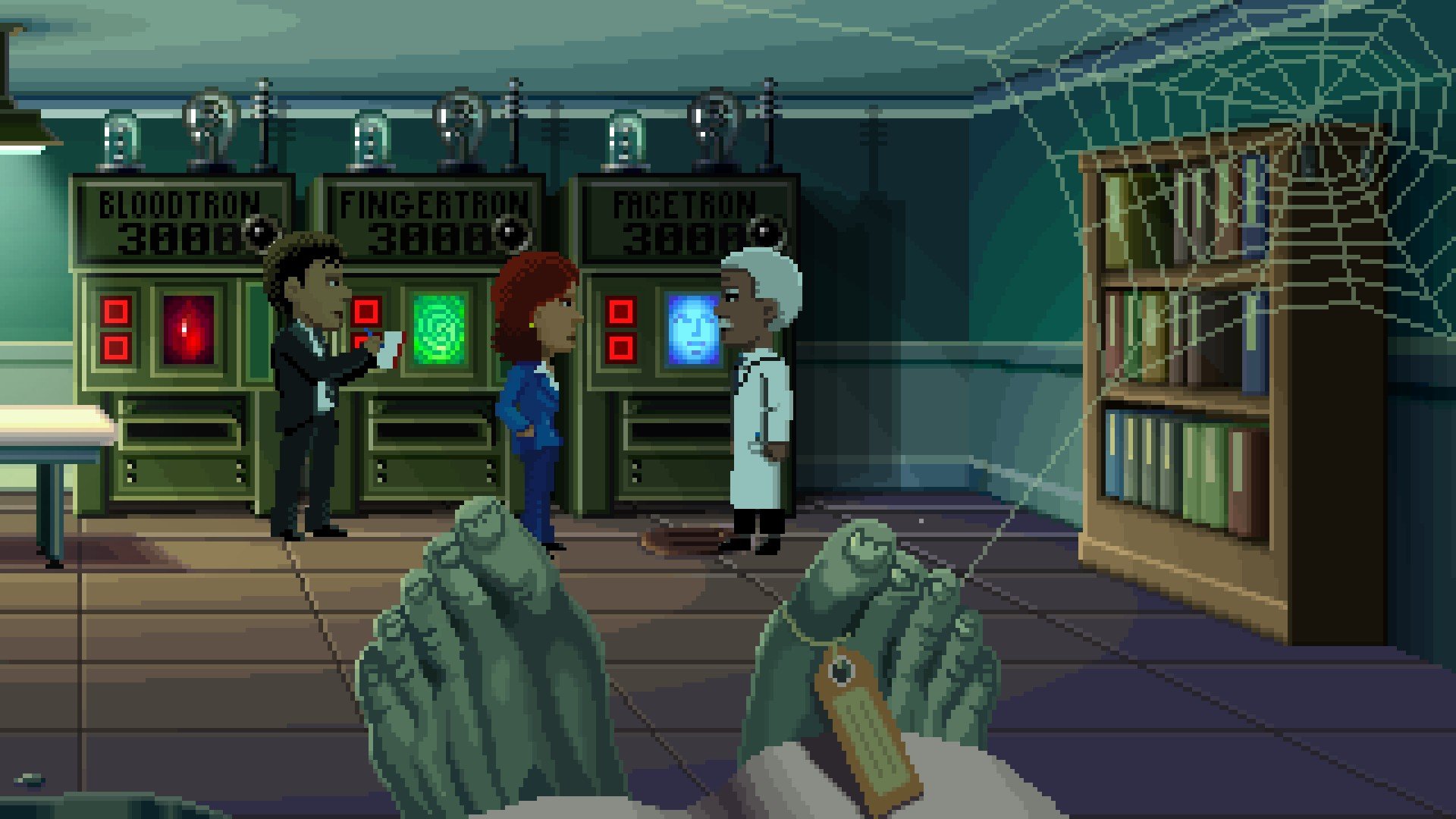
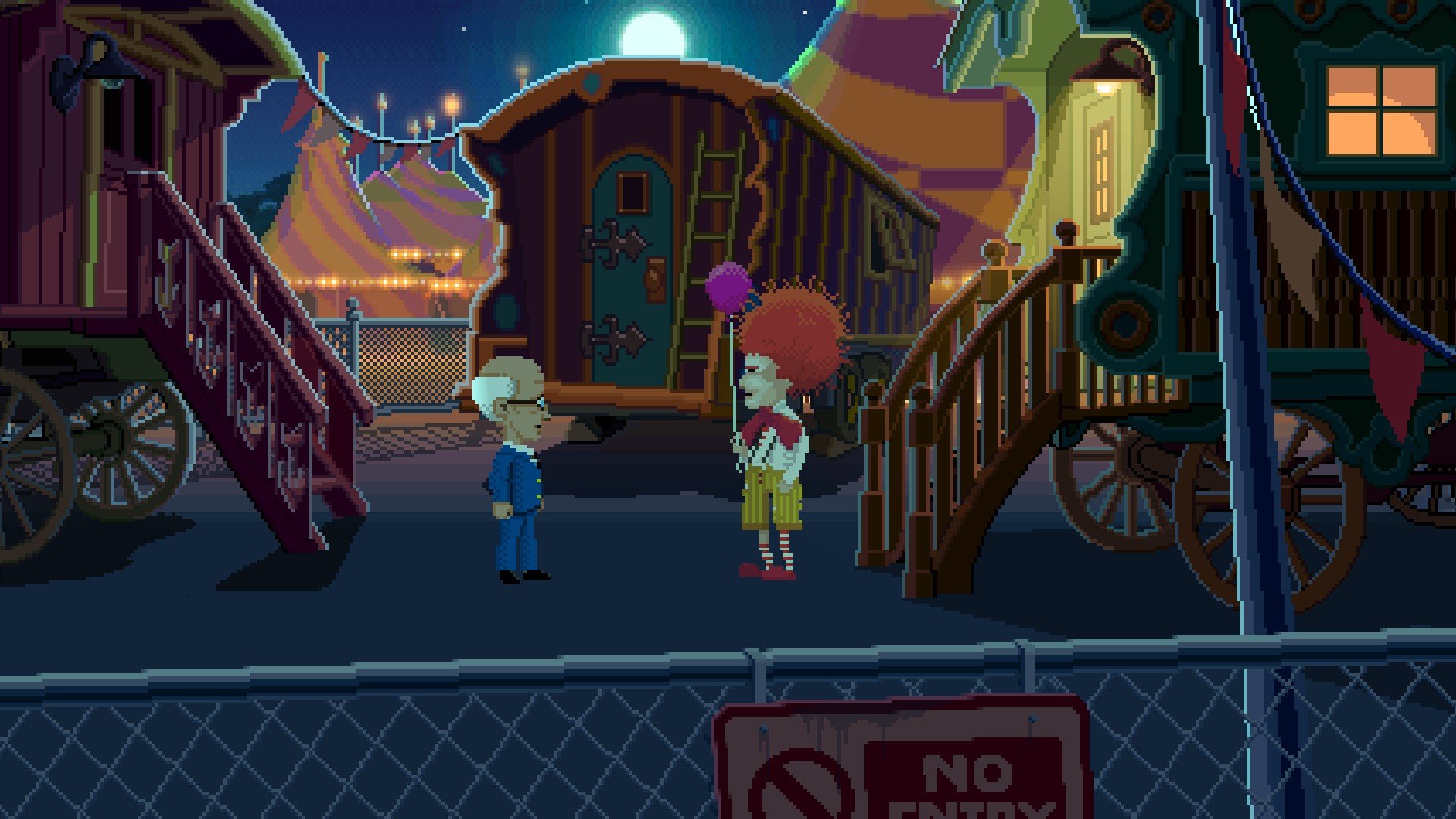
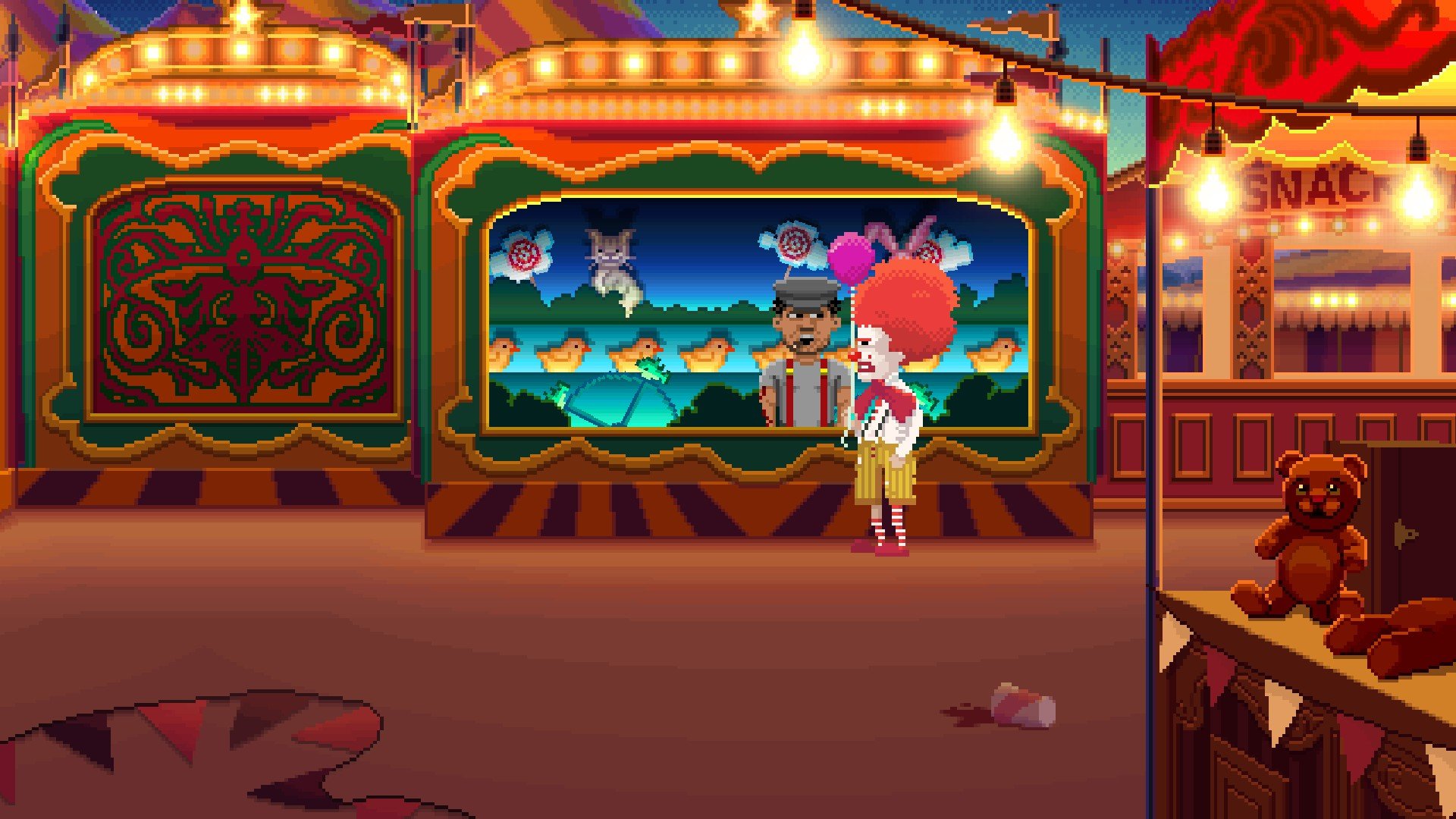
[b]Ron[/b]: Well, we look at this a little bit like we look at Maniac Mansion. That was a satire, or a parody of those horror movies that Gary and I liked. We look at Thimbleweed Park really as a satire and a parody of Twin Peaks meets The X-Files. It’s definitely going to be poking fun at a lot of those genres, even poking fun at things like True Detective. Maniac Mansion and Monkey Island at their core had a serious story going on. Then you wrap that in a lot of humour. That’s the way we look at this.
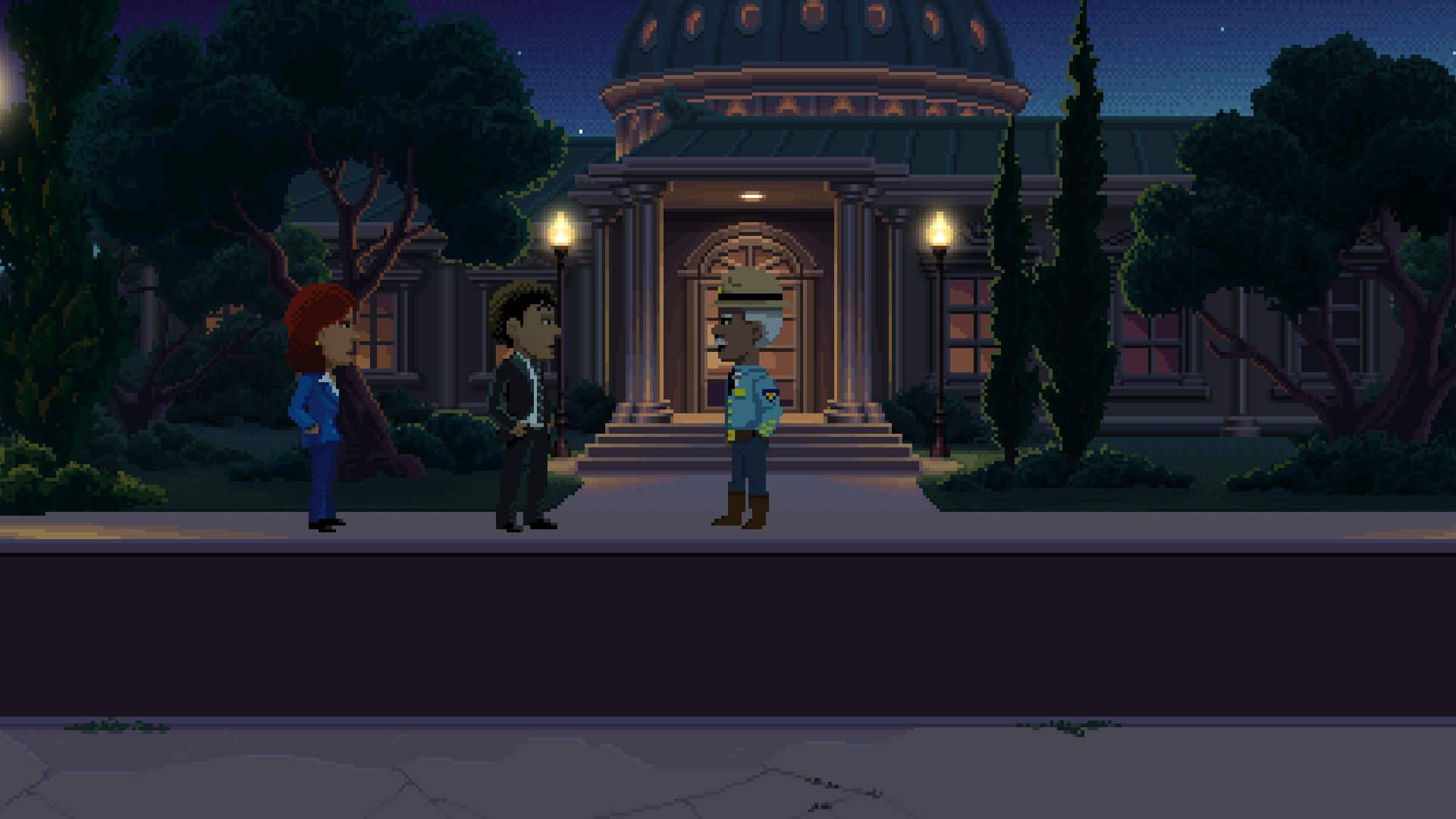
[b]Gary[/b]: You have somebody who walks around and talks to a rubber chicken instead of to a log, those kinds of things.
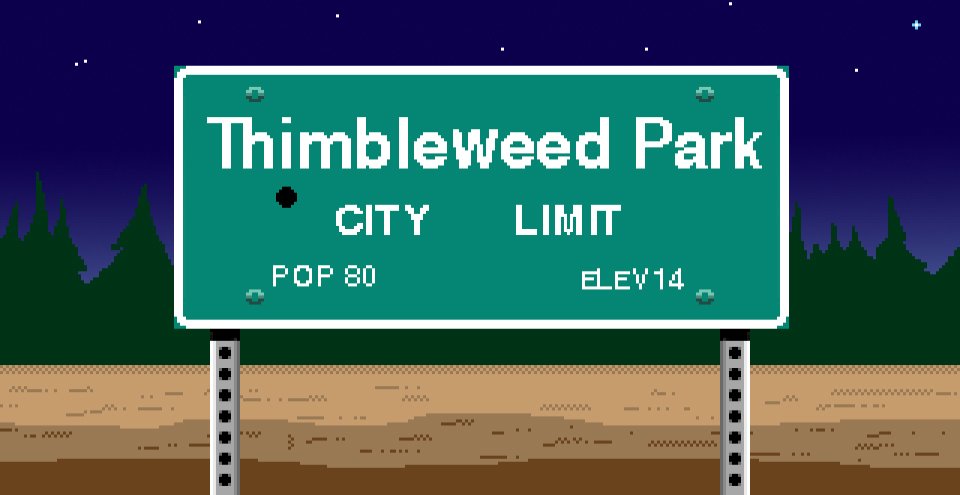
Thimbleweed Park once boasted the state’s largest pillow factory, but now teeters on the edge of oblivion
[b]Marek[/b]: Do you think humour is a necessary element to adventure games, or is it just a tone that you personally enjoy?
[b]Ron[/b]: I think there’s a little of both. It’s definitely something that we enjoy, being funny and doing humorous things, but I also think adventure games as a whole work better in comedy, because you are just asking the player to do ridiculous things at some point. If the game is completely serious about it, it does seem a little weird.
[b]Gary[/b]: It’s also a bunch of… when people see how a puzzle works, other than maybe a monkey-wrench, it’s like this “A-ha” moment. Or maybe you’re thinking about this puzzle, and you’re walking around the grocery store, and suddenly you see a container of salt next to the snail killer, and you suddenly realize: “Oh that’s what they want you to do”. That kind of thing.
[b]Marek[/b]: It seems a lot more difficult for projects to get funded on Kickstarter now compared to the previous years. Perhaps Kickstarter has been a bit of an education for game players as well in terms of what it takes to design and produce a game. Some backers seem to be sitting on the fence a lot more now – to those who are sitting on the fence, what would you say to them?
[b]Ron[/b]: Yeah, that’s a big issue with Kickstarter, and one of the reasons that we’re asking for the amount we are, which might seem high to some people. We really do take this project very seriously. It will probably take around eighteen months to do, and this is Gary’s and my full job. We’re not working on other jobs and doing this part time. And there’s a few other people we’re going to need to hire.
I think it’s just about taking it very seriously. We do have a fair amount of experience, not just designing adventure games, but also producing games. We’ve made a lot of games over the years, and hopefully, there’s a realism that comes with this that people will appreciate. We’re not looking to double or triple the amount of money: if we get one dollar more than we want, we can still make an amazing game, and that’s how we structured this whole thing.
[b]Gary[/b]: And we’re very clear on the scope of what we’re building. A lot of people, I think, when they get into making games on Kickstarter, have a general idea of what they want to build, and they’re not really sure of the scope of what they’re getting themselves into. This year, we have a very clearly defined scope and we’re going to stick with that.
[b]Marek[/b]: You’ve been in the game industry a long time. Projects used to be made by small teams, for example at LucasArts, then they went big with large AAA development teams. How have things changed again? Would making a game with a small team again have been possible five or ten years ago?
[b]Ron[/b]: One of the very interesting things about the game business right now is that we are coming full circle in a way. It’s about two or three or four people building amazing games, and that’s something that certainly interests me. I don’t have a big desire to work on a triple A game with a team of two hundred people. I like small teams. That’s the other thing that’s very appealing to me about this project: that it is going to be four or five people working on this very, very closely. It brings back some very good times of my life, from making Maniac Mansion and Monkey Island with very small teams of people. I think the industry can support this type of game a lot better today than it could five or so years ago.
[b]Marek[/b]: Do you feel that working in a smaller team lets you focus more, or try different things out?
[b]Ron[/b]: Yeah, that’s true. It was good for us, back at LucasArts. We had this unprecedented amount of freedom. It was more than just: “we were a small team of people”. It was: “we were a small team of people and we could pretty much do whatever we wanted”. We didn’t have a marketing department that was looking at what was going on or what the most popular trends were. We were just doing what was passionate for us. We were making these games because these were fun things and we wanted to make them, not because we’d thought we had to make them.
I do think that’s why you saw that creative burst that came from LucasArts at that time. It’s that we just had no adult supervision, in a way. That, to me, is exciting about this project. We’re going to be able to passionately build what we want. There isn’t a larger entity or body looking over us, telling us what we should be doing. That’s exciting.
[b]Gary[/b]: We don’t want any more adult supervision. (laughs) We’ve been dealing with that for the last twenty years. We really would rather go back to just doing it the way we used to do it. Ron can go: “Oh, it doesn’t make sense to do this in an assembly language, I can just write a scripting language” or whatever.
[b]Marek[/b]: Well, it’s been great talking with you about this new project. Best of luck with the funding drive.
[b]Ron[/b]: Thanks. Gary and I are really excited about getting started with this. We continue to work through the design and figure that stuff out, and we’re just really excited about doing this.
Latest Gaming Articles
All Articles