



Ron Gilbert and Gary Winnick – Thimbleweed Park

[b]Marek[/b]: How do you go about designing puzzles that are challenging without being too obscure? I remember the “monkey wrench” puzzle in Monkey Island 2: LeChuck’s Revenge, which made very little sense to me at the time.
[b]Ron[/b]: (laughs) Oh god, yeah. No, that’s – yeah, thanks for bringing that puzzle up.
[b]Marek[/b]: I’m so sorry. Is that puzzle going to haunt you forever?
[b]Ron[/b]: Yeah, I will forever be haunted by that puzzle. I don’t know if there’s a scientific answer to that question. It’s about… it’s a feeling, you feel that, “You know what? This might be too hard.” or “This might be too easy.” A lot of times, I’ll design a little puzzle chain and think “oh, this is way too easy” and add some steps to it to make it too hard.
The other thing you do is a lot of playtesting. You do a lot of just watching people play the game, very silently watching them, seeing where they get into trouble and then trying to ask them questions about their thought process. You realize, “Oh, I see they’re not getting this one little clue I’m putting over here”. You either remove the puzzle chain or a piece of the chain, or you bump up the clue. It’s a very iterative process. I don’t know if there’s a hard answer for how to figure that out.
[b]Gary[/b]: I mean, there’s a certain amount of intuition, but I agree with Ron: the value of playtesting is really important. It’s interesting, because on Maniac Mansion, I think we had one full time playtester and Ron’s uncle, and that was it.
[b]Ron[/b]: Yeah (laughs). That’s true. Which might explain some of the weirdness in that game as well.
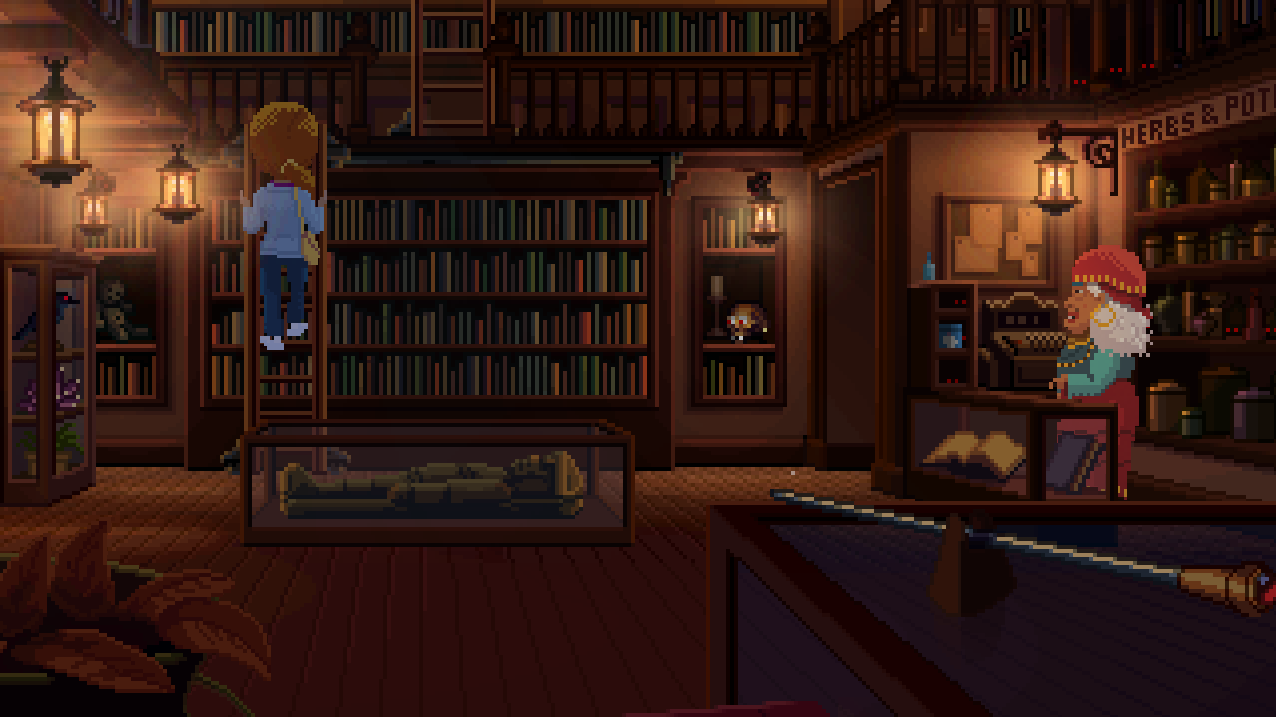
[b]Gary[/b]: Dead ends, possibly (laughs).
[b]Marek[/b]: Did you do much playtesting back at LucasArts then? If I’m not mistaken, in the Broken Age documentaries your former colleague Tim Schafer describes how that was kind of a rare process for adventure games.
[b]Ron[/b]: I don’t know what they did with Broken Age, but Maniac Mansion didn’t have… I mean, there’s two different things: there’s testing, and there’s playtesting. Testing is where you find all the bugs. These are really “professional” testers who are just pounding on something to find the bugs. Then there’s playtesting where you bring in people who have never played the game before, and you just watch them play. You’re not looking for bugs, just looking for their comprehension of the game.
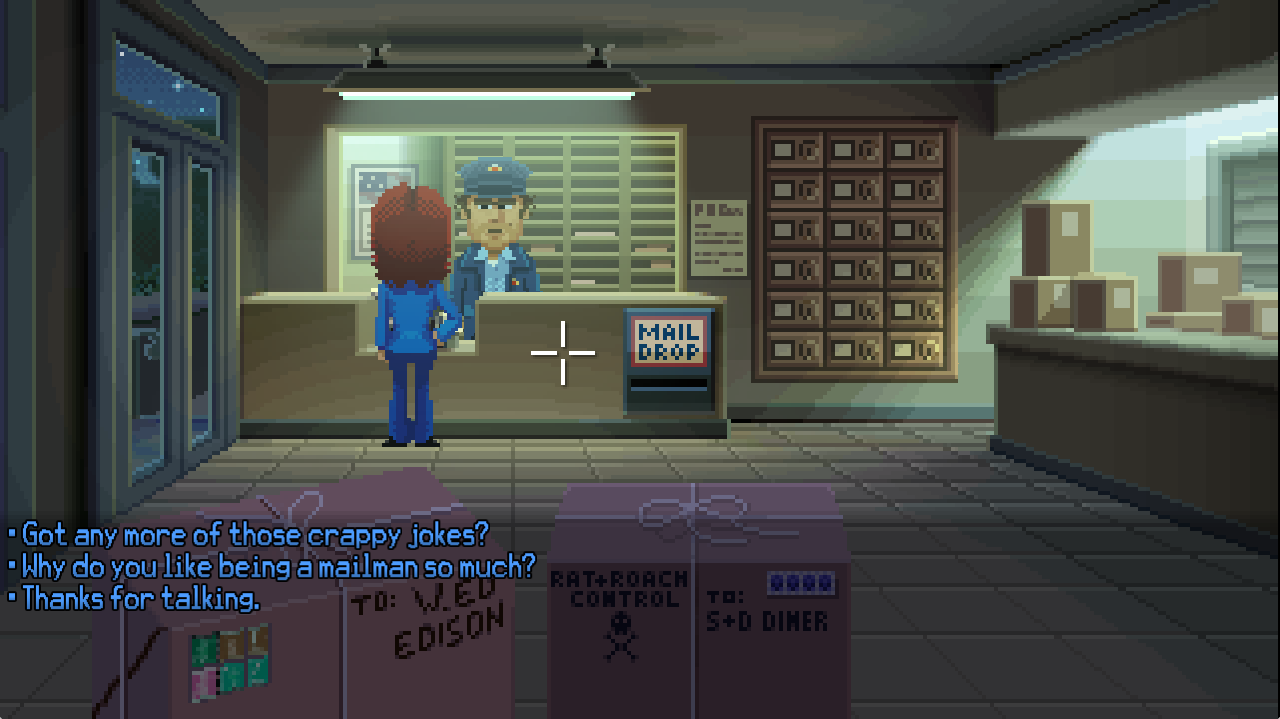
We didn’t do a lot of that on Maniac Mansion. We did more of that on Monkey Island. We had some playtesting sessions, where we got people who basically sent in registration cards, back in the day when we had those, and got them in for a whole Saturday. We did a lot of that on The Cave: I think probably twice a week for the last six months of that project. People came into the office and they played the game for a couple of hours, and we just sat there and watched them and took notes. It’s invaluable and I would certainly do a lot more of that today than happened back on Maniac or even Monkey Island.
[b]Gary[/b]: It’s interesting comparing the tools we have today versus then – I remember when we were first trying to figure out whether or not Maniac Mansion was even playable, we actually built a paper version of it, with a game board and cards. Whereas now, Ron can rapid prototype. It’s certainly changed, but I don’t think we’re going to make this one on paper first.
[b]Ron[/b]: (laughs) No.
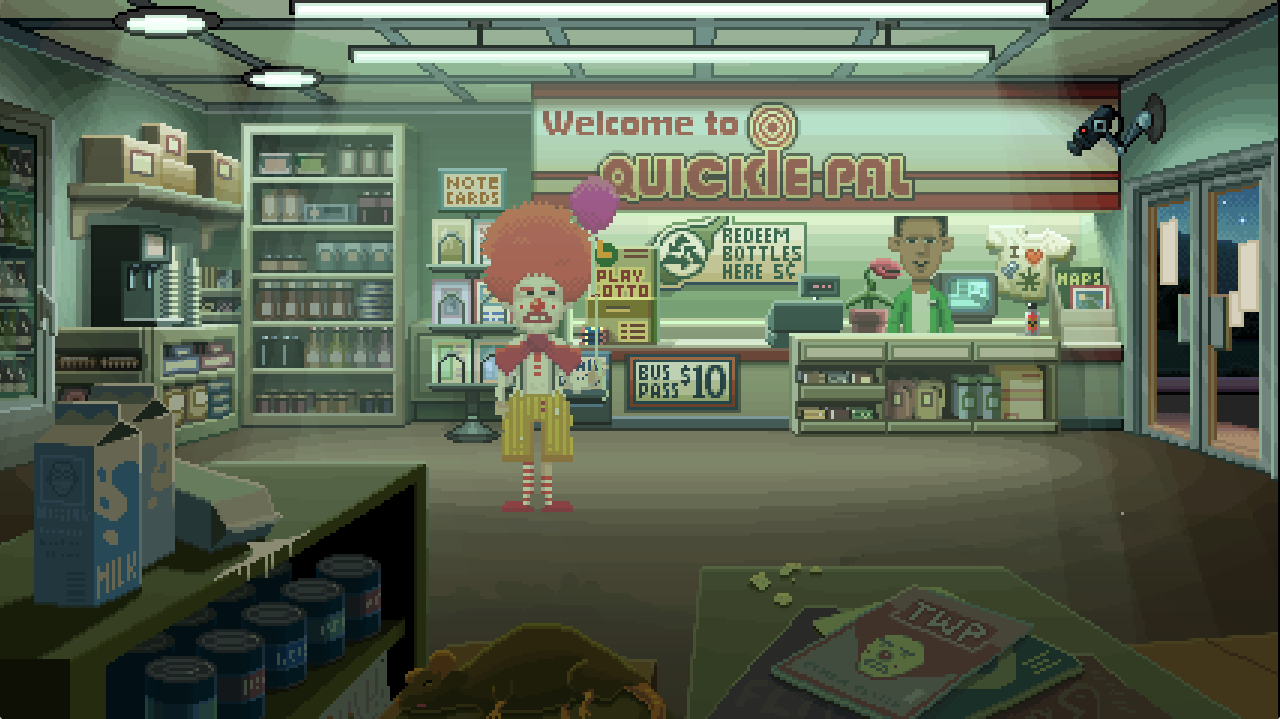
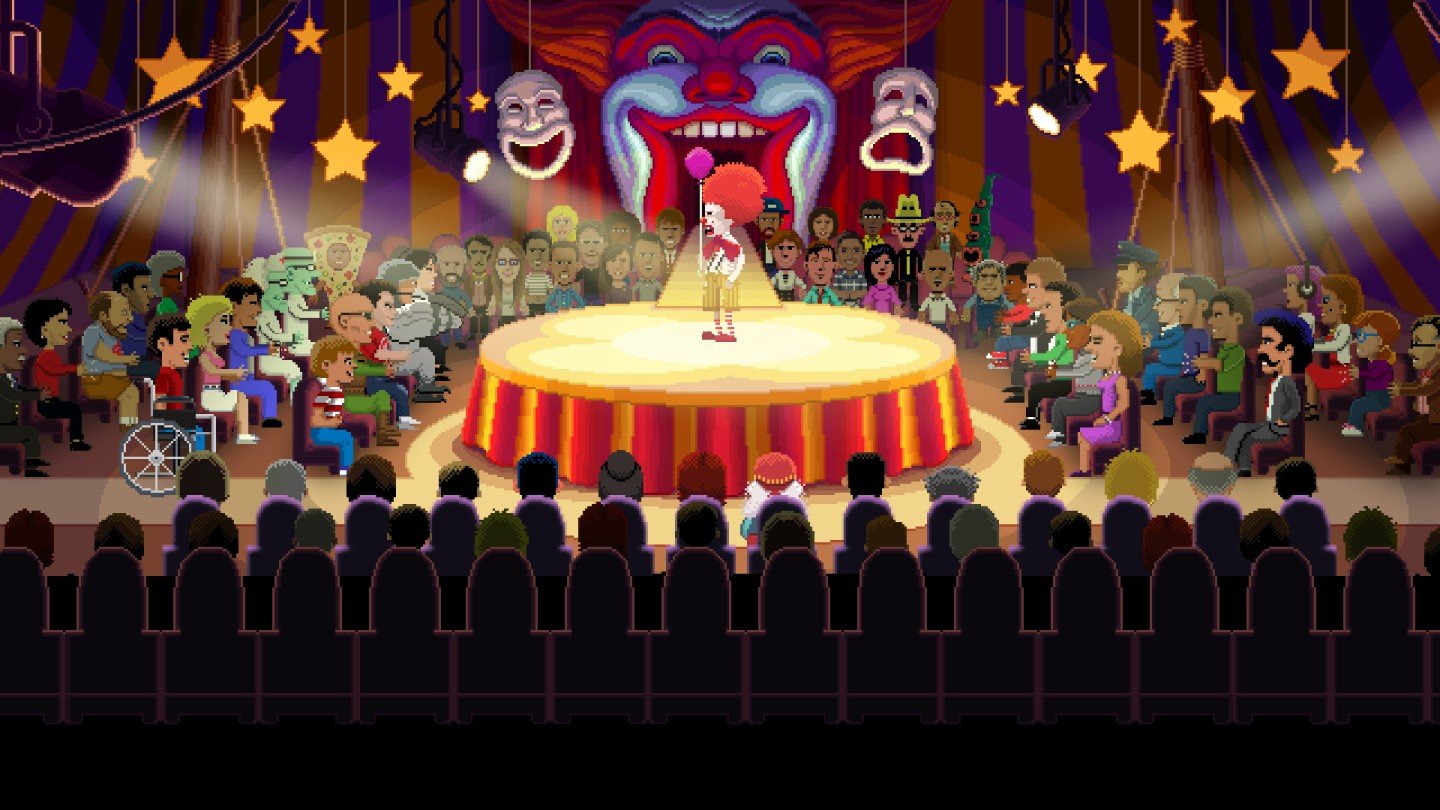
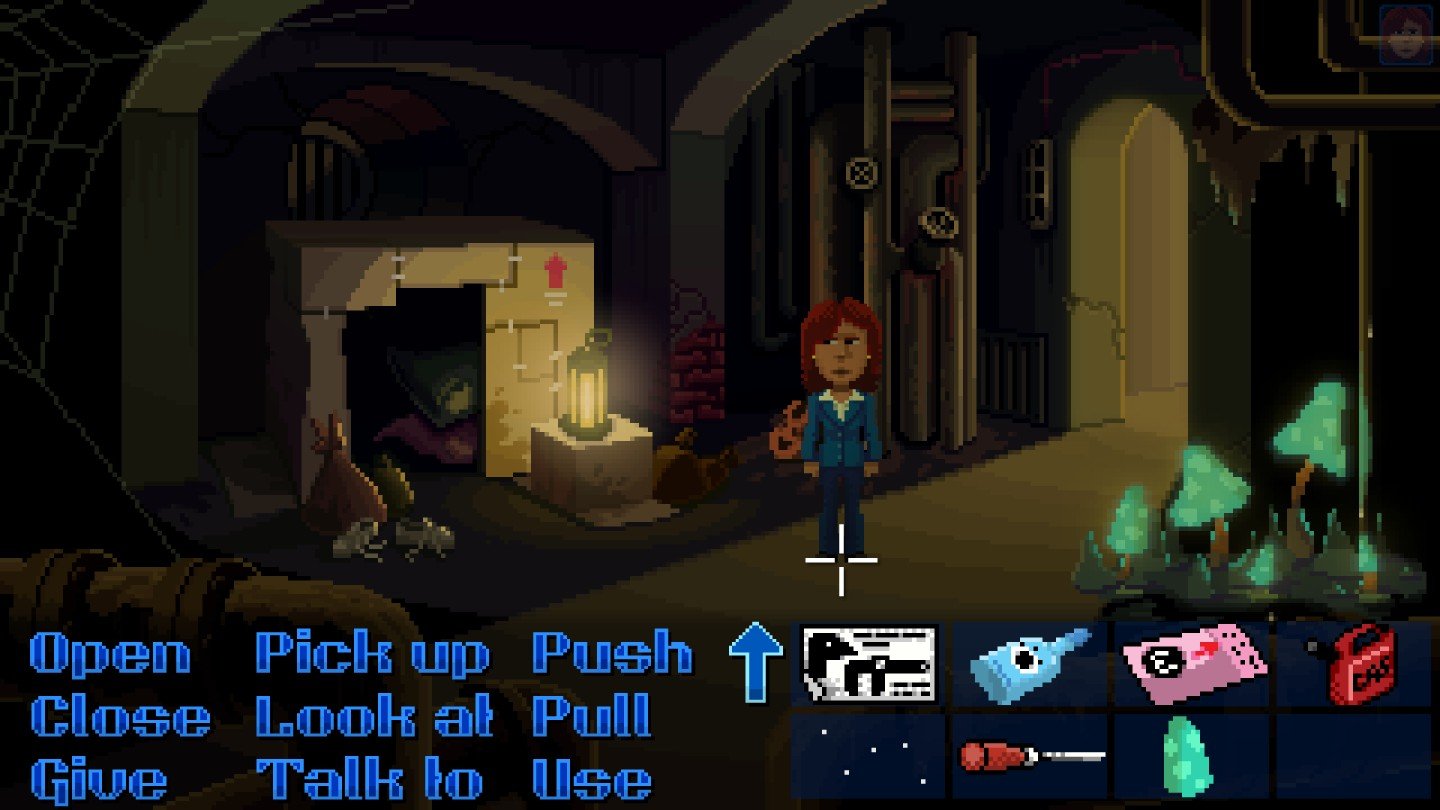
[b]Marek[/b]: Speaking of tools, how are you achieving this 1980s look? Presumably it’s not using the same tools you used back then.
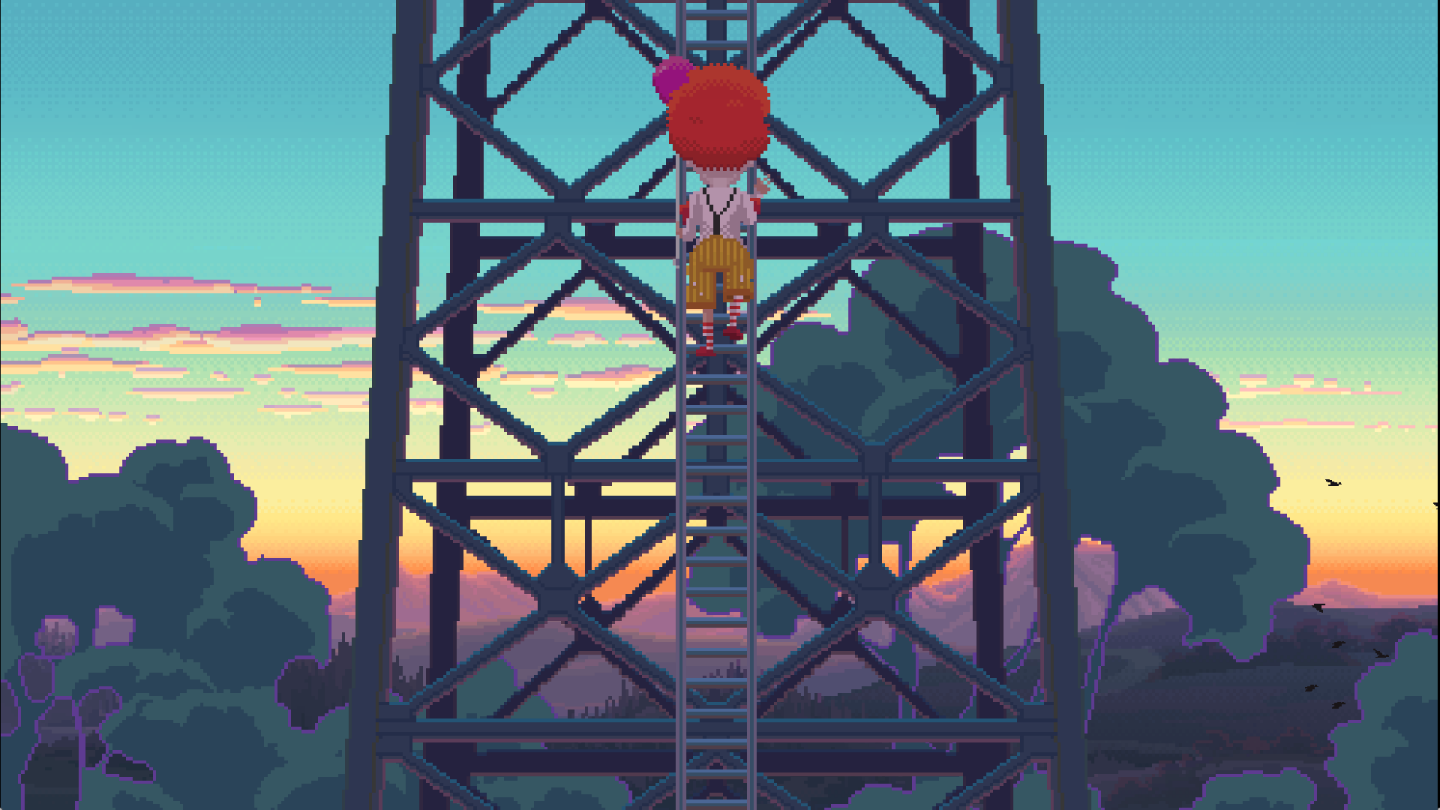
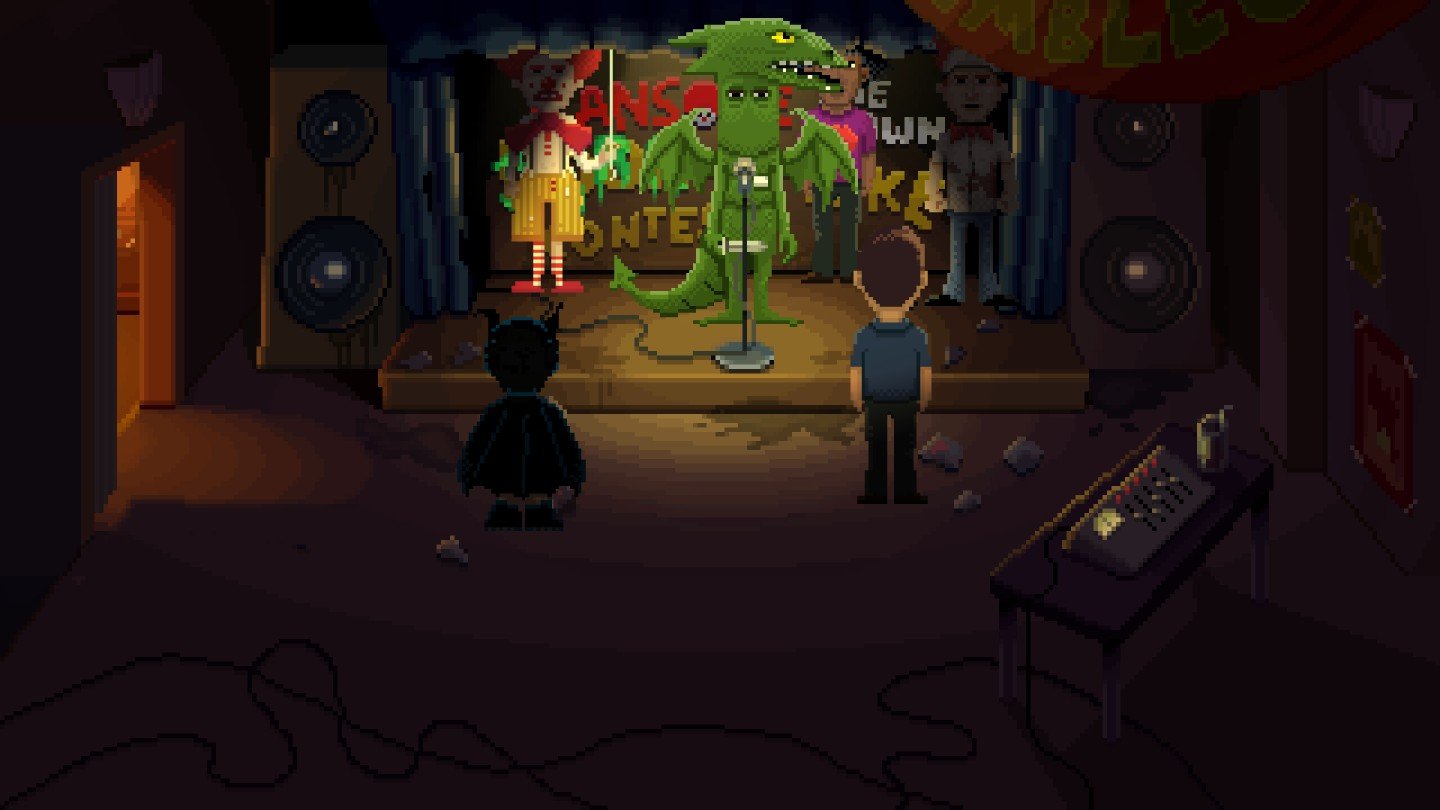
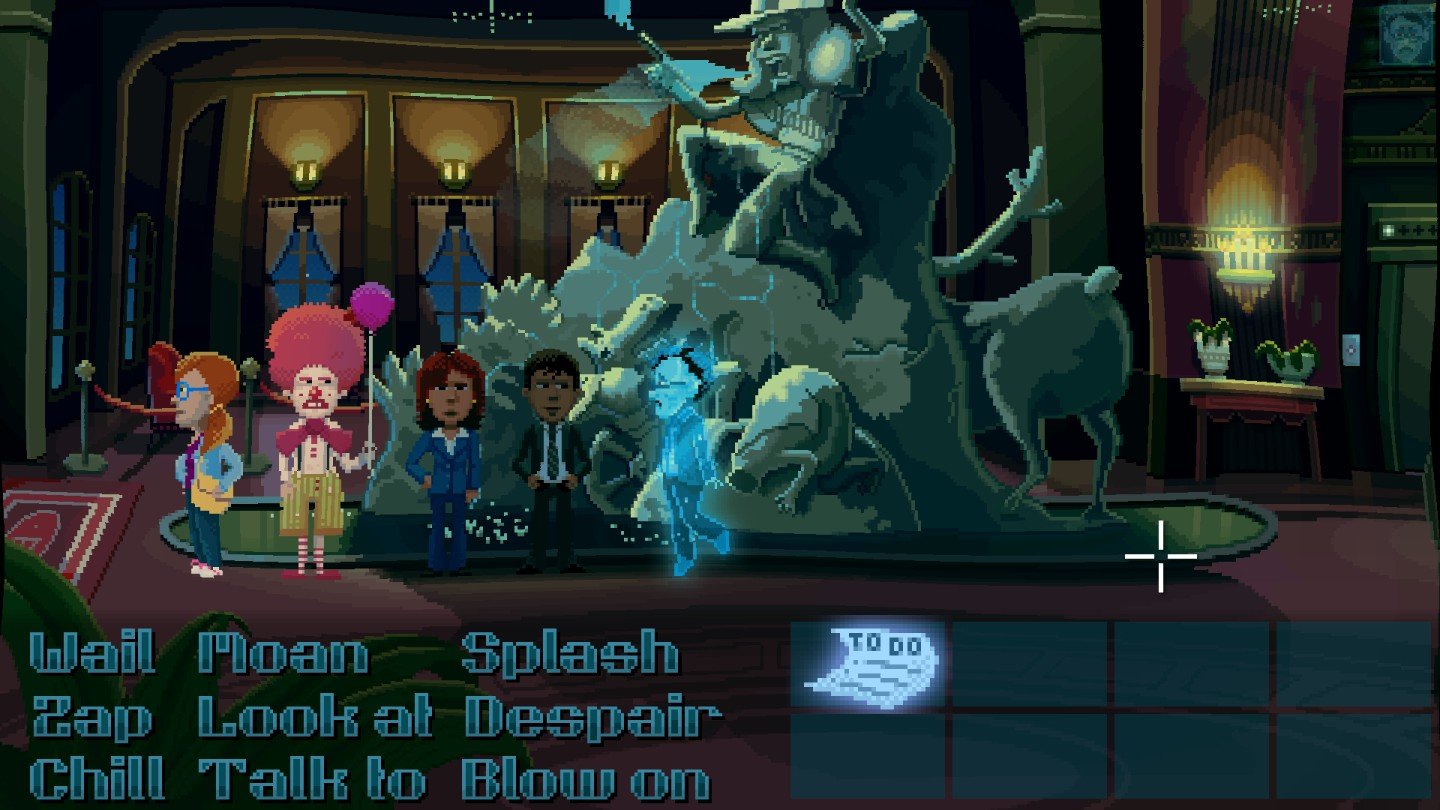
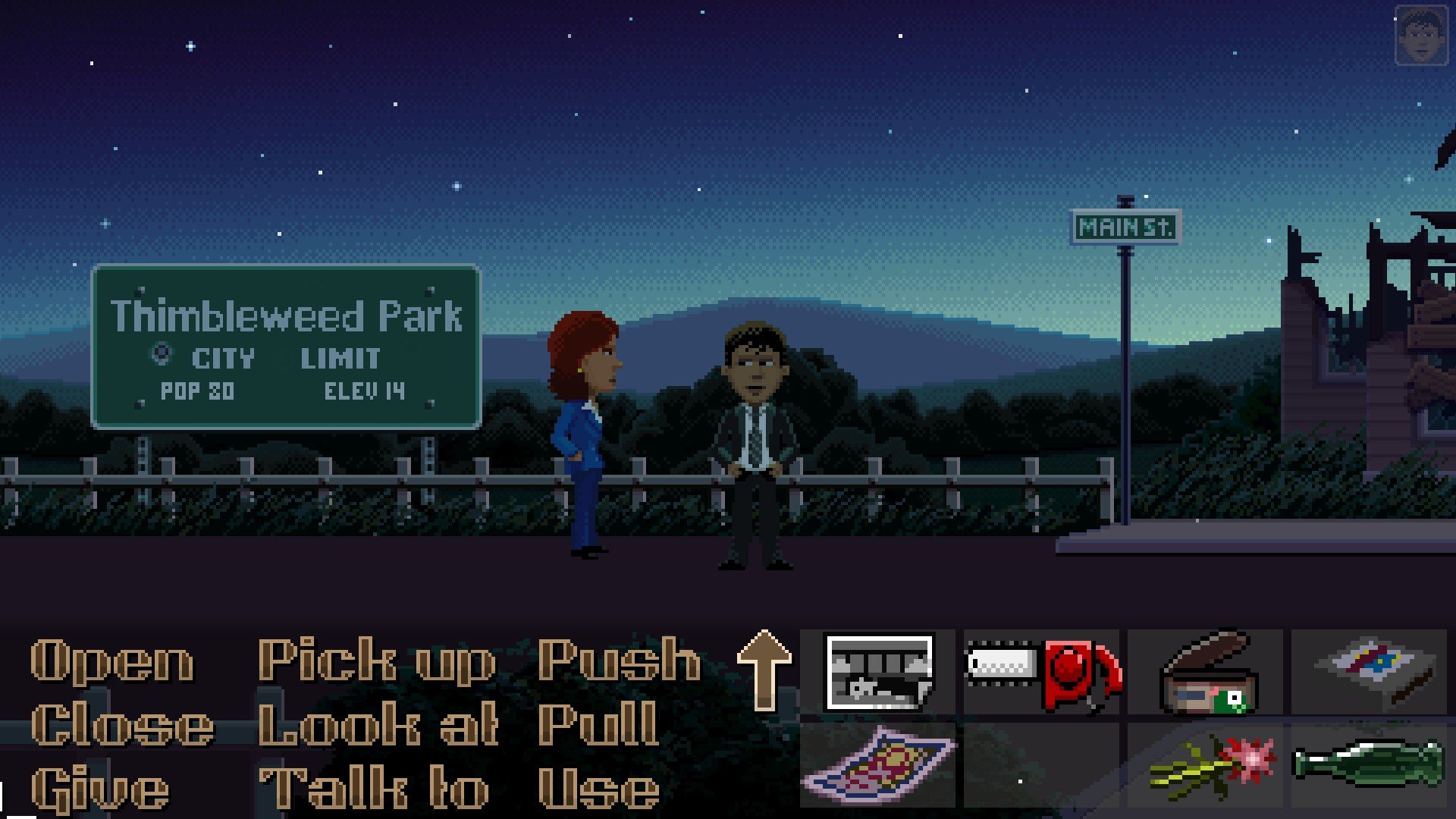
[b]Ron[/b]: Yeah, the tools – it’s got that classic look to it, but the technology underneath it, I’m hoping, is modern in a way. Parallax scrolling is something we never could’ve done back then, but we can do now. We can do interesting things with depth of field. There’s a lot of little, fun visual effects we can do. On some level it’s like a classic point-and-click adventure game, but then there’s just something modern and technologically cool about it. It’s not the same technology we would’ve used back then at all.
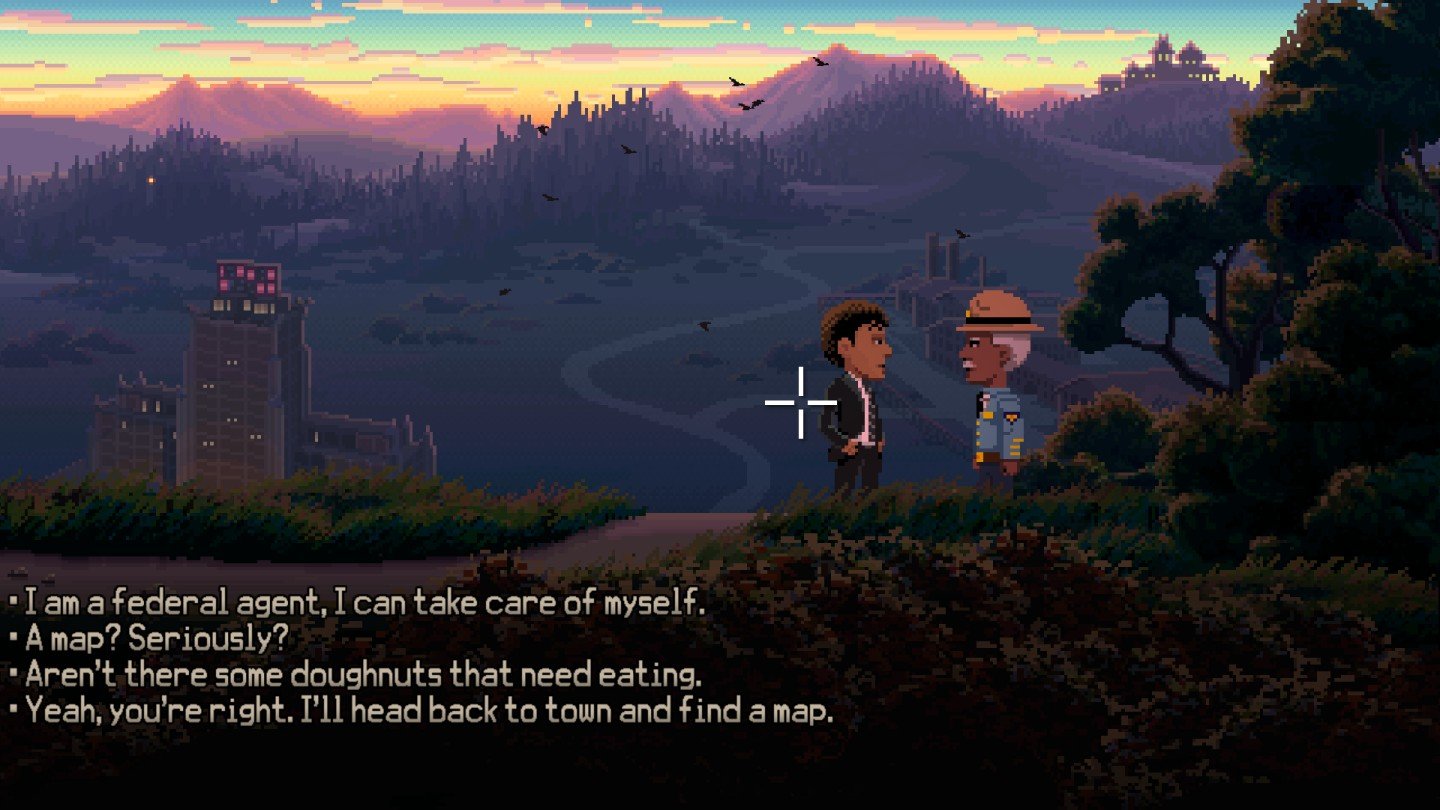
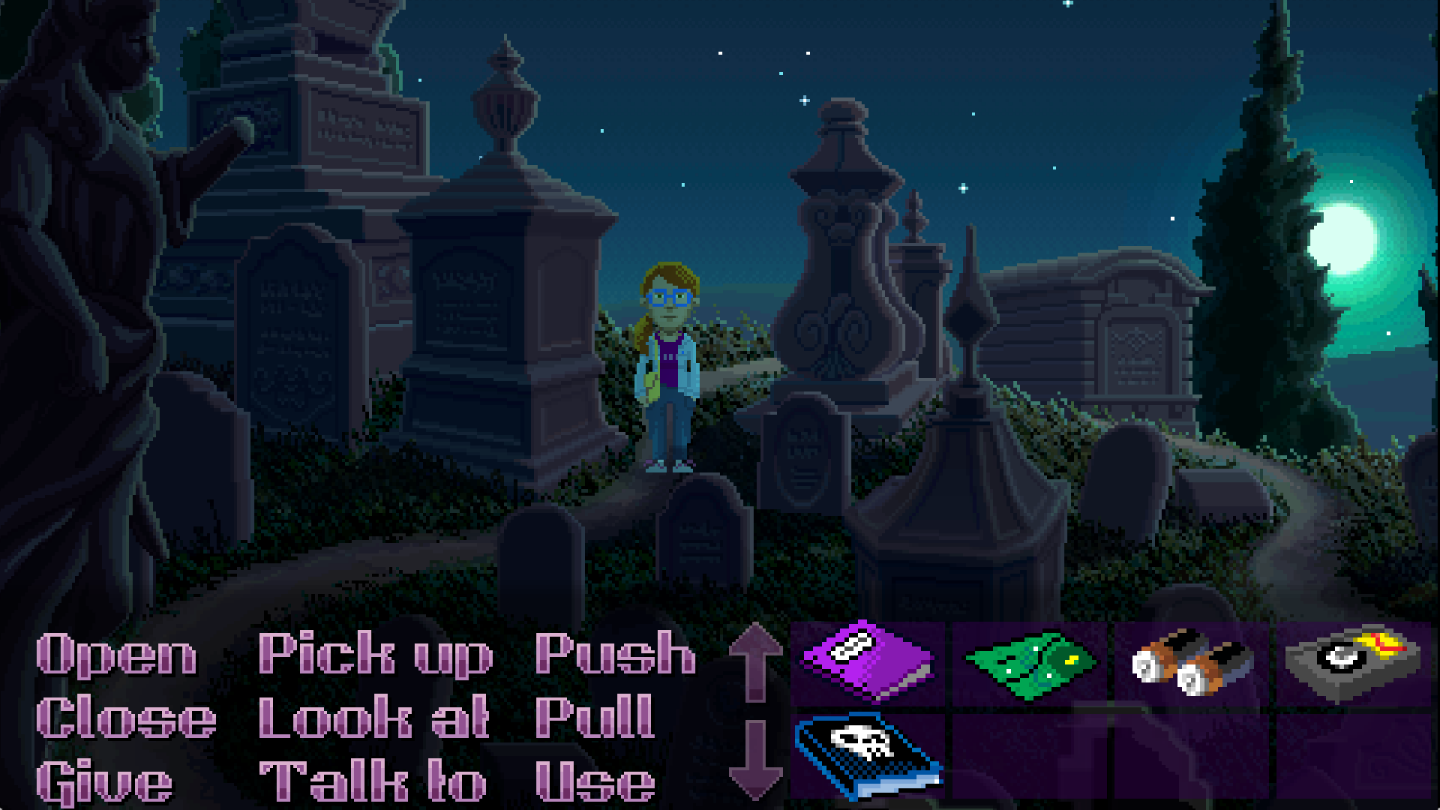
Thimbleweed Park uses a SCUMM-style interface, much like Gilbert and Winnick first introduced in Maniac Mansion
[b]Marek[/b]: So I suppose you’re trying not to be dogmatic in terms of “this could not have happened around the time of Maniac Mansion, so it can’t be in this game either”…
[b]Ron[/b]: Yeah, things like colour palette – we had sixteen colours in the EGA palette, or the Commodore 64 palette. Certainly, Thimbleweed Park is using more than sixteen colours. There are some things that we’re more than willing to push. It should really invoke that feeling you had playing those [classic] games, or more importantly, it should be how you remember those games looking, not how they actually looked.
[b]Gary[/b]: I realise we’re getting old right now, but there’s this whole visceral feeling of looking at these games. I remember how I felt at that time in my life, and this brings back a lot of those memories and feelings on a retro level, at least for me. When I’m working on it, I really enjoy connecting back to what it felt like to work on Maniac, and I’m hoping people can connect back to how it felt to play those games.
[b]Marek[/b]: What about the sound and music? Are those aspects you are looking to modernize or will you be sticking to the retro style?
[b]Ron[/b]: Yeah, music is one of those areas that I do want to completely modernize. Music was one of those very frustrating and limiting things. There’s a lot of really cool 8-bit chip music out there, but I think we do want to do something that is a lot more digital and modern, more like the music you hear in the trailer that’s up on the website. And we can even start to do some good interactive stuff, like you heard with iMUSE in Monkey Island 2.
[b]Marek[/b]: So how did you end up joining forces on this project again? Since Maniac Mansion you both did a lot of different things, but did you still keep in touch over the years?
[b]Ron[/b]: Yeah, Gary and I have always kept in touch over the years. Whenever we would get together, we would talk a lot about Maniac Mansion and, like I said, talk about what made that game so special, not only to us as the people who made it, but to a lot of people that played games. We were just talking recently about how we should make another one of those games, that would just be fun to do. Kickstarter gives us the ability to actually do that. Certainly going through any publishing or money-raising situation with this is just not going to be feasible. We just started talking about it a few months ago, and spent more time and then decided that yeah, we should do this.
[b]Gary[/b]: Obviously, it engaged us because we actually spent a bunch of time and work in what we’ve done to this point. There’s a lot more design time involved, but we’ve done some pretty involved sessions, in terms of figuring out how we would do this, and what the core story is, and who the core characters are. All things being equal, we would rather do this together than most other opportunities that we have right now. That’s one of the reasons we’re pursuing this. It really speaks to us in terms of “let’s get back to this and make a really cool thing together again.”
[b]Ron[/b]: I guess we haven’t worked together really, since Maniac Mansion, and that would just be a lot of fun to do.
[b]Marek[/b]: Gary, you led all the art on Maniac Mansion, right?
[b]Gary[/b]: Yeah, I was actually the co-designer and I did all the art on Maniac Mansion, and Ron was co-designer and he did all the programming. He wrote the SCUMM system and worked with David Fox to write some of the scripts, but for the most part Ron created all the technology, he and I created the story together. Actually, at the time, we were roommates. It was weird to work together and live together, but that was one of the genesis points of Maniac Mansion – we both liked the same things. We both liked old, crummy B horror movies, we both enjoyed the same television shows and movies and the same sensibility in terms of humour.
[b]Marek[/b]: More recently, it seems you have been working a lot on comic books.
[b]Gary[/b]: Actually, right now, if you go to my site, garyart.net, I have a book that’s coming out right now called Bad Dreams, which is being published by a company called Red Five. It’s a five-issue limited series; the fifth issue just came out this month, and then it’s going to be coming out as a graphic novel in January.
[b]Marek[/b]: So coming from this very illustrative and detailed comic book work, what’s it like switching mindset entirely and working on this very low-resolution pixel art?
[b]Gary[/b]: Doing pixel art is sort of a different way of thinking. These flat, almost like layers of cardboard that you paint and slide around… the limiting factor is really challenging, but it’s also really engaging, because if you’re working on a screen that’s 320 pixels wide, or whatever, and you’re trying to make something look like a road sign, or something look like a car, there’s only so much you can do. But there’s still a lot of stylistic approaches you can apply to that, whether it’s dithering or whatever else, to get a real unique look. You can make them very iconic, because people need to be able to look at a ray gun, or look at a skull, and realise what it is instantaneously. You can do that in high res or low res, whereas the other stuff I’m doing right now is very graphically designed, and that all ties back together in terms of the whole graphic design approach.
Latest Gaming Articles
All Articles