



Ragnar Tornquist

Game design is not a profession that can be learned behind a schooldesk, at least not yet. How did you get drawn into the world of game design?
Probably like most others in this business—through a combination of luck and a passion for games. I started off coding simple games in Basic back in the early 80’s, mostly because there weren’t a lot of games available for my computer. I also put together a number of text-adventures for the Commodore 64 using a great little tool called The Quill. But I didn’t get into the business professionally until 1994, when I applied for a position at Funcom and ended up designing and producing the Casper video-game. The fact that I had a film-school education helped quite a bit, especially in being able to tell a story visually, but the most important aspect of this job is just loving what you do, loving games.
How did you come up with the concept for TLJ? Were you guys just writing down ideas when someone suddenly cried out “Eureka!” ?
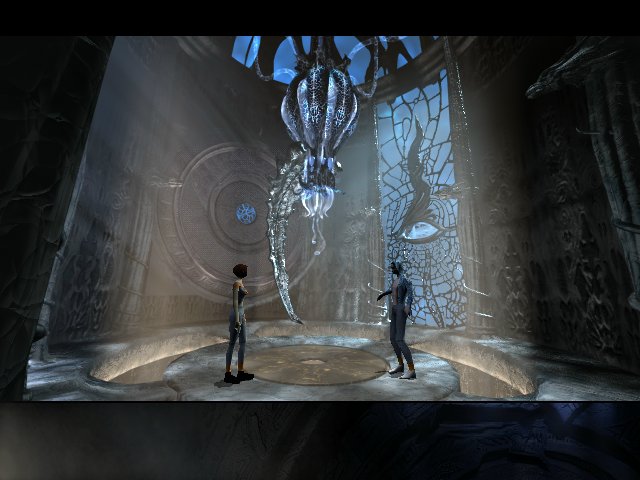
If I remember correctly, I think it was “Geronimo!”. Okay, that’s not really how it happened. The core idea of TLJ—two worlds, one of magic, one of science, and a Guardian to keep watch of the Balance between them—was actually the setting for a platform game (of all things) that Funcom was developing at that time, called Split Realities. I wasn’t involved with that project at all, but when for various reasons the game was canned, the lead artist, Didrik Tollefsen, wanted to take the core concept and build a new game around it. Which is where I entered into the picture. We sat down for quite a while, played around with the setting and the characters and the story, and the end result of that process was the beginning of The Longest Journey. There are only little bits and pieces left of the original idea, but that’s the nature of any good game design; it grows and changes with the people working on it. At this point, it’s difficult to say who came up with what, but it’s really been a cooperative process between me and the lead artist, with constant input from the whole team. So, no, it was never “Eureka!” It was more of an organic process.
For a relatively young company like Funcom, an adventure game can be a bit risky sales-wise. What made you decide to make one?
Good question! I’m sure a lot of people are thinking the same thing. I mean, what were we thinking? Seriously, though, adventure games have only recently been falling out of favour, if that’s the right word. In 1996, when we started production on The Longest Journey, adventures were still going… if not strong, then at least “going”. In fact, in 1996, role-playing games were just about dead, and nobody in their right mind had an RPG on their production slate. Except for the few visionary developers who thought that the genre might be revived if only somebody decided to release a good RPG. Risky, perhaps, but like RPGs, I definitely think that the adventure genre has a good shot at making it back into favour—it all depends on the games. There’s always an audience for good games, no matter the genre.
What do you most like playing when you’re not working on The Longest Journey?
It’s that “when you’re not working on The Longest Journey” bit that confuses me. There’s no unit of time short enough to describe those moments 🙂 I do try to play as many games as possible, usually during the time when I should be sound asleep. I make a point of playing as many adventures as possible, though that’s like saying I also try to keep track of all the snowflakes in hell. Other than that, I’m a sucker for RPGs, and first-person shooters, and I think that Half-Life is probably one of the best games ever made. Recently, I’ve been playing System Shock 2 quite a bit, and I’m anxiously awaiting the arrival of the Dreamcast to feed my craving for fighting- and racing-games. Oh, and Civilization II is without doubt the best game ever made. Either that or Day of the Tentacle. I’m never quite sure.
The name LucasArts pops up here and there in your descriptions of TLJ. Are their games an example to you?
Yes. 🙂
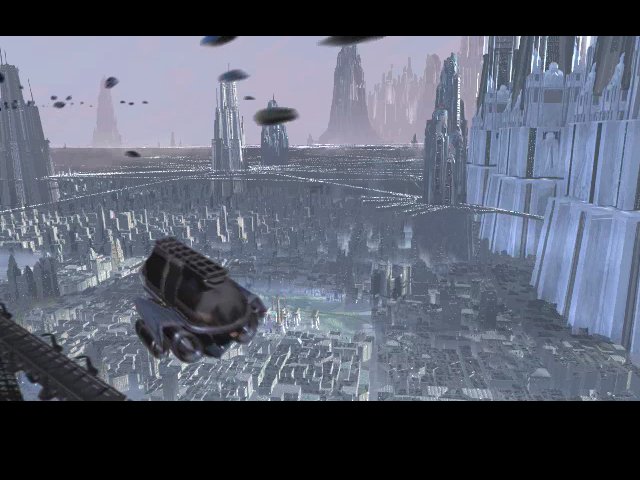
I’m just a big fan of all things LucasArts. I remember playing Monkey Island to death on my trusty old Amiga, and before that Maniac Mansion with a monochrome Hercules card on an XT. Day of the Tentacle is simply the most brilliant adventure ever made, and I don’t think anything will ever surpass it in pure ingenuity of design. So, sure, they were a big influence when we started working on The Longest Journey. But we never tried to emulate them, because we’d only end up looking like a horse’s rear end. The Longest Journey is, at heart, a very serious game, and though it’s humoristic in parts, I don’t think anyone can accuse it of being too LucasArts-y. Aside from the interface, which is, uh, inspired in parts by some of their games. But that’s only natural; why fix what ain’t broken?
What’s the one thing in The Longest Journey you’re most proud of?
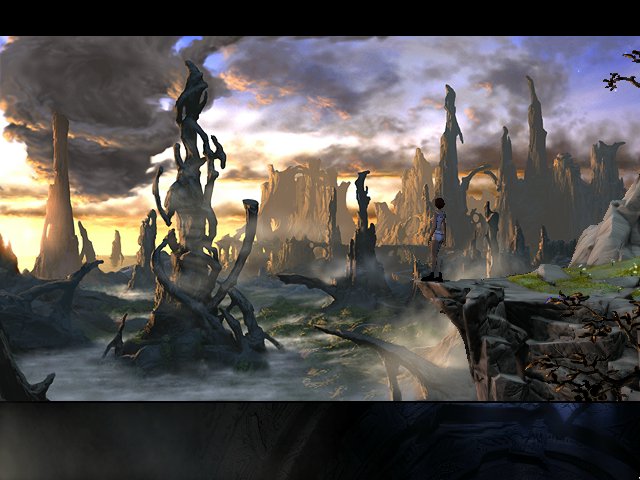
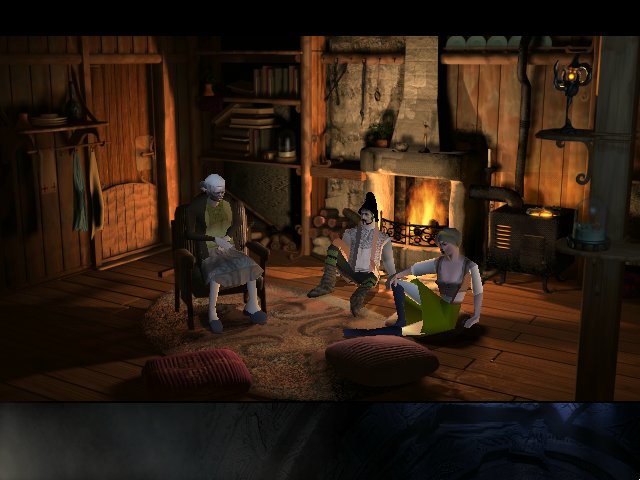
You mean which part of my baby do I love the most? Boy, that’s a difficult question. For my own part, I’d have to say the characters and the puzzles, ’cause that’s been my thing from the very beginning. But looking at the game, the thing that keeps bowling me over is the graphics—we’ve had some amazingly talented people working on this project for a long, long time, and they deserve all the credit they’re gonna get…because it simply looks stunning. To give you an idea of the calibre of talent we have working on the graphics, we just got a new team-member whose last credit was Star Wars Episode I: The Phantom Menace–the movie, that is, not the game!
Latest Gaming Articles
All Articles