



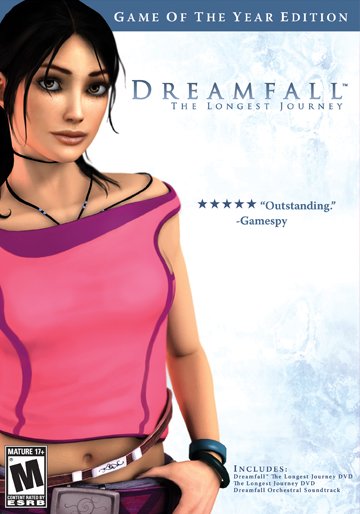
Dreamfall: The Longest Journey

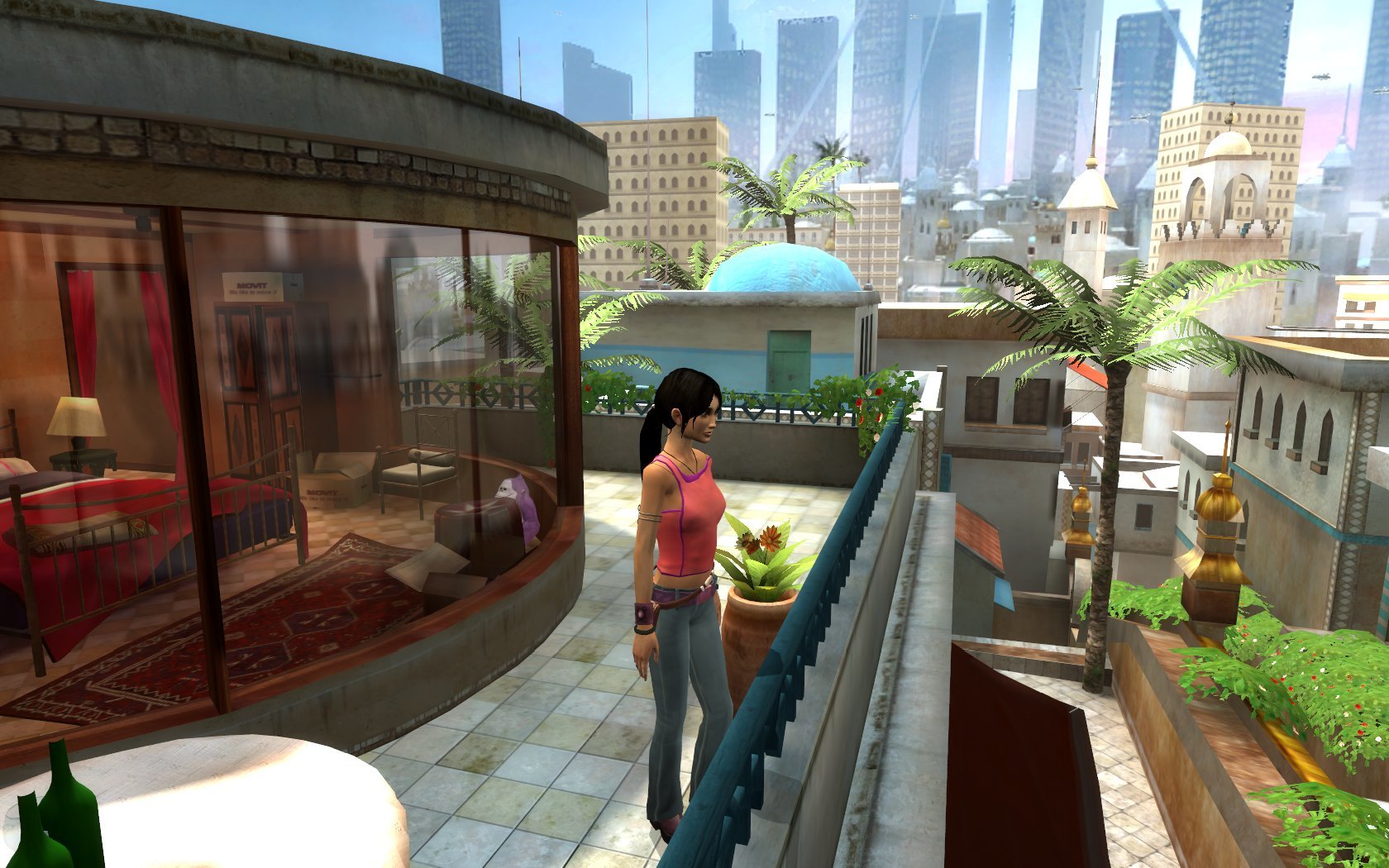
The graphics have been a point of contention since it was first announced that Dreamfall would leave behind the pre-rendered backgrounds of TLJ and replace them with a full 3D environment. For some, this represents an unnecessary move that compromises the visual quality, while others laud Funcom for being one of the few developers able to drag the genre kicking and screaming into the 21st century. The amusing thing here is that the results will probably be pointed to by both camps as proof of being correct. No, the graphics aren’t as detailed as pre-rendering can achieve, but the world is so much more dynamic, so it’s a positive tradeoff. But ultimately it’s not about either pixels or progress. Quite simply, Dreamfall wouldn’t have been Dreamfall had it not moved to 3D, and I’m pleased to say that it’s still a feast for the eyes. Technologically it’s less than cutting edge even at its highest detail settings, but what it lacks in polygons it surpasses with stunning art direction, imaginative locales, plenty of animation, and lots of little touches that put Dreamfall pretty much in a class of its own among adventures.
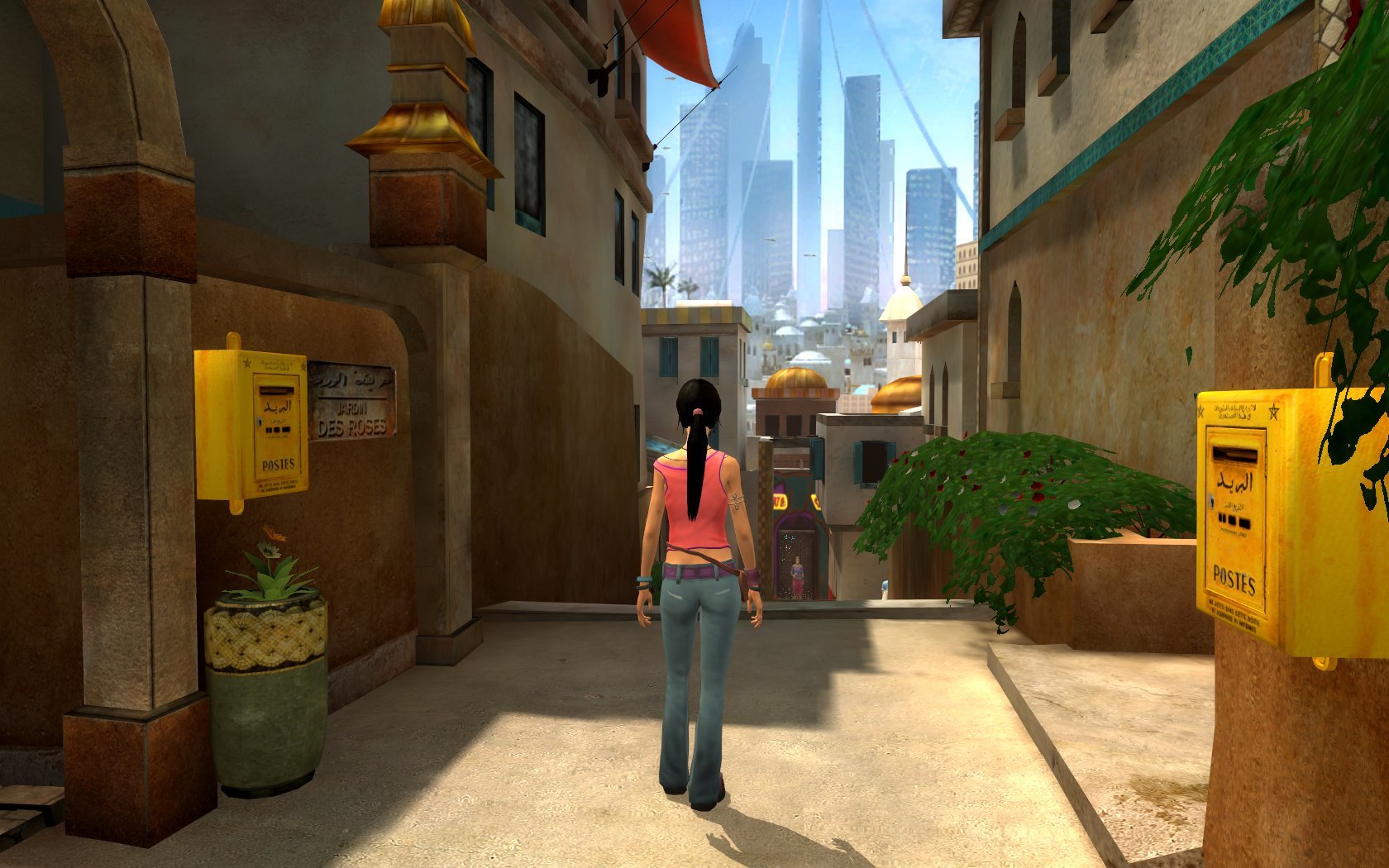
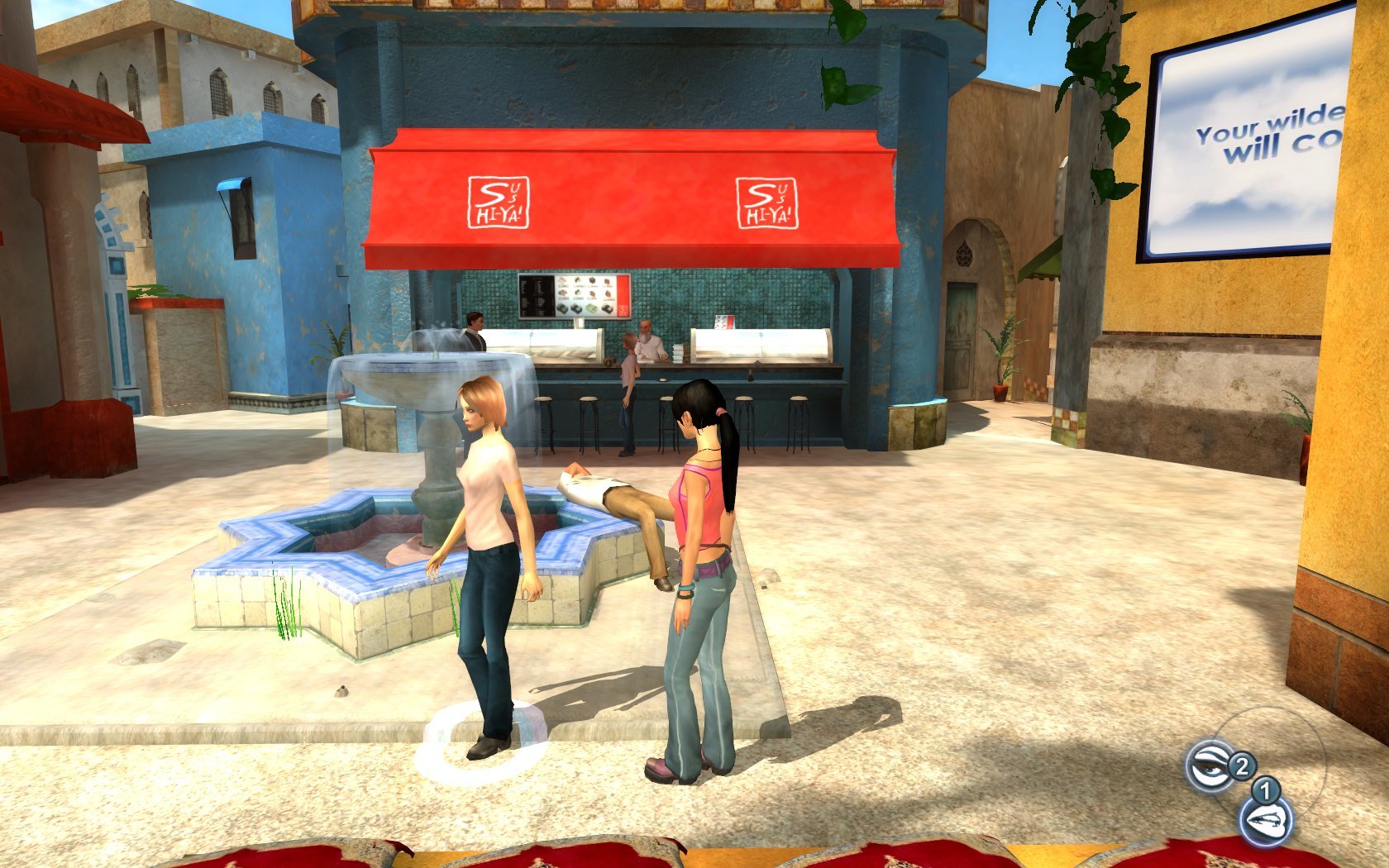
Better yet, the graphics are untarnished by the game’s interface, at least by default. There’s no cursor, reticle, or onscreen display of any kind until you reach an interactive hotspot, which automatically calls up a menu with context-sensitive options, very similar to Broken Sword 3. Along with the standard look/talk/use options, you’ll sometimes get a jump, push, or climb icon to select. Performing these moves is a simple as a button press, as the character does all the work with no further input from you. The game’s much-publicized focus field can be turned on manually, which emits a maneuverable blue light that lets you scan your surroundings from afar. However, apart from the rare circumstance that requires it, you’ll probably find yourself leaving it off, as the game’s hotspot detection is more than adequate, and it’s much faster to move your character around than to stop and have a blue beam gander.
Navigating these 3D worlds is done through several different direct control options, making Dreamfall a much different experience than its point and click predecessor. The most popular method will likely be the keyboard/mouse combination common to many action games. The keyboard provides character movement, while the mouse directs the camera rotation. The setup is comfortable and intuitive (and yet fully re-mappable if so desired), the controls responsive, and most players will be zipping around in no time. If you’ve got a gamepad, Dreamfall also handles like a charm, although there’s really no obvious benefit to choosing this option besides the more tactile feel it provides. And for those with an incurable keyboard aversion, there is also a unique mouse-only method that will definitely take some getting used to. Moving the mouse will steer your character in the direction and speed desired, with the camera slowly swinging around behind. This works surprisingly well during regular exploration, though it may prove problematic when called upon to perform more subtle moves in the game’s combat and stealth sequences.
Hey, wait a sec… 3D, direct control, and now combat and stealth… is this an action/adventure after all? No. Really it’s not. The two activities represent such a tiny fraction of the overall game that it just doesn’t warrant much consideration, and both the mechanics and execution are so simplistic that they shouldn’t pose much problem for even the most action-phobic adventurers. Fighting occurs only a handful of times at most, and some of them are avoidable entirely by choosing a peaceful approach. When you are forced to square off, it’s a real-time but basic affair composed of two different attacks and a blocking move, each of which is carried out with a single button click. The goal here is tension, not difficulty, though the sluggish controls will invariably result in a dramatic slow motion death or two. But likely not more than that given the total absence of any artificial intelligence in your opponents.
Stealth scenarios are equally elementary and forgiving, often involving nothing more than identifying timing patterns, with the occasional puzzle element thrown in for good measure. The game lets you save anywhere, any time, but even if you forget, it auto-saves at the beginning of each combat or stealth sequence, ensuring that failure won’t involve much repetition until you get it right. Of the two, the clumsy combat feels like the more poorly conceived gameplay filler, while the sneaking seems to flow more naturally from the plot, but it’s unlikely that either will affect your enjoyment of the game significantly, for better or worse.
I use the word “puzzle” loosely where Dreamfall is concerned, as the sometimes-contrived, conventional puzzle approach of The Longest Journey has been replaced here with more organic, story-driven obstacles. Sure, you’ll still collect and combine objects, match patterns, and perform fetch quests on occasion, but these tasks are few and far between, and offer nothing that should cause you to break a mental sweat. Mind you, once you stumble upon the puzzle made completely unfair with an obscure, time-critical clue, you’ll likely be thankful the developers didn’t include more of the same. But still, seriously compounding the simplicity of Dreamfall‘s puzzles is the general lack of them entirely.
Here at last we return to the issue that not only prevents the game from reaching masterpiece status, but might threaten to send it tumbling out of consideration for some people altogether. There’s no way around it: Dreamfall is a game that simply doesn’t have much actual gameplay. Of the fifteen or so hours you’ll spend playing, the vast majority of that time will consist solely of moving your character from place to place, person to person, and task to task, without any real challenge or even much of an interactive role. Those fabulous dialogues I described are largely automated, with only occasional keyword input from you to propel the conversation along. What few choices you have offer some replay value, but make only a cosmetic difference, so while that adds to the narrative quality of Dreamfall, it has little bearing on the gameplay aspect of it. Meanwhile, the streamlined interface and limited item interaction leave little room for doubt as to what will work where. And while you’re free to explore some areas at leisure, there’s even less to do outside of the linear story progression, so it won’t be long until you fall back into line.
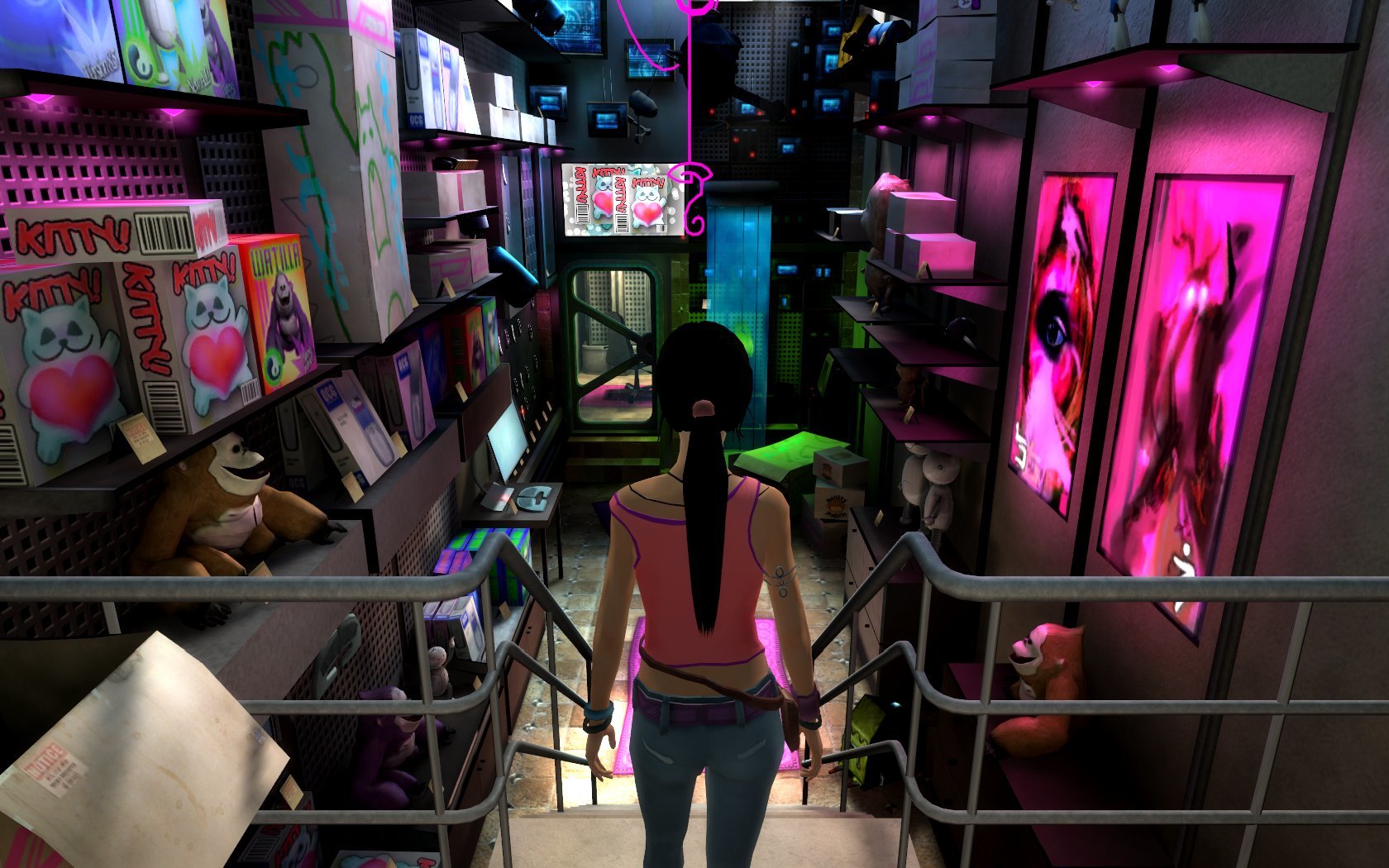
Taken alone, none of these factors are inherent weaknesses, and I personally applaud the design decision favouring naturally-emerging obstructions. But they need to actually emerge, and in Dreamfall they appear far too infrequently. In fact, several times I encountered scenarios that were tailor made for increased player participation, but glossed over by the developers, presumably as an undesirable plot hindrance. Between safes I didn’t need to crack to codes I didn’t need to decrypt to inventory items I didn’t need to procure, the real disappointment here is that the game didn’t utilize the opportunities the story DID provide, leaving me feeling more like a passenger than a player. It didn’t by any means ruin my overall enjoyment, but it did diminish my involvement in the game, and with that my sense of accomplishment.
While I believe in judging a game by what it seeks to be rather than what I might prefer, at some point its own ambitions need to come under scrutiny if the discrepancy becomes too large to ignore. And that’s the regrettable but unavoidable case with Dreamfall. Funcom has clearly sought to create one of the finest stories ever presented in a game, and they’ve accomplished that goal with room to spare. Yet in the process, they’ve provided only follow-the-bread-crumb exploration and paint-by-numbers gameplay for players to guide that story but rarely influence it, and it’s ultimately a lesser experience because of it. Like science and magic, Stark and Arcadia, there’s a delicate balance between story and gameplay that Dreamfall fails to fully achieve, settling instead for a wildly entertaining but overly passive ride.
Still, when all is said and done (and in this case, certainly a lot more is said than done), let’s return to where we began. It is, it does, and you should. Dreamfall offers more “adventure” than any game in recent memory, and while less a sequel than a successor, it’s certainly deserving of its Longest Journey subtitle. Its limited interaction will prevent it from being unanimously embraced, but Dreamfall simply deserves to be played, with expectations set accordingly. What it lacks in challenging gameplay, it more than makes up with its scope, style, and maturity of storytelling. Like a good book or movie, its brisk pace, gripping plot, engaging characters, and lavish production values make Dreamfall a modern classic that falls just short of being the gaming masterpiece it could have been. But then, that’s what the series finale is for, right, Funcom?
Latest Gaming Articles
All Articles