



Casual Collection – July 2011 releases


Intrigue Inc: Raven’s Flight
by Jack Allin
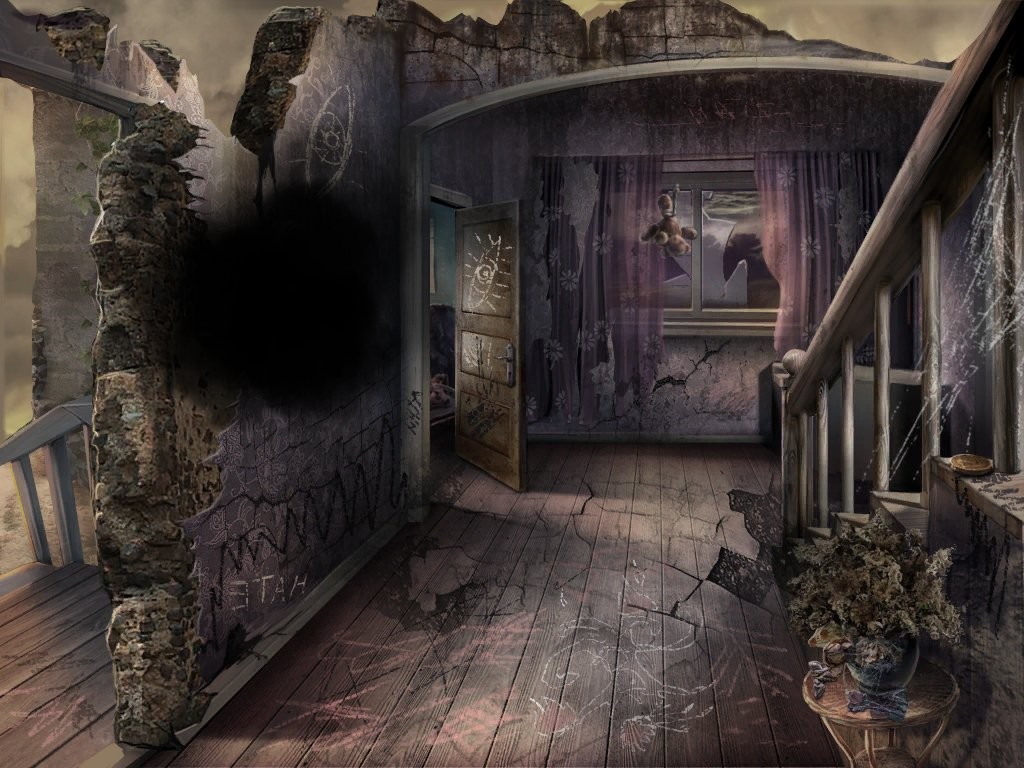
It may be tempting to turn up your nose at Skunk Studios’ Intrigue Inc: Raven’s Flight due to its limited production values, but beneath the surface there’s a decent amount of lite adventuring and hidden object hunting to be found. The laughably threadbare story puts you in the shoes of an operative for the titular global protection agency, tasked with chasing down a rogue agent with plans of world domination. All that really means is chasing him from his luxury boat to his beachside villa to penthouse apartment, learning of his maniacal plans through conveniently scattered tell-all memoirs while gathering items and solving inventory puzzles along the way.
Many objects are found in traditional hidden object screens with several interactive items per scene. A few scenes visibly display the items to collect, but most are traditional lists of items, though you can see silhouettes of these as well by clicking on the words. The searches are rarely if ever repeated until the very end, as the game continually progresses in a streamlined fashion of three or four screens per area. Given the spy theme, many of the puzzles suitably involve avoiding traps like security cameras and electrified gates, while others have you repairing equipment or manually assembling makeshift tools once you’ve found all the parts. On the easier difficulty setting, interactive areas sparkle and outlines of necessary inventory items are shown to hand-hold you through solutions, making the harder difficulty a much better alternative if you want any challenge at all. There are hints and puzzle skips available, but although the recharge time is very slow, you likely won’t need them given the limited options at any given time and the simplicity of the puzzles.
For a little (less believable) variety, a few standalone puzzles like rotating rings and tracing tangled wires are introduced, all of which are extremely easy. Code locks always have blatant clues nearby, and even minigames like magnetized fishing, laser avoidance, and cooking for clues (oh, those dastardly Smell-o-Safes!) are child’s play to complete. Apparently the entry requirements to Intrigue, Inc. aren’t too demanding. The final sequence is a rather obnoxious maze, which isn’t that big or difficult to navigate, but there are multiple items hidden within it, and you’ll have to scope the entire area in full to collect them all. The payoff is a final confrontation with “Raven” after nearly three hours of pursuit, which concludes the story decently, if not exactly climactically. With such a paper-thin plot further weakened by rather blocky, nondescript graphics, an absence of voice acting and only periodic spy-themed music attempting to insert some otherwise-missing drama, this is clearly not a game for story lovers or eye candy connoisseurs. The routine gameplay won’t dazzle you either, but if you have a few free hours to devote to a mission that’s very much possible (if not a little too much so), you may just find enough to make this game intriguing enough to warrant a look.
Foreign Dreams
by Jack Allin
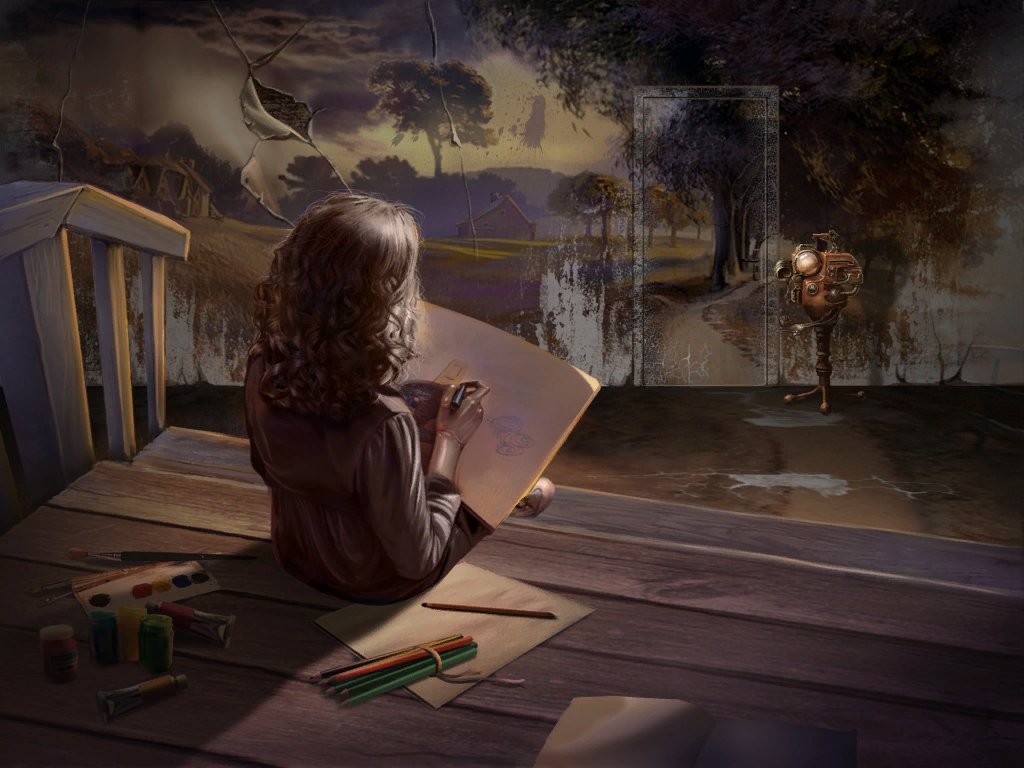
There are two nightmare realms to explore this month, although Kohey’s Foreign Dreams represents by far the kinder, gentler – and sadly, lesser – world of nighttime imagination available this month. A young man named Victor is experiencing terrible dreams, and his psychically-gifted friend Maya is the only one who can help by inserting herself into his nightmares and seeking the source of the disturbance. As Maya, you’ll delve ever deeper into a subconsciously repressed mystery that dates all the way back to Victor’s childhood, following an eerily silent little girl through a variety of surreal environments in search of clues, puzzles, and a host of hidden items.

With no introduction at all, this premise is established strictly through a mute conversation between Maya and Victor as play begins, which is a sign of the budget shortcuts you can expect throughout the game. Much of what’s here is solid enough; there just isn’t a whole lot of it. Locations are reasonably diverse, but many are surprisingly mundane: rooftops and street alleys, train and bus stations, a bar, playground, hospital room, and countryside are all fine but do little to capitalize on the creative possibilities of dreams. A photo-strewn “hall of memories” suspended in outer space and an underwater morgue with a mannequin corpse and circling anglerfish are welcome exceptions. Fortunately, it’s all presented in an attractive art style, with realistic backgrounds drawn in bold outlines like a graphic novel. The 3D characters jar a bit in contrast, but they appear only occasionally. A pleasant but short musical track accompanies the early part of your adventure before giving way to silence, then abruptly starts all over again and begins an endless looping cycle that repeats until the end.
Gameplay is similarly formulaic. You’ll enter five dreams in total, each consisting of three distinct screens (plus close-ups) with three objectives to accomplish. As each new task is identified, whether fixing a jukebox, repairing rock band equipment or developing photos, a group of related item images is displayed at the bottom of the screen. All items are found in the main environments, some of which are small and difficult to find without accessing a hint. Most objects are relevant, though this being a dream, some defy logic, like finding missing letters for a book. Only a few items are actually used as inventory, as most serve their purpose automatically once all the parts are found. In each dream, you’ll need to find an increasing number of items to construct a dreamcatcher to exit, which gets old quickly since you can’t pick the objects up until it’s time to leave. There are some familiar standalone puzzles, from jigsaws to rotators to colour-matching sequences, but most of them are incredibly easy, so choose the harder difficulty setting if you want even a modicum of challenge. Even if you do, you’ll likely breeze through, and just when you begin to uncover a surprisingly intriguing backstory, it’s all wrapped weakly up in an anti-climactic rush. It’s a shame that so many corners were cut, because there was potential for so much more. As it is, there’s some decent hidden object adventuring to be found here, but if you expect to get any more than two hours at most out of this game, pinch yourself because you’re dreaming.
Note: Developer’s name may be incorrect, as no company was listed in the credits, and the name appeared only once in barely-legible font at game’s end.
Lara Gates: The Lost Talisman
by Jack Allin
Latest Gaming Articles
All Articles