



Casual Collection – July 2011 releases


Vampire Saga: Welcome to Hell Lock
by Jack Allin
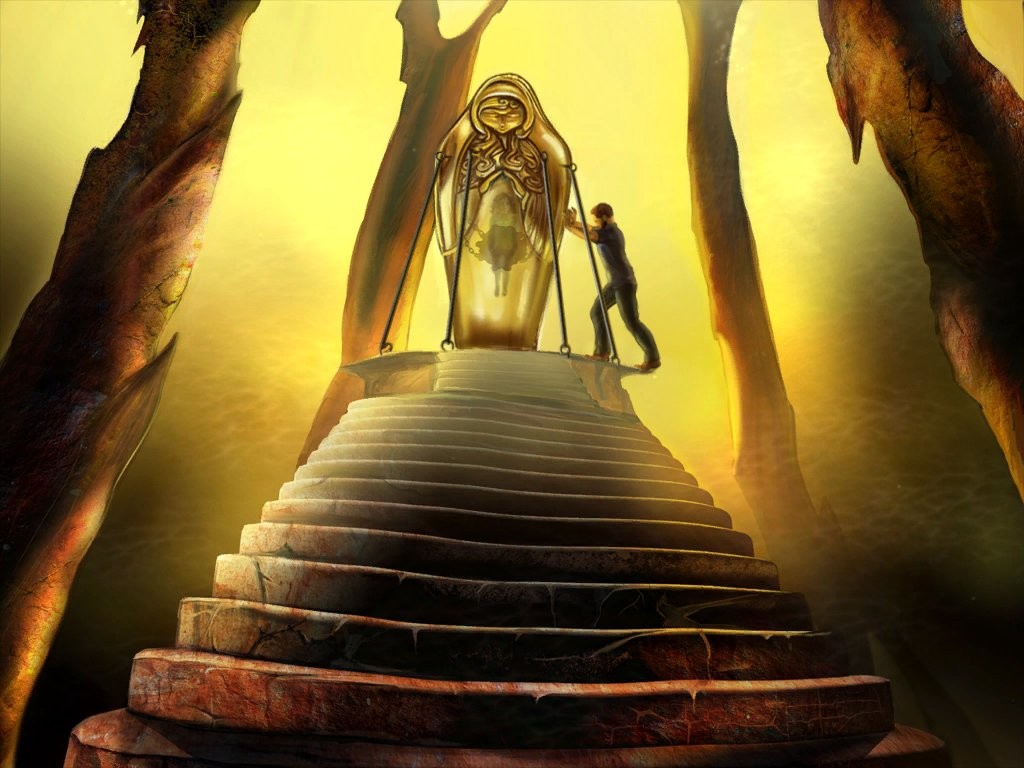
Despite being referred to as a Vampire Saga, GO!Games’ Welcome to Hell Lock has nothing whatsoever to do with 2009’s Pandora’s Box. It also doesn’t have much to do with vampires, at least until the end of this hidden object adventure filled more with spectral visions and other mystical phenomena than bloodsucking creatures of the night. It does take place in Hell Lock, at least, as the once peaceful small town of Hill Lock has ominously been dubbed by the now-dead or missing locals. With no introduction beyond a sepia-toned, comic-styled cutscene of a young man crashing his motorcycle, you’re unceremoniously dropped at the town gate with no memory of who you are and no obvious means of escape, as the passage out is blocked by a cave-in of ever-burning underground mines. To make sense of what’s happening and (hopefully) get out, you’ll need to head into town, completing repetitive item hunts and solving a host of inventory puzzles as you go.
While the first game favoured traditional hidden object hunts over lite adventuring, here the focus seems the reverse – at first. There are many screens to explore in, around, and even under Hell Lock. You’ll investigate a residential house, the fire station, and local theater, among others, before finally descending to the still-smouldering mining caves beneath the streets. There is really only one standalone logic puzzle to solve, in the form of a rotating Venn diagram near the end. You’ll also complete a simple paint-by-numbers task, operate a magnetic crane, and crack a few combination locks with easily-identified clues, but for the most part all puzzles involve simple inventory application. Some items are picked up from the main environment, twinkling rather blatantly so you can’t fail to notice them. Others can only be acquired by scouring through screens for lists of random items.
For the first half of the game, there are very few object searches to contend with, but about halfway through its nearly-three hour duration, the developers obviously ran out of ideas and decided to simply recycle old ones to double the play time. Both HOG scenes and individual items begin repeating annoyingly, although not consistently. I’m sure there were some screens I never revisited, yet a couple I visited almost four or five times in total. (Perhaps the repeats are randomly chosen, though I wasn’t inspired enough to start over to find out.) The screens are often quite cluttered, making it difficult to find every item, but the game adds an unusual help feature, as any item on the list close to where your cursor is pointed is highlighted in green. This is very useful for finding those last few stubborn items (though the usual recharging hint option exists as well), but the downside is how often you’ll inadvertently be tipped off about items you aren’t even looking for yet. With no way to shut the feature off, this may end up feeling more like a hindrance to your enjoyment than a help.
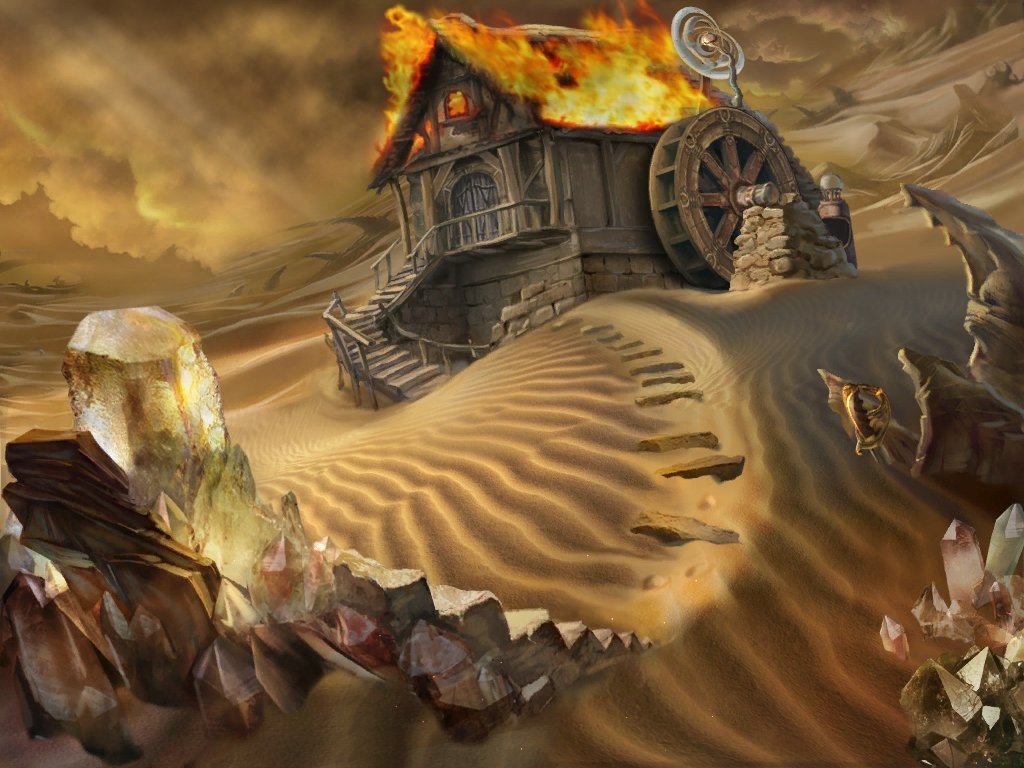
As the HOG searches come more often, they’re also activated more randomly across town. There’s nothing to alert you to the fact, though the game does include a welcome “map” that shows thumbnails of all locations. Not only can you quick travel to any destination from there, it highlights any screens with currently active puzzles and item searches. Unfortunately, there’s too much reliance on this feature, so expect to begin referencing it constantly in lieu of any intuitive progression of tasks. That’s too bad, because the adventuring premise is a solid framework in its own right, whether you’re repairing equipment, restoring power, eliminating a bug infestation, or even making holy water. The scenery looks good too, hand-drawn in a realistic style using subdued colours, as all the action takes place at night. There is no voice acting at all, and the music is limited strictly to understated background ambience that’s suitably haunting without ever being particularly scary.
There’s no one alive in Hell Lock except you, though you’ll frequently see flashes of ghosts as you enter new areas and spot one recurring half-man/half-smoke creature apparently stalking your progress. The playable character never comments on this, whether oblivious or unperturbed; nor does he seem at all surprised that his camera can reveal hidden blood-marked rubies when the icon flashes on-screen. Indeed, this game does very little to flesh out its storyline, seemingly content to throw arbitrary spooky events at you with no explanation of any kind (ever). That’s not entirely unusual for a casual game, but when the tale does suddenly lurch forward at the game’s climax, it’s completely disconnected from the events that have transpired to that point. Why does your face appear on a “Wanted” poster outside the Sheriff’s office? Why does a skeletal bird transform to a real one and fly off? Why are you collecting “invisible” gems and why can you see ghosts? You won’t get answers to any of these questions, though perhaps they’re still to come, as a teaser clip following the credits hints of more to follow. I’d be happy to see another Vampire Saga, though only if it’s more like the first ninety minutes here than the toothless second half.

Millenium Secrets: Roxanne’s Necklace
by Jack Allin
Diamonds may be a girl’s best friend, but the precious stones in Roxanne’s Necklace may just be the most destructive element on the planet. That’s the premise behind the second installment of Jet Dogs Studios’ Millennium Secrets series. This time around, once-reluctant adventurer Kate McCormick is now an FBI Special Agent, tasked not only with tracking down a rogue agent, but also securing a set of crystals dating back to Alexander the Great. Her investigation takes her to far-flung locations from mountain peaks to ocean floors, though most of what Kate does is solve puzzles and collect objects – lots and LOTS of objects.
Don’t be fooled by that description, however, as this game is anything but a traditional hidden object adventure. There are about a dozen standard lists of items to find in self-contained screens, but for the most part everything you’re looking for can be found in the main environments you explore. But not quickly, and not easily. At times you’ll simply be looking for individual tools and keys to use as regular inventory, but usually you’ll need to find multiples of the same item, whether it’s machine diodes, wires, chemicals, photos, vase shards, even pointy sea urchins. Sounds simple, but unlike most casual games, here almost all scenes can be rotated in 90-degree increments, significantly expanding the number of screens to scour. Some objects can only be acquired after completing other objectives first, while some are just plain hard to spot in their own right. Finding nondescript herbs in a jungle will likely having you pounding the hint button if you’ve chosen the harder difficulty setting, which doesn’t display intermittent twinkles to alert you to interactive areas. Or you could just access the quick travel map, which helpfully identifies all areas with items available or goals to complete.
You’ll also have numerous logic puzzles to solve along the way. There are plenty of standard types here, from assembly puzzles to marble poppers to coded and coloured wire connections, but most do a good job of adding a twist that makes them much more challenging. Gear puzzles include movable belts, tile jigsaws move pieces in attached pairs, and staggered rings must be aligned so that no patterns overlap. Although the puzzles start out fairly easy, they get increasingly difficult as you go. One hexagon slider almost drove me to the puzzle skip option, and a couple finally did, like mixing primary colours to light crystals – a simple enough concept, except the actual goal isn’t clear and there’s no feedback to gauge where you are going wrong or why. On the other end of the difficulty spectrum, whenever a secondary clue is involved, the information is automatically displayed for you on the appropriate puzzle screen. It’s very helpful to not have to memorize a lock sequence even momentarily, but it means you really don’t have to pay much attention. Just click on everything with a hotspot, and you’ll be handed the info you need when the time is right.
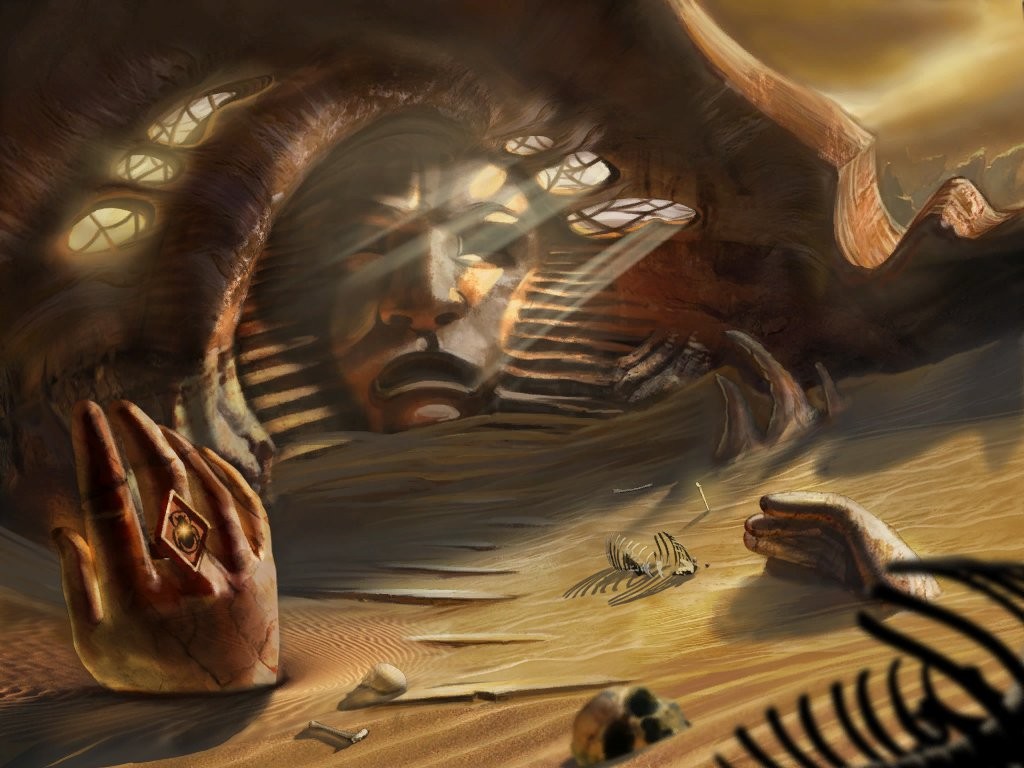
All this gameplay adds up, and it could easily take you five or so hours to get through the game. Unfortunately, much of it feels like padding, as it just takes a long time to scrutinize each four-sided screen, then click ahead to the next location and lather, rinse, repeat. The items may change, but the formula never does. This functionality comes with a graphical price, too, as the game is presented in a rather unappealing 3D, with muddy textures and very little artistry. There’s a nice selection of locales all told, from the European Alps to a museum library, a tribal village, and even a submerged shipwreck, but you’ll spend plenty of time in drab buildings as well, and most scenes are sparsely decorated and shown at a distance, making for a very dull visual experience. Character models are decently done, though the lip-syncing is atrocious. You could read the intrusive subtitles instead, but the game is fully voice acted to a fairly high standard, so there’s really no need. The rest of the audio is forgettable, with minimal sound effects and a generic sci-fi sort of background tune playing at times. That suits the vibe of the story, which teases of extra-terrestrial involvement and secret societies, but never does anything with them besides sending you on yet another scavenger hunt, right up to the anti-climactic non-ending. If you’re tired of all the same-old hidden object games, Millennium Secrets: Roxanne’s Necklace will certainly be a change of pace at first, though expect it to wear out its welcome before the end, so don’t expect a gem.
Latest Gaming Articles
All Articles