


How Starcraft 2’s Rich Lore Drives it Forward

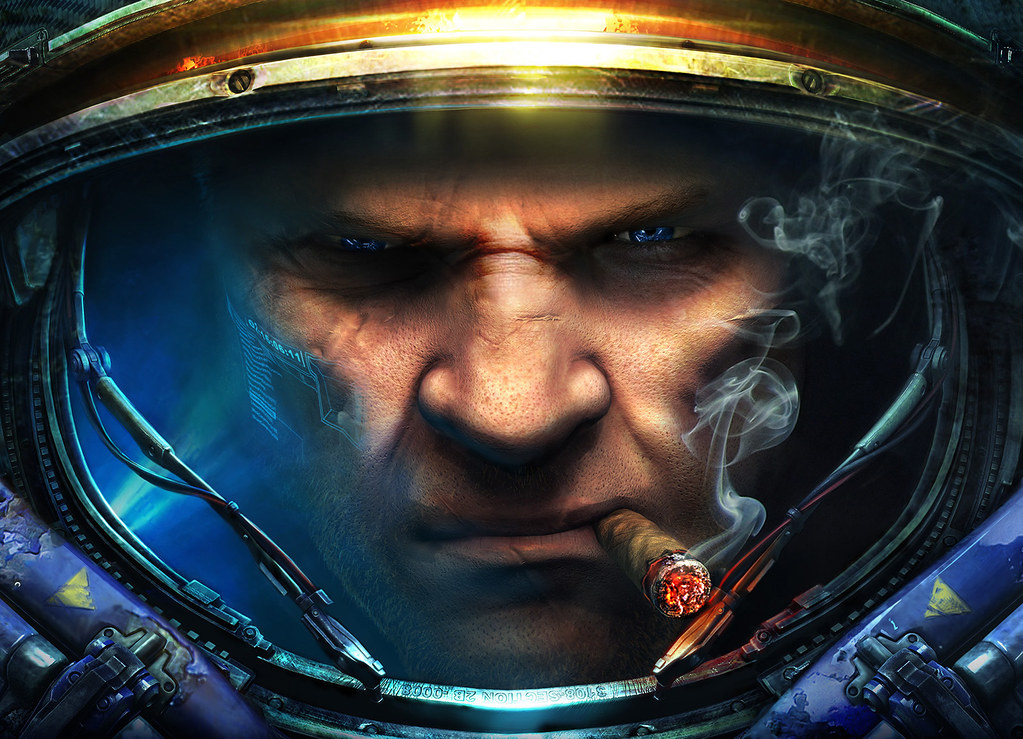
When it comes to adventure games, military science fiction offers so many exciting opportunities. Reah: Face the Unknown alone sees you playing as an investigative journalist on an ultra-secret mission to uncover a military base on a barren and uninhabited planet. Interesting premise, right? These are the kinds of stories you can enjoy with military science fiction. To see the genre at its finest, though, you’ve got to look at the game that does it best: Starcraft 2.
This heart-pumping story of rebellion, unity, and survival is considered one of the greatest video games ever made because of its gameplay, mechanics—and, most importantly, some incredibly immersive lore that allows you to truly engage with the game in more ways than one. With both Starcraft 2 and the original remastered StarCraft coming to Game Pass soon, you might want to try it out for yourself.
Before you do, here’s everything you need to know about the franchise’s universe and how it’s helped drive the game forward in the world of military science fiction.
The rise of Starcraft 2
Starcraft 2 was developed by Blizzard Entertainment, a video game company that’s also known for Overwatch and the Warcraft series. When it came out with Starcraft in 1998, however, it essentially launched what video game critics believe to be a revolutionary title in the real-time strategy genre. In just a decade, Starcraft sold more than 11 million copies and became one of the best-selling PC titles of the time. By the time Starcraft 2 came out in 2010, Blizzard had a solid fanbase anticipating its release. As a result, the sequel skyrocketed in popularity almost immediately. It sold over three million copies a mere month after it hit the shelves, making it the fastest-selling real-time strategy game at the time.
In fact, this title is so successful that it’s still widely played today. That’s arguably because the improvements Blizzard in Starcraft 2 mean fans can continue to engage with the game in multiple ways, keeping it relevant even 14 years after its release. Free to play since 2017, it doesn’t require hefty system requirements and comes with comprehensive tutorials that are easy to follow, making Starcraft 2 highly accessible. In single-player mode, you can go through three story-rich campaigns, resulting in hours of gameplay—and once you’re through, there’s tons of multiplayer content left to consume.
That content has made the game especially popular in esports, with professional Starcraft 2 tournaments hosted by ESL Gaming offering enticing prize pools of up to $1.3 million. The best part is that non-gamers aren’t left out in the process. Because of the exciting nature of esports competitions, the game’s fans can still tune in to tournaments. They can even go further by making their viewing experiences less passive. One thing they can do is speculate on competitive matches, something primarily facilitated by the Starcraft 2 odds created by the game’s extremely competitive mechanics. Because its plot focuses on a war involving three races, the resulting maps and resource management aspect of the game require a high level of strategizing that can easily turn the match in favor of one esports team or the other—something that makes predicting the ultimate winner more satisfying to accomplish. Starcraft 2 fans can also try a number of esports quizzes through online communities, with Discord channels hosted by Thunderpick being one place where they can pit their knowledge of the game against those of fellow enthusiasts.
Because of all these factors, it’s thus no wonder that Starcraft 2 is still one of today’s most popular real-time strategy games. It currently attracts roughly 110,553 monthly active players and nearly 200,000 in peak tournament viewership. Thanks to its lore, it continues to reach new heights—so let’s dive deeper into what it involves.
The lore driving Starcraft 2 forward
Much like its predecessor, Starcraft 2’s sci-fi aspect infuses the game’s setting itself, taking place in a far-flung corner of the Milky Way during the 25th century. The military side of this in-game universe revolves around an ongoing conflict between three races: the Terrans (descendants of humans from Earth who now live in space due to a failed colonization attempt), the Zerg superspecies, and the technologically advanced Protoss. The lore behind these Starcraft 2 races easily works its way into each campaign, with the strengths and weaknesses of each integrated into the title’s gameplay mechanics:
Protoss: because of its advanced civilization, this is considered the game’s strongest race and is featured in the Starcraft 2 expansion Legacy of the Void. As a result, playable characters like Trap and Zest allow you to immediately equip all units and buildings with regenerative shields and let you access the Warp Gate. This structure is unique to the Protoss and allows you to rapidly produce units in any part of the map covered by the Psionic Matrix but not the fog of war.
Terrans: featured in the main Starcraft 2 release, Wings of Liberty, they are new to this part of the galaxy and do not have the technological and biological perks available to the Protoss and Zerg races. However, they are considered only second to the Protoss because of their unparalleled survival skills. Playable characters like Maru and TY thus have higher mobility and defense stats. Terrans can also construct buildings anywhere—many of which can fly—and can capably repair their buildings and units.
Zerg: arguably the least preferred race of the three, the Zerg is an amalgamation of multiple species combined into a single Swarm. Featured in the aptly named Heart of the Swarm expansion, the Zerg solely relies on its biological advantages and does not use technology. Playable characters like Rogue and Dark thus come with a speed advantage and let you construct units and buildings that regenerate hit points over time.
As evidenced by the above, the challenge in Starcraft 2 lies in resource management, defending bases, and eliminating enemy forces. That focus on Economy, Technology, and Army ties into the game’s lore—which involves leading a Terran rebellion, uniting the Zerg Swarm, and saving the Protoss from extinction. As such, resource management in particular is a key element of the game, with minerals and Vespene Gas being the main ones used in Starcraft 2. Buildings must be constructed to gather these resources, increase your supply of units, and aid in static defense. Meanwhile, units are essential for unlocking abilities and spells, new works, and armor upgrades. Combined with the attributes of Starcraft 2’s various races, these mechanics seamlessly tie back into the realities of wartime management, offering multiple ways to engage players as they strive to beat other races and accomplish the game’s objectives.
Conclusion
Starcraft 2 is exceedingly successful for a reason. Thanks to a rich in-game universe that ties the lore behind multiple races, their attributes, and their cultures into a number of its gameplay mechanics, players and spectators alike can expect the outcome of every single-player and multi-format campaign to vary every time. The excitement that comes with that unpredictability keeps people coming back for more—and with rumors of a potential Starcraft 3 release currently in the works, they can look forward to even more expansions on that lore that will drive the game even further in the genre of military fiction.
Latest Gaming News
All News