

The Zork source code is available to everyone, but why does it matter?


The classic Zork text adventure games have been made open source by Microsoft. The original trilogy, consisting of Zork I, Zork II, and Zork III, is now fully available for play, exploration, and study.
The Zork source code was anonymously posted online many years ago, but now Microsoft has made the original games open source under an MIT license. So, why does it matter?
The legacy of Zork

Zork I: The Great Underground Empire is an interactive fiction game written by Marc Blank, Dave Lebling, Bruce Daniels, and Tim Anderson in the 1970s, which then went on to be Infocom’s first published game in 1980. The objective in Zork I is to collect the Nineteen Treasures of Zork and install them in the trophy case. Just a year later, Zork II: The Wizard of Frobozz continued where its predecessor left off, but this time, players are tasked with collecting the treasures needed to take down a wizard in the Great Underground Empire. The final entry in the series, Zork III: The Dungeon Master, marks the end of the story as players end the adventure into the Great Underground Empire by becoming the new Dungeon Master.
Activision purchased Infocom in 1986 and went on to release Zork Nemesis: The Forbidden Lands, the first entry in the Zork franchise to not be under the Infocom label. This built upon the foundations that the Zork trilogy already established, while using pre-rendered graphics and a point-and-click interface. However, the narrative in Zork Nemesis took a darker tone and was absent of the humor fans came to love, leading to the game receiving a mixed reception at launch. This shift showed the versatility the game could accomplish, while playing a role in inspiring a whole new wave of Myst-like adventure games.
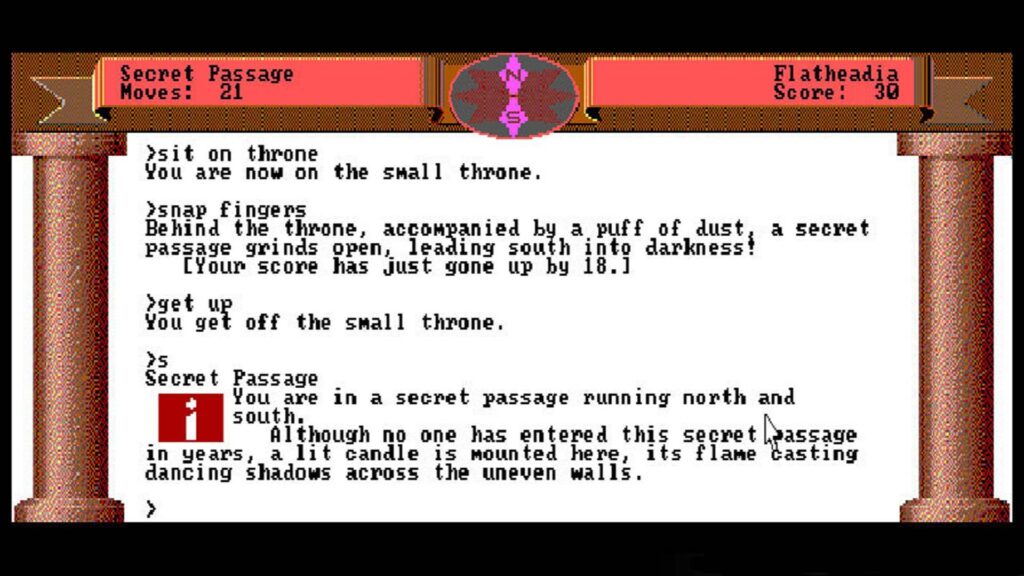
On the surface, Zork appears to be a text-based adventure with a simple format, but Zork was essentially an open-world RPG before the industry even knew what that was. To play Zork means players using simple controls to roam freely, trying and failing along the way. The lack of instructions meant that players had to progress by manipulating a world that was brought to life by the player’s imagination, and solve puzzles with more creativity than a lot of games even today don’t allow for. Also, Zork played a role in broadening the adventure games genre further by displaying puzzle logic and problem-solving in point-and-click games, while enabling a first-of-its-kind immersive exploration experience that was a huge step forward for interactive fiction.
Not only can the influence of Zork continue to be felt in modern gaming, but it also prompted the creation of Zork spinoffs. Legends of Zork, released in 2009, was one such example, and it invited a whole new audience to Zork. It was an MMO that offered more casual Zork gameplay, focused on fighting monsters and solving puzzles for the in-game currency, Zorkmids. It featured loot collecting, and characters had class, leveling, equipment, and skill systems.
How did Zork go open source?
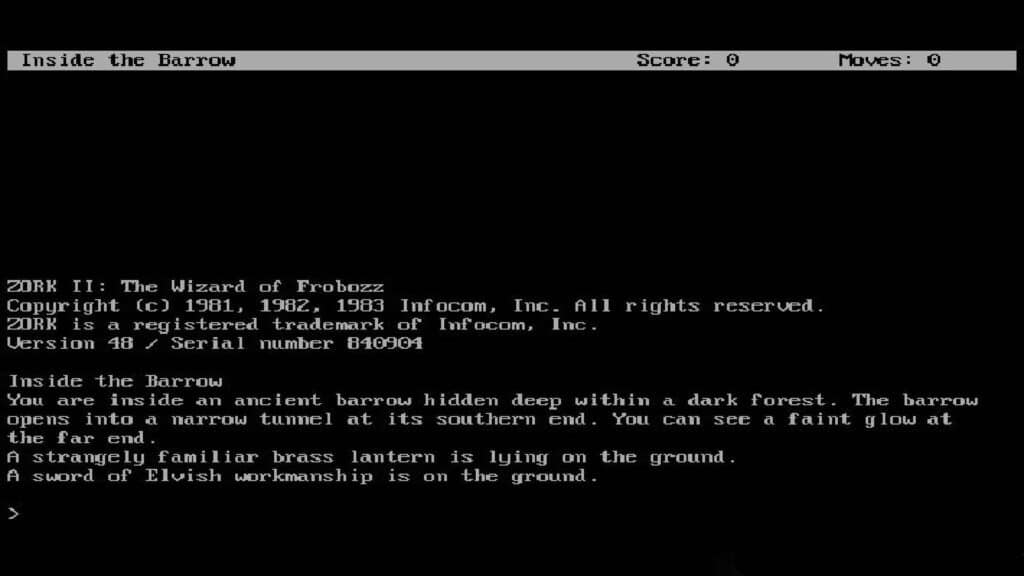
After Microsoft acquired Activision in 2023, the industry giant became the owner of all Activision IPs, including the Zork games. On November 20, 2025, Microsoft announced that Microsoft’s Open Source Programs Office (OSPO), Team Xbox, and Activision are making Zork I, Zork II, and Zork III available to all under the MIT License.
Rather than creating new repositories for the Zork source code, Microsoft is collaborating with Jason Scott, a digital archivist from the Internet Archive, and has officially submitted pull requests to the historical source repositories of Zork I, Zork II, and Zork III. Those pull requests add an MIT license and complete the formalities of documenting the open-source grant.
Each repository includes:
- Source code for Zork I, Zork II, and Zork III
- Accompanying documentation, where available, such as build notes, comments, and historically relevant files
- Clear licensing and attribution, via MIT LICENSE.txt and repository-level metadata
Keep in mind that the source code itself is all that’s being published. It doesn’t include commercial packaging or marketing materials that were used at the time, and it doesn’t give rights to any trademarks or brands, which remain the property of their respective owners. It does come with the original ZIL files (Zork Implementation Language), the code that powered the Zork video game world logic.
One small step towards game preservation
As time goes on, far too many games become lost media, and the Zork text adventure games would’ve been a significant loss. When titles are delisted, servers are taken offline, and technology moves on, a piece of history is left behind. When the original source code disappears, it becomes impossible to see how systems were built, how puzzles were constructed, and how a world was built. Sure, emulators can keep a game running, but they are no longer largely accessible for study or play.
Take Doom, for instance. When id Software released the Doom source code, it didn’t just preserve the game and its legacy. The result was years of modding, academic study, and even the birth of new subgenres. Arguably, Doom hasn’t survived this long because of nostalgia, but it survived because the code went public and allowed for the game to be built upon in a way id Software itself wouldn’t be able to keep up with. For academics and developers alike, the Zork source code is invaluable for studying the game and the wider interactive fiction genre that the Zork text game pioneered.
What’s next for Zork?
While neither Activision nor Microsoft has announced that any new Zork games are in development, the Zork trilogy going open source means fans now have the opportunity to create mods and entirely fresh Zork experiences. New Zork story expansions could be built, new features could be added, there’s the opportunity for remakes, and just to throw an idea out there, Zork could run on a VR headset.
In the Zork announcement on the release of its source code, Microsoft commented:
We will use the existing historical repositories as the canonical home for Zork’s source. Once the initial pull requests land under the MIT License, contributions are welcome. We chose MIT for its simplicity and openness because it makes the code easy to study, teach, and build upon. File issues, share insights, or submit small, well-documented improvements that help others learn from the original design. The goal is not to modernize Zork but to preserve it as a space for exploration and education.
FAQs
Can you still play Zork?
Yes, you can still play Zork. The Zork Anthology includes Zork I, Zork II, Zork III, Beyond Zork, Zork Zero, and Planetfall. The original Zork trilogy can also be played today thanks to the public release of its source code.
Why is Zork so famous?
Zork was the first successful interactive fiction game and helped inspire later video game genres such as RPGs and point-and-click adventure games.
How many Zork games are there?
The Zork series consists of eleven commercial games, along with several spin-offs.
What was the last Zork game released?
Zork: Grand Inquisitor was the final official game released in the Zork series.
Is Zork difficult to play?
Yes, Zork is considered difficult due to its complex puzzles and lack of in-game guidance.
How do you access the Zork source code?
The Zork source code is available on GitHub, with separate repositories for Zork I, Zork II, and Zork III.
References
Latest Gaming Articles
All Articles