


Ron Gilbert, Dave Grossman – Return to Monkey Island

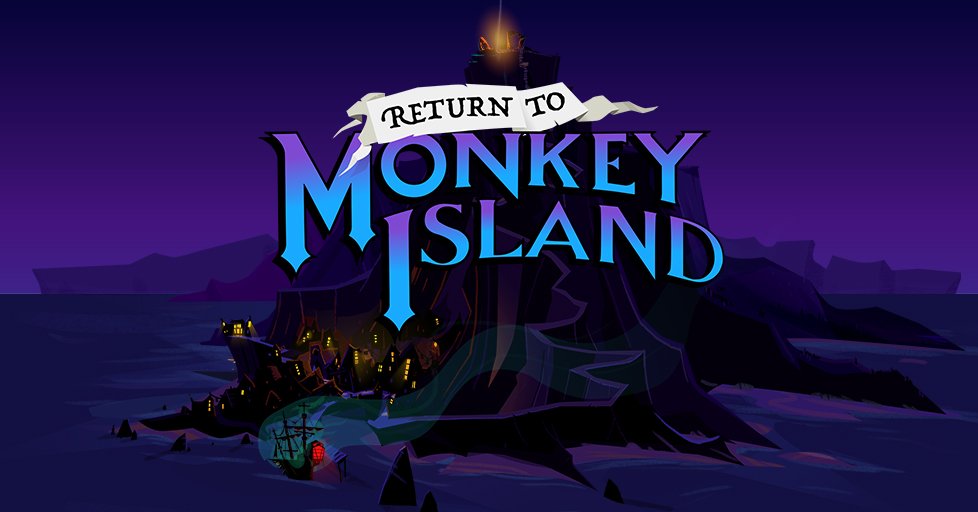
Ron Gilbert hates April Fool’s Day. At least, that’s what he’s led readers of his Grumpy Gamer blog to believe for the past eighteen years. But he’s also a fan of letting ideas gestate. His last release, Thimbleweed Park, was a spiritual successor to his very first, 1987’s Maniac Mansion. The game he made before that, The Cave, spawned from an idea that he’d had even before Maniac Mansion. And he’s been ruminating about returning to Monkey Island ever since Monkey Island 2: LeChuck’s Revenge came out more than thirty years ago.
So when Ron posted this on his blog on April 1, fans had good reason to hope:
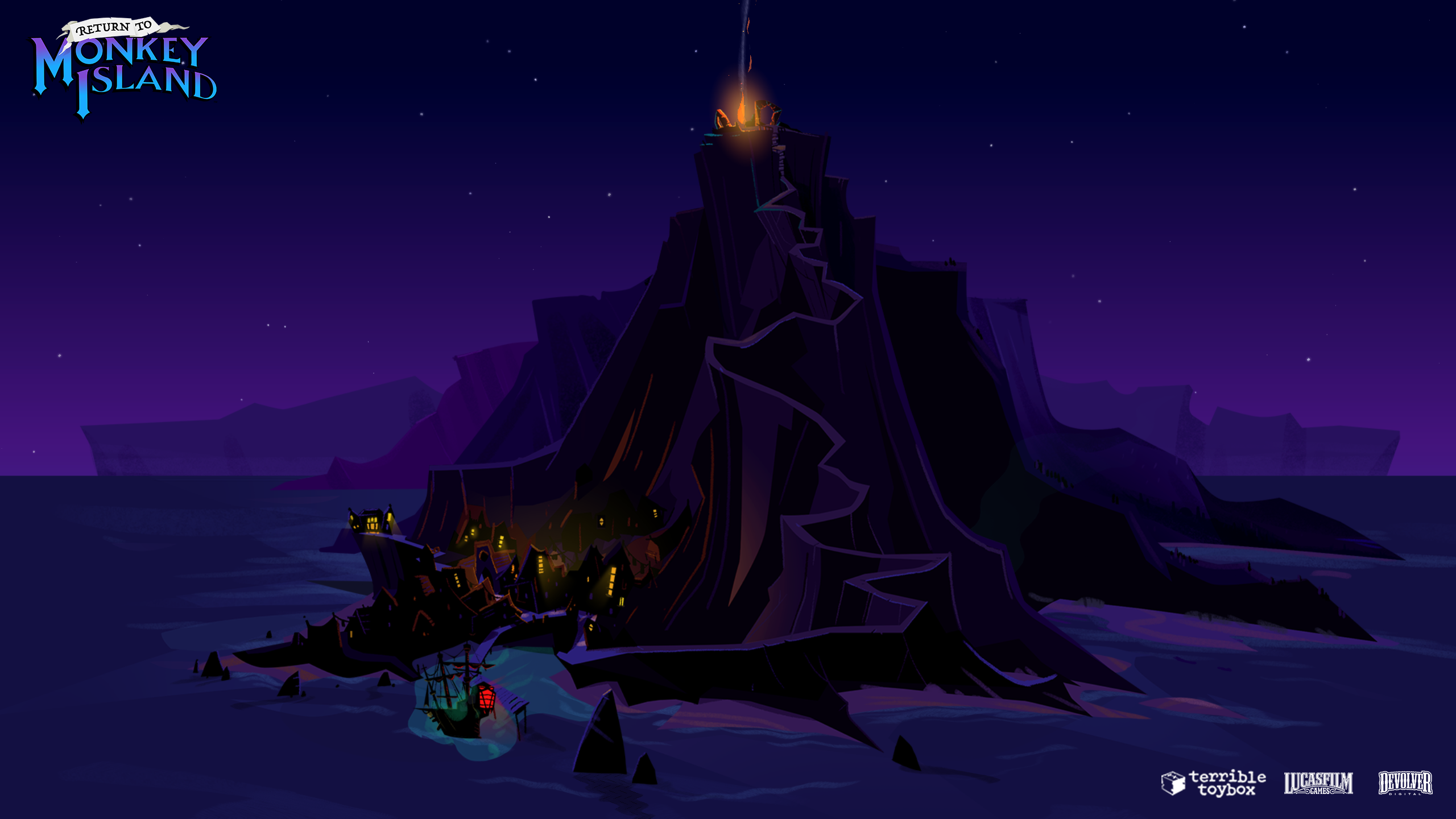
Three days later, his offhand announcement was made official. Return to Monkey Island, the sixth installment in the genre-defining franchise that Ron conceived at Lucasfilm Games, will be out later this year, with Ron Gilbert and his Secret of Monkey Island and LeChuck’s Revenge collaborator Dave Grossman at the helm.
Ron, you have a long history of hating April Fool’s Day. How did this start, and at what point in that long history did the idea of announcing this game become part of it?
Ron: I think I’ve always disliked April Fool’s. It’s mostly a quality issue—there’s so much crap out there on April Fool’s, and the majority of it is just bad. It’s bad humor, it’s bad everything. And so I’ve just always hated it. I can’t think of an example, but I’m sure I’ve gotten sucked into an April Fool’s thing at some point, and you’re like “Arrrggghh” when that happens. I don’t like humor that’s based on practical jokes or making fun of people or putting down people, and it seems like that’s really all April Fool’s is, right? April Fool’s is just making fun of people and trying to dupe them. And so on my blog, all the way back to almost the beginning, I’ve always said, “This blog will always be April Fool’s free.” And it kind of gained a little bit of a cult following; people come to it every year just to be reassured by my statement.
I don’t know when I first thought about announcing Monkey Island on April Fool’s. It was maybe about the time right after I wrote that If I Made Another Monkey Island thing [in 2013], and I just thought, you know—it was a weird fantasy, I was like oh, I’d buy the rights back, and I’d announce it on April 1, and it’d be great. And then when we did the deal for [Return to Monkey Island], I realized these dates might line up. If we get moving on this, April Fool’s actually might line up with when we’re able to announce it. So I kind of stuck the stake in the ground.
Dave: The first phone call that we had about the project included that plan of announcing it on April 1, and at the time I thought, “That’s a terrible idea. Oh no, we can’t do that. That’s the worst idea.” And then I slept on it, and then in the morning I was like, “That’s the greatest idea!”
What did you think of the reaction, first when people didn’t know that it was real, and then when they found out on April 4 that it was real?Ron: I was really pleased with the reaction on the first, because it was exactly what I wanted. Half the people thought, “There’s no way it’s true,” and the other half of the people thought, “It must be true.” People were citing the fact that I’ve always said my blog would be April Fool’s joke free, and so that was proof that this was actually true, which is great, right? And somebody online called it, like, “a wonderfully crafted adventure game puzzle,” which made me feel really good. You know, it was all this kind of weird intrigue.
I think the announcement went really well. The only part of the announcement I was a little disappointed with was that April Fool’s fell on a Friday, which means we really couldn’t announce it for real until Monday. There was more time than I would have liked to let it fester with some people. But other than that, I think it went exactly—better than I could have hoped.
Dave: The discussion over that weekend was great. I did see a poll from somewhere, where the people who said that it was an April Fool’s joke won out two-thirds to one-third.
Luckily polls don’t determine what actually happens! Ron, for a long time you’ve said that you wouldn’t make another Monkey Island game unless you owned the IP. And you’re in a situation now where you’re making the game, but Lucasfilm owns it, and Lucasfilm is owned by Disney. So can you tell us how Return to Monkey Island came to be, and how your thinking has changed around that?Ron: Well, I bought Disney, that’s how this all happened. [laughter] Yeah, I said I wouldn’t do it unless I owned it, and I certainly kind of poked around Disney trying to figure out whether there was any interest in that. What was very obvious was that they really liked Monkey Island, that Monkey Island meant a lot to the people at least in the Lucasfilm group of Disney. And that was just never going to happen. It’s not like Disney needs the money, and I could slip them some money, and yay, they can make their quarter or something. It’s just not a reasonable possibility for me to do. And I think the more important thing, rather than owning it, was that I really wanted to have creative freedom. I didn’t want to be making a game and having somebody tell me what I should make. It’s not a work-for-hire gig. So that was probably more important than actually owning it, was being able to make the game we wanted to make.
The whole thing came about because I was talking to Nigel [Lowrie] from Devolver. We got together, I think it was at PAX, and we just started talking. He had mentioned that he knew John Drake, that they were friends, and John Drake was in charge of, I think, the licensing at Lucasfilm Games. So he wanted to approach [John] about doing a Monkey Island, and I thought sure, let’s see if anything goes.
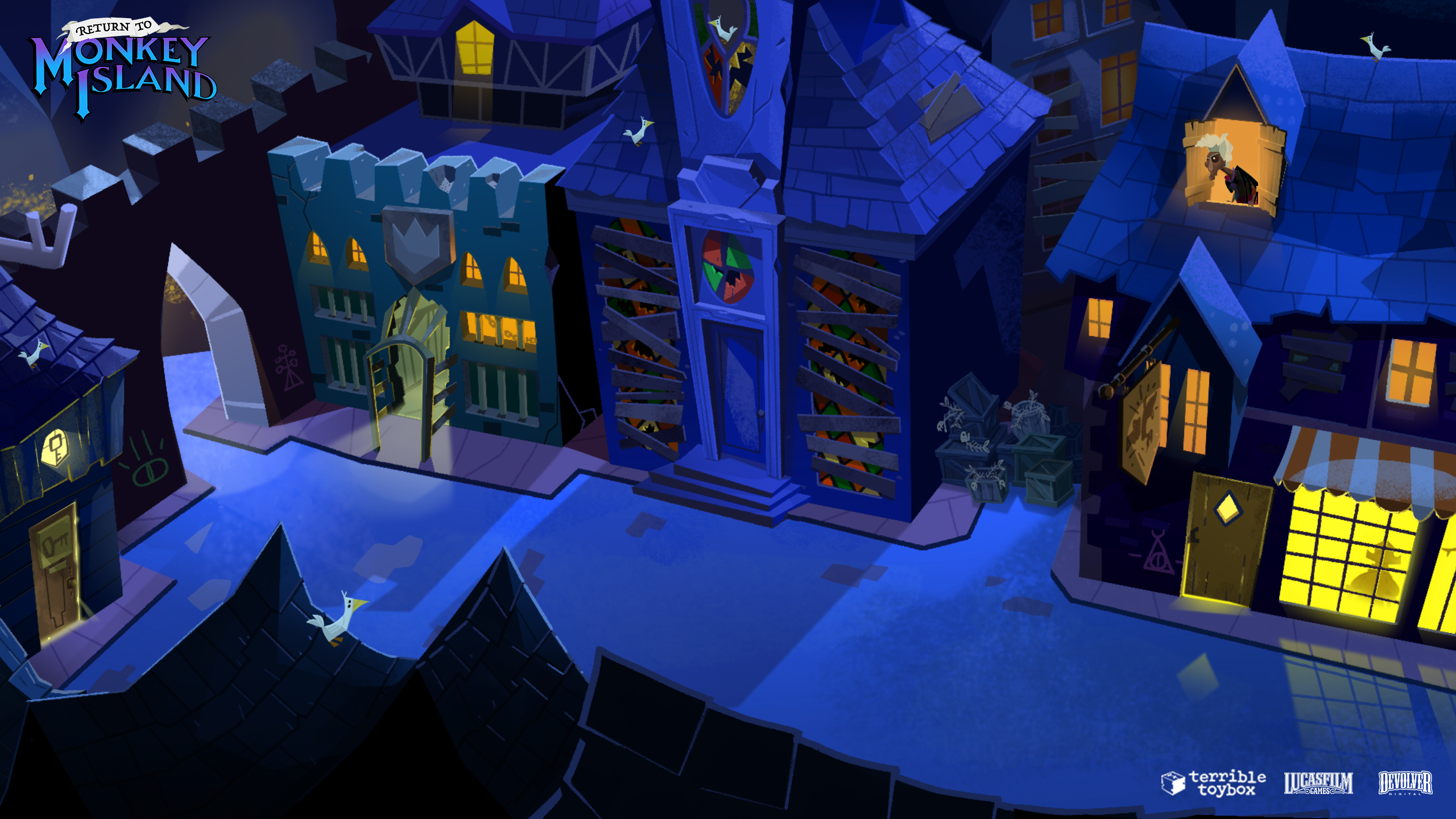
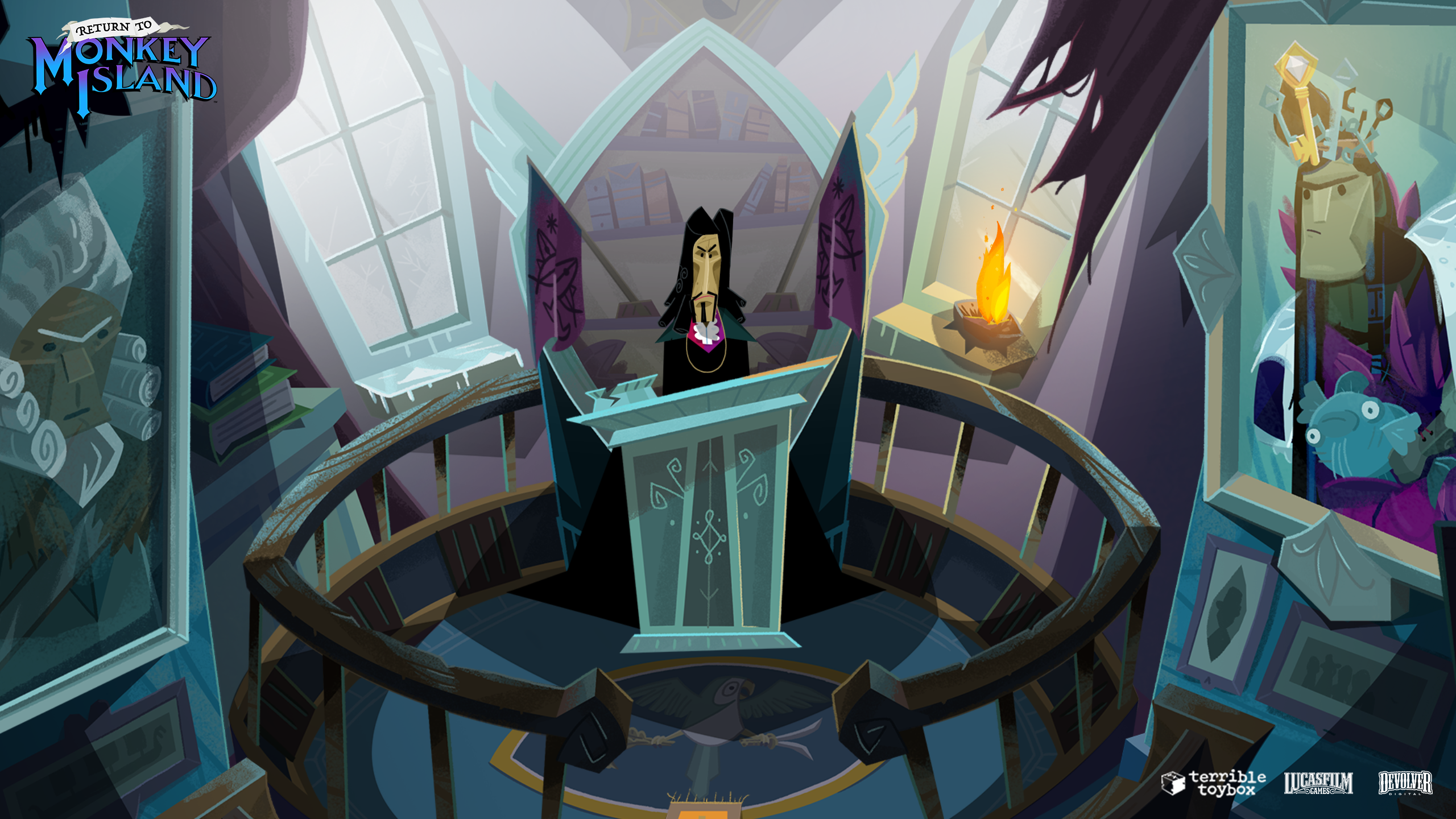
The courthouse of a chilly new island – Return to Monkey Island
So Nigel approached John Drake, and they had a conversation, and it turned out that Disney was willing to talk about it. How long ago was that?Ron: Maybe two years ago January was when we started discussions with them.
Dave: You had to have talked a little bit before then, because you called me about it in December.
Ron: Well, I talked to Nigel about it, probably at the PAX before that. And the thing I told Nigel is, “I need to think about this. I need to make sure that we have a good idea.” It’s obviously—it’s a game that’s just fraught with problems, just because of the historicalness of it, and I just wanted to make sure that we had a good idea. That’s when I called Dave, before that, and Dave flew up here [to Seattle], and we spent a couple of days just hammering out, “Okay, if we were going to make another one, what would it be?” We just thrashed all sorts of ideas and talked about what are the themes, and what do we want to say in the game, all that stuff. And it was after that discussion with Dave that I felt confident—“All right, I think we can make a good game.” And that’s when the discussion started up for real.
That would have been around three years after Thimbleweed Park came out. Were you thinking at that point about doing another adventure game? I remember right after Thimbleweed Park, you had thoughts about experimenting with other genres.Ron: Yeah, right after Thimbleweed Park, I started working on an RPG. And I worked on that for a while; I worked on that for about a year, but it just wasn’t coming together in a way I was happy with. So when the Monkey Island stuff came about, then I’m like, you know, I think I’m going to focus on this, rather than the RPG thing. I may go back to the RPG thing when [Return to Monkey Island’s] over, just because it is a game I really liked and was very interested in.
Dave: Sort of. Earplay had gone into a mode where it was mostly doing service work for other companies, and so there wasn’t a whole heck of a lot for me to do. So I had actually been specifically looking for what was my next project going to be, outside of that, and Ron and I had even earlier talked about another thing that we might do together. So lines of communication were open, and he called me up and said, “What do you think about this Monkey Island game; would you want to do that?” And I was like, “Yes! Yes! That’s exactly what I need right now.”
It was an easy answer, then?Dave: It was, yeah. You know, a chance to revisit the world and write some funny stuff and work with Ron again. A-plus, I’m in. I’m easy.
Ron: I think Dave was more enthusiastic than I was. I think I was a little more scared about the whole thing, and just thinking about, “Can we really do this? What if we fail?” I think Dave was a little more infectious with his enthusiasm, which really helped me, because it was like, “You know what? Dave thinks this is going to work; Dave is behind this. I can be behind it too; I can do this too.” So I think Dave helped out a lot.
.jpg "Screenshot for Ron Gilbert, Dave Grossman – Return to Monkey Island")
Dave: I had all those same fears and anxieties, but I didn’t want to let them get in the way of the fun.
Ron: Smart move, smart move.
Dave, you had worked on Monkey Island more recently than Ron had, on Tales of Monkey Island.Dave: Sort of. We both sort of technically worked on that. Tales was… so that was even, how many years is it now?
Dave: Yeah, so that’s certainly been a while, and my role in that was sort of different from what it had been on [Monkey Island 1 and 2], where [on Tales of Monkey Island] I was mostly making sure other people were doing a good job with the stuff that they were doing. And I got to crash a lot of story meetings and poke holes in a lot of pitches, but I didn’t actually write a single word for it. So this has been refreshing.
So, just so we’re all clear here, Devolver’s publishing Return to Monkey Island, you have complete creative control, and Lucasfilm is…?Ron: They’re the IP rights holder. I think they call themselves the “steward” of the property. I’m sure that probably has some legal meaning; I don’t know. But yeah, Devolver’s publishing it and then Lucasfilm is the IP holder, and that’s how that whole thing works.
And, as Terrible Toybox, you’ve been in charge of picking the team and making all the hires and overseeing everything?Ron: Yeah, we’re the developer, so we hire the team and figure all that out, do the design, programming, art—all of that other stuff is done [by] us.
Ron: I think we were twenty-five at its height. We’ve lost a couple people since then, just because we’re winding down, but I think it was about twenty-five.
How does that compare to the Thimbleweed Park team size?Ron: I think Thimbleweed Park never got above like fourteen or so, so it’s bigger than the Thimbleweed Park team.
Where are the extra people coming from? More art?Ron: It’s definitely more art; there’s a few more programmers… there might be like one more programmer. But most of it’s art. Just a lot more artists, a lot more animators than we had on Thimbleweed Park.
Ron: Yeah, it’s bigger budget. Also it’s a different art style; it’s a lot… harder’s not the right word, but there’s a lot more that has to go into it. So, you know, there’s several animators, several background artists. We have a dedicated storyboard artist; all Sarah [Thomas] does is storyboards for us. So every scene is all storyboarded out. We didn’t have that on Thimbleweed Park.
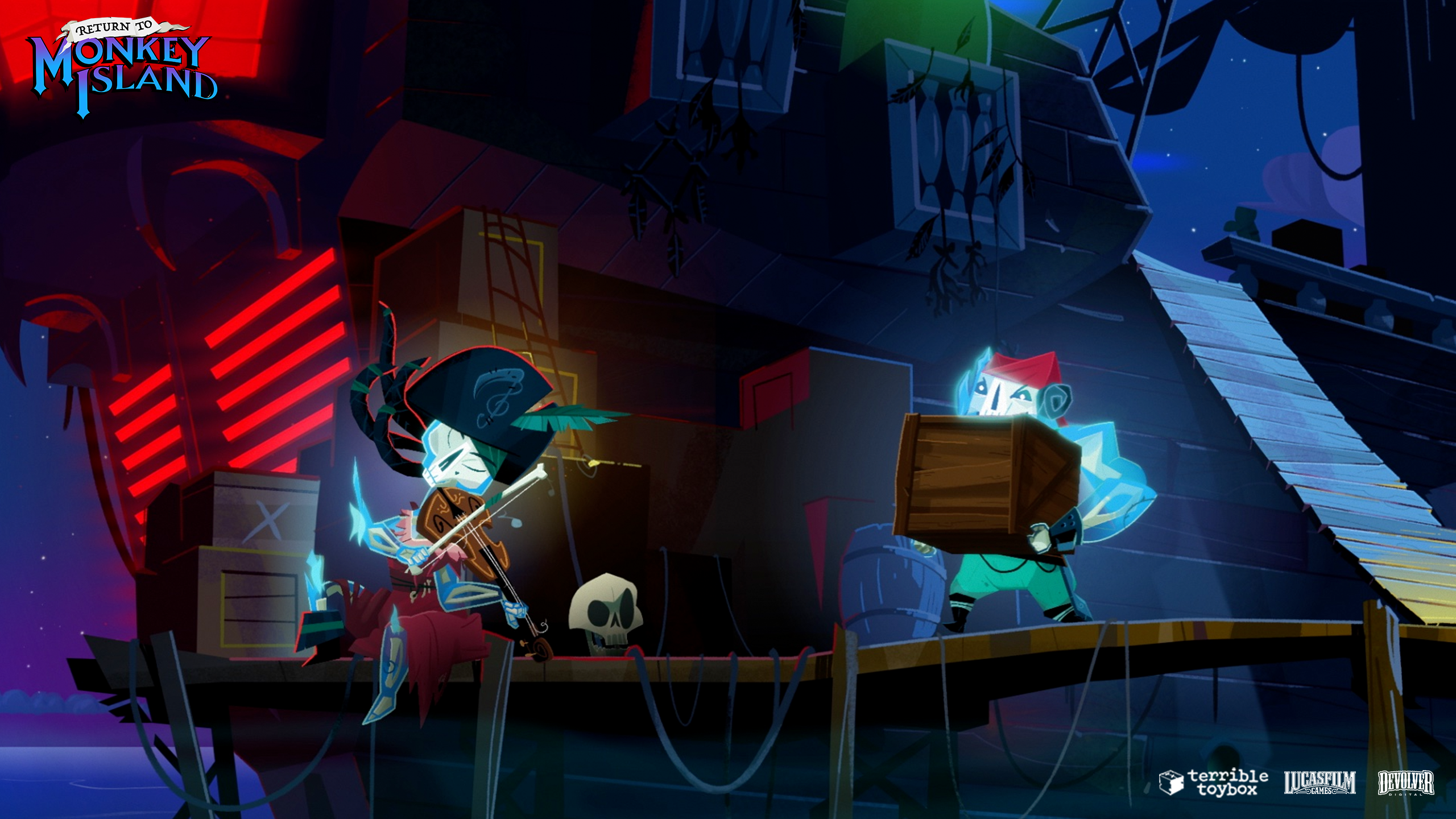
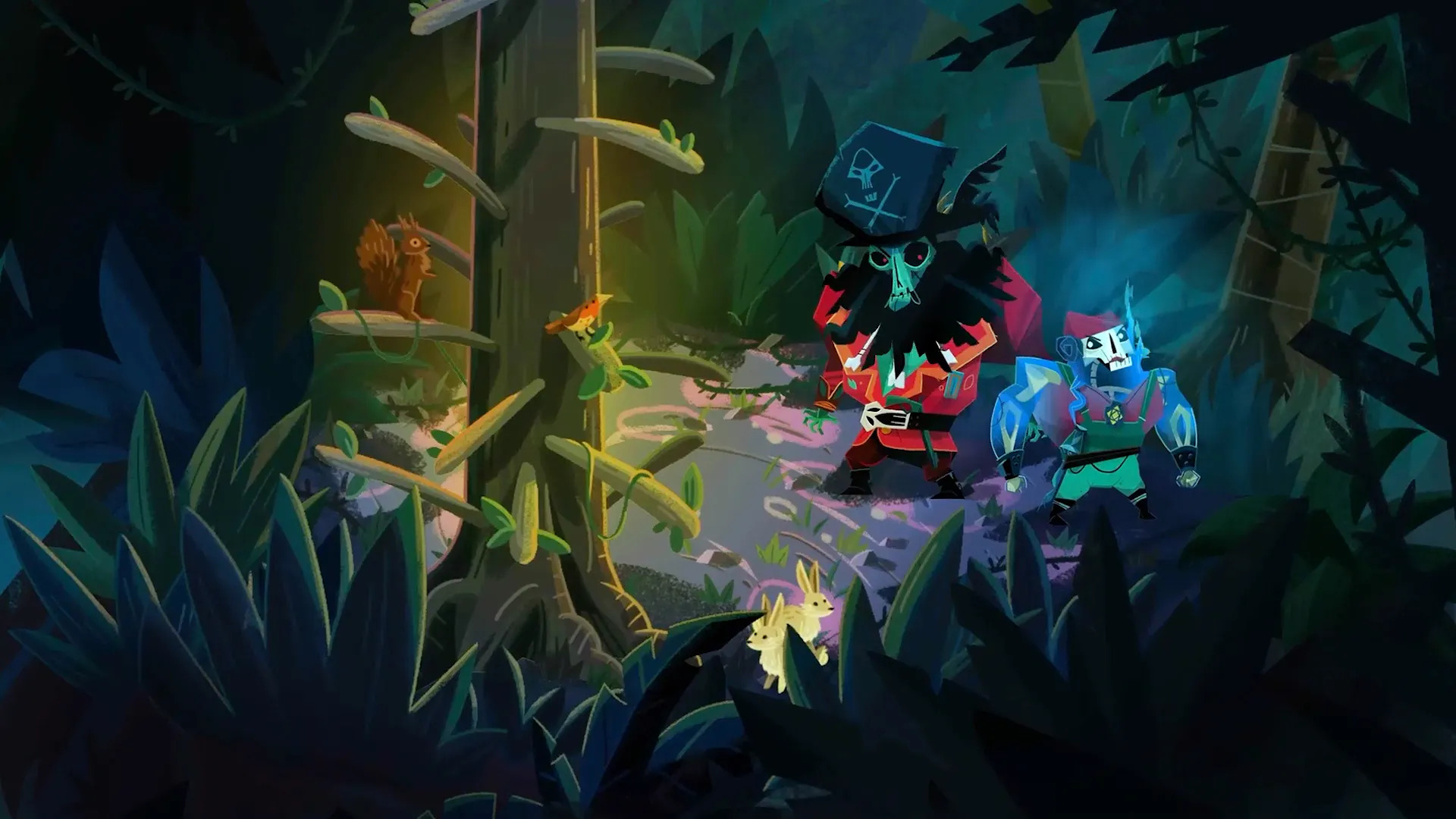
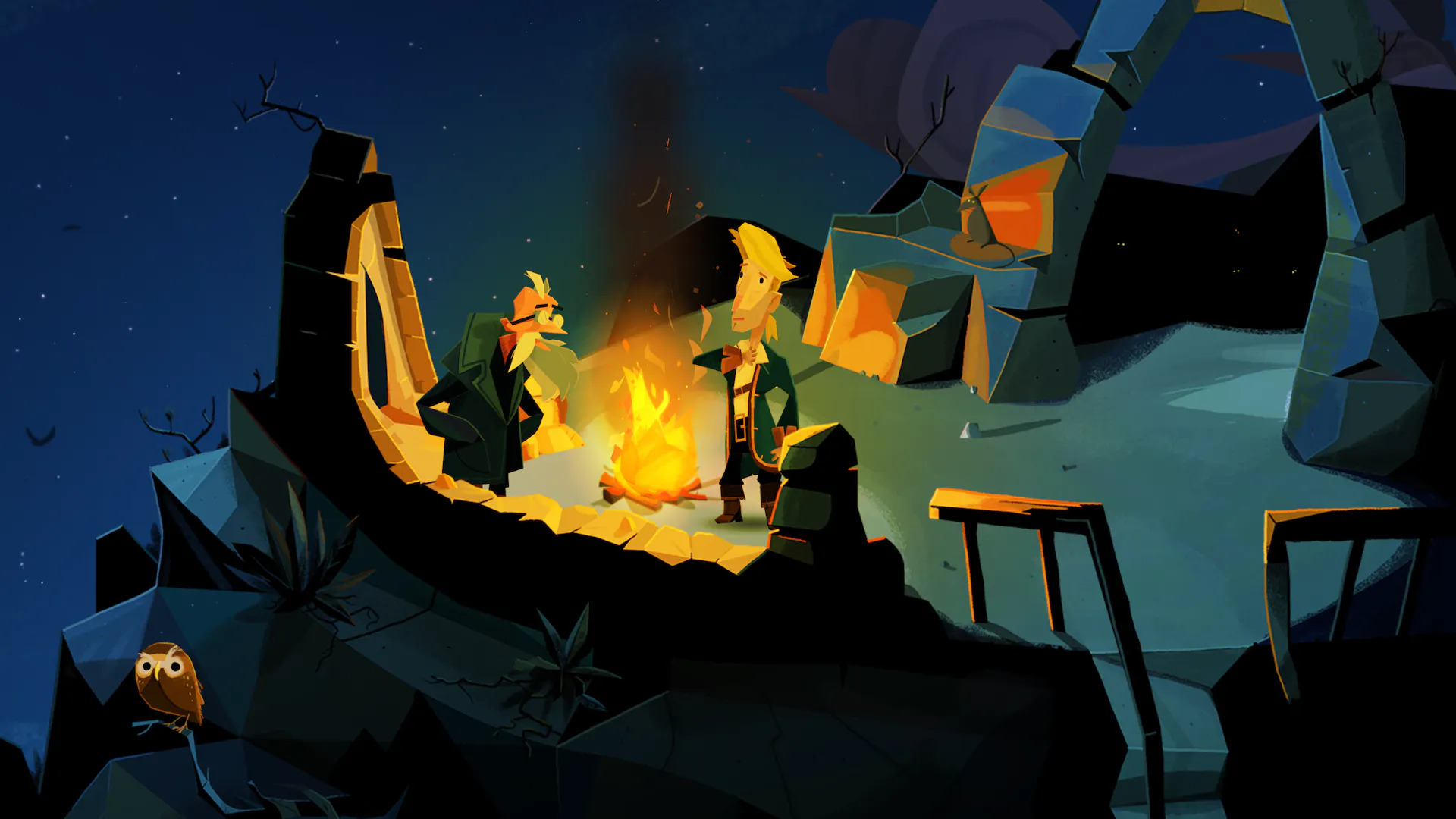
A mysterious and dangerous location on Monkey Island – Return to Monkey Island
How does it compare to the team size or the team breakdown you had on The Secret of Monkey Island?Ron: [laughs] I think—
Dave: Do you remember back that far?
Ron: I counted it up one time, and I think there were seven core members of that team, not including the test department. So it was a much smaller team.
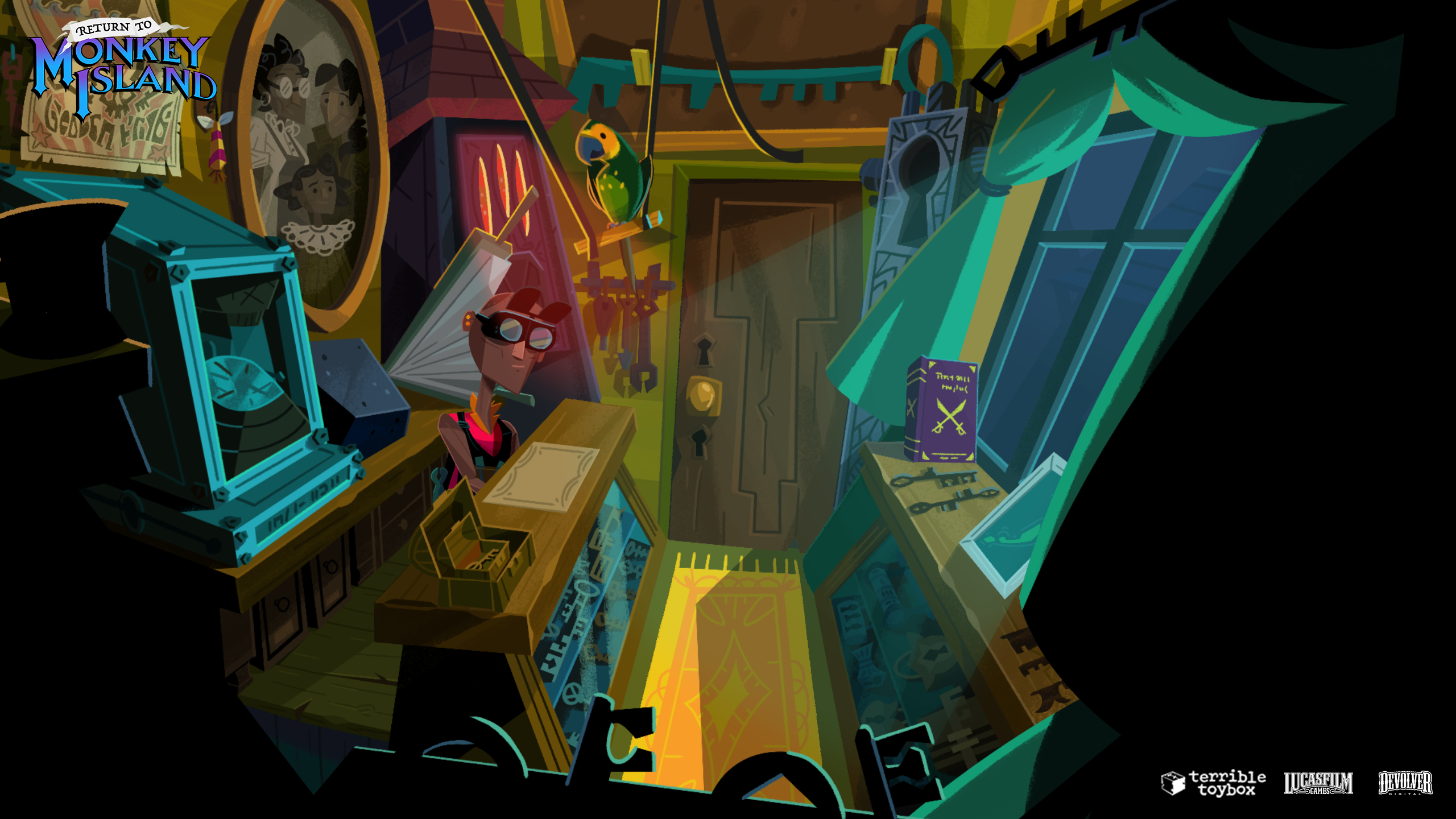
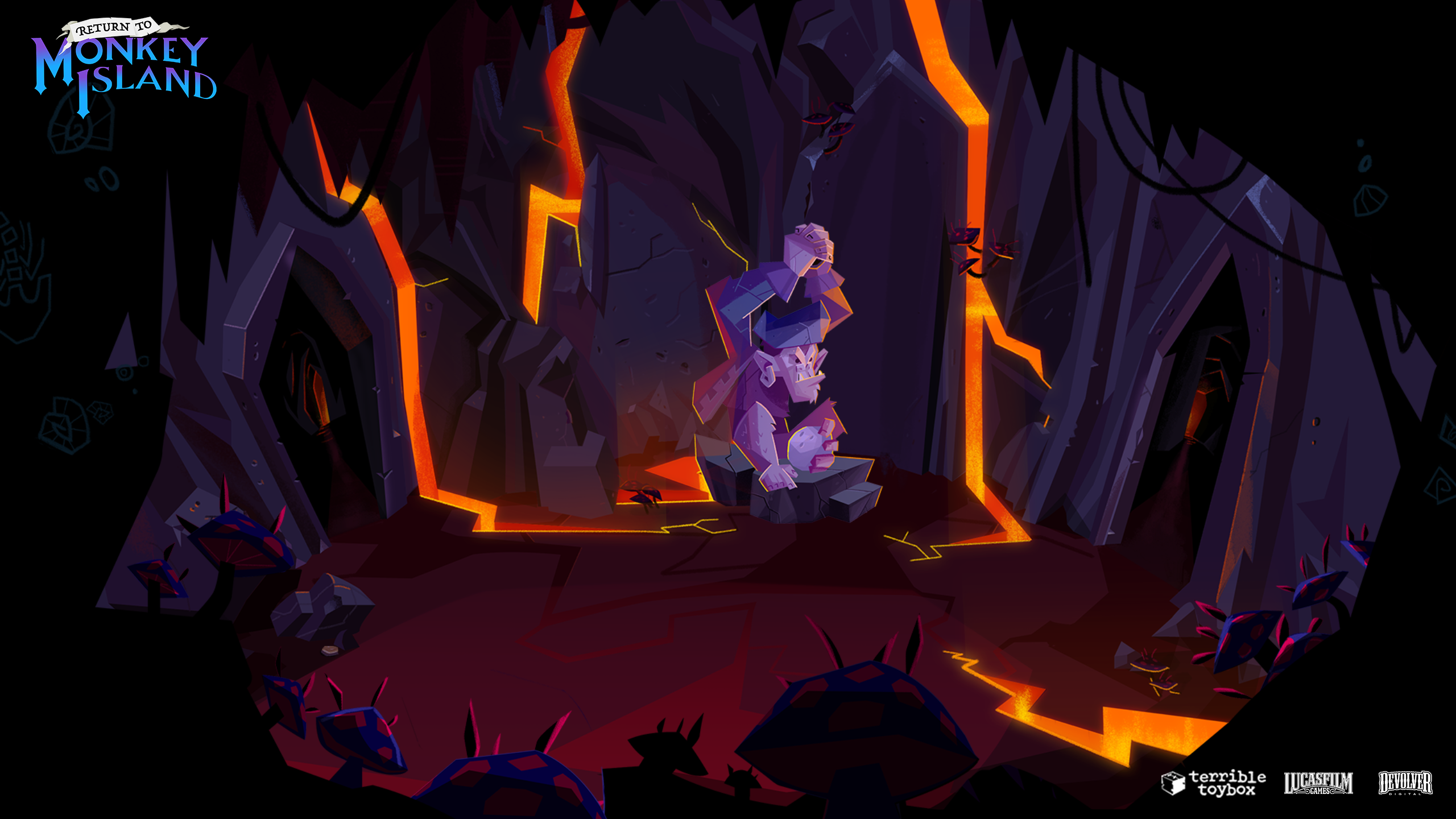
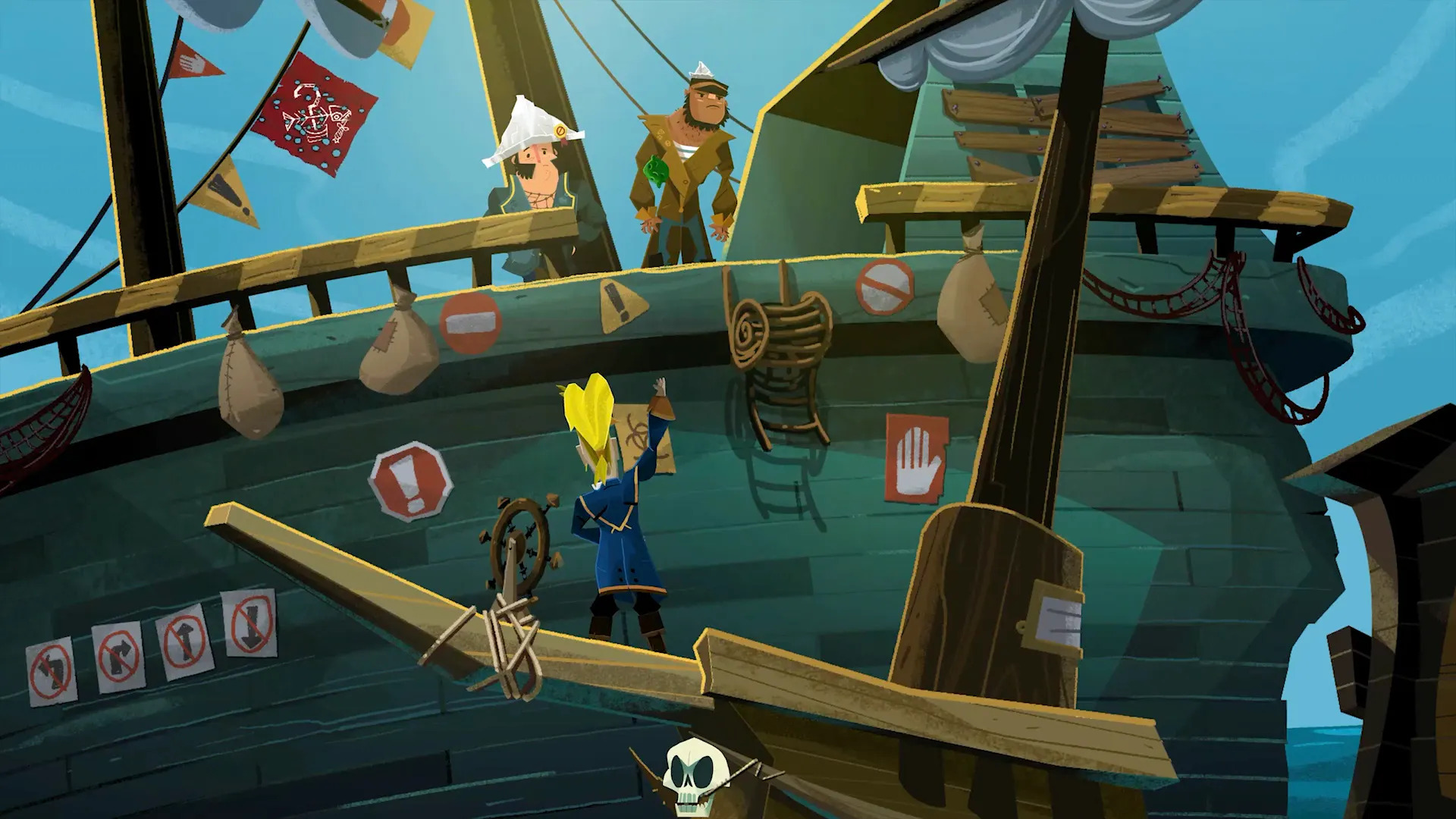
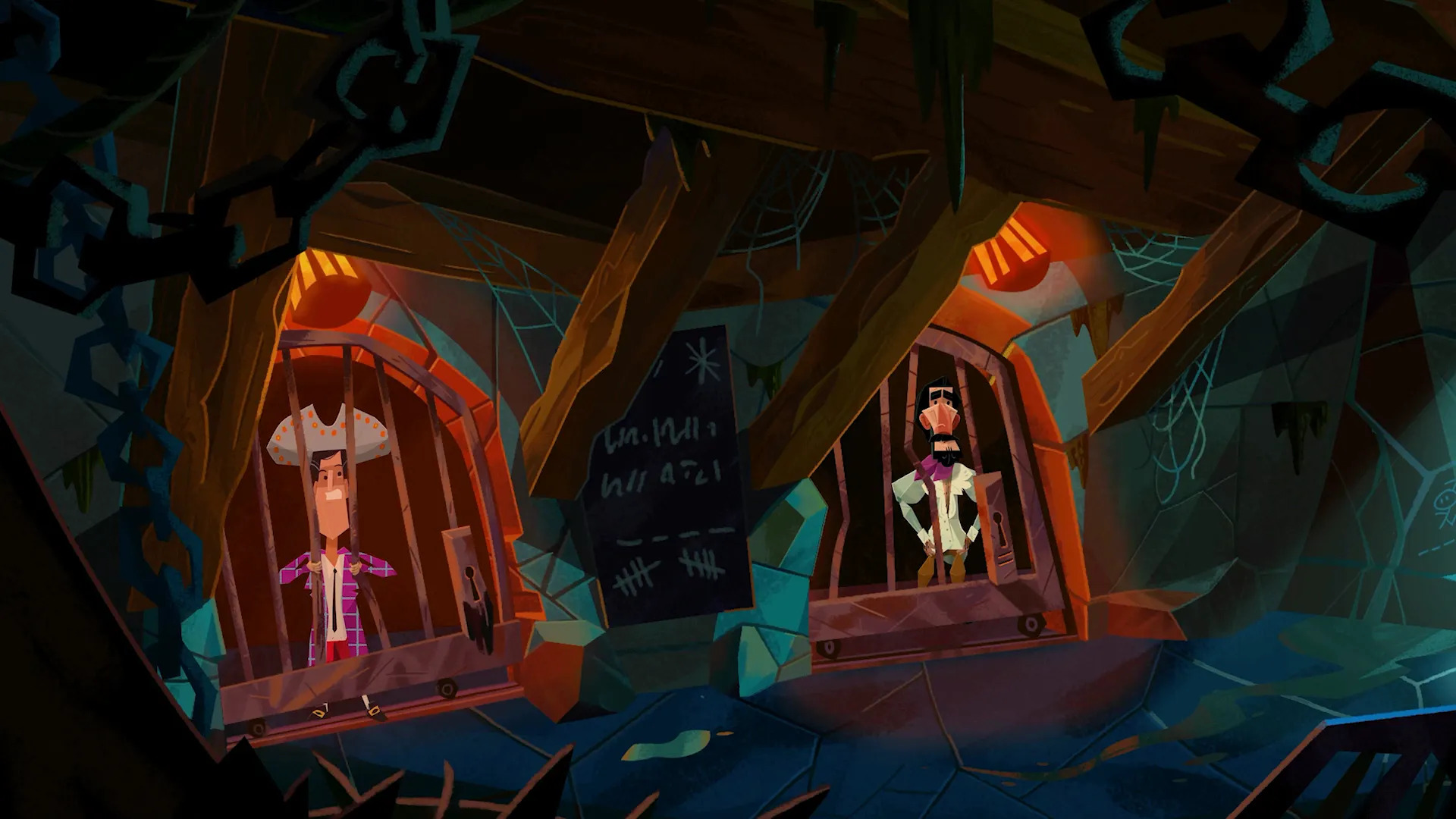
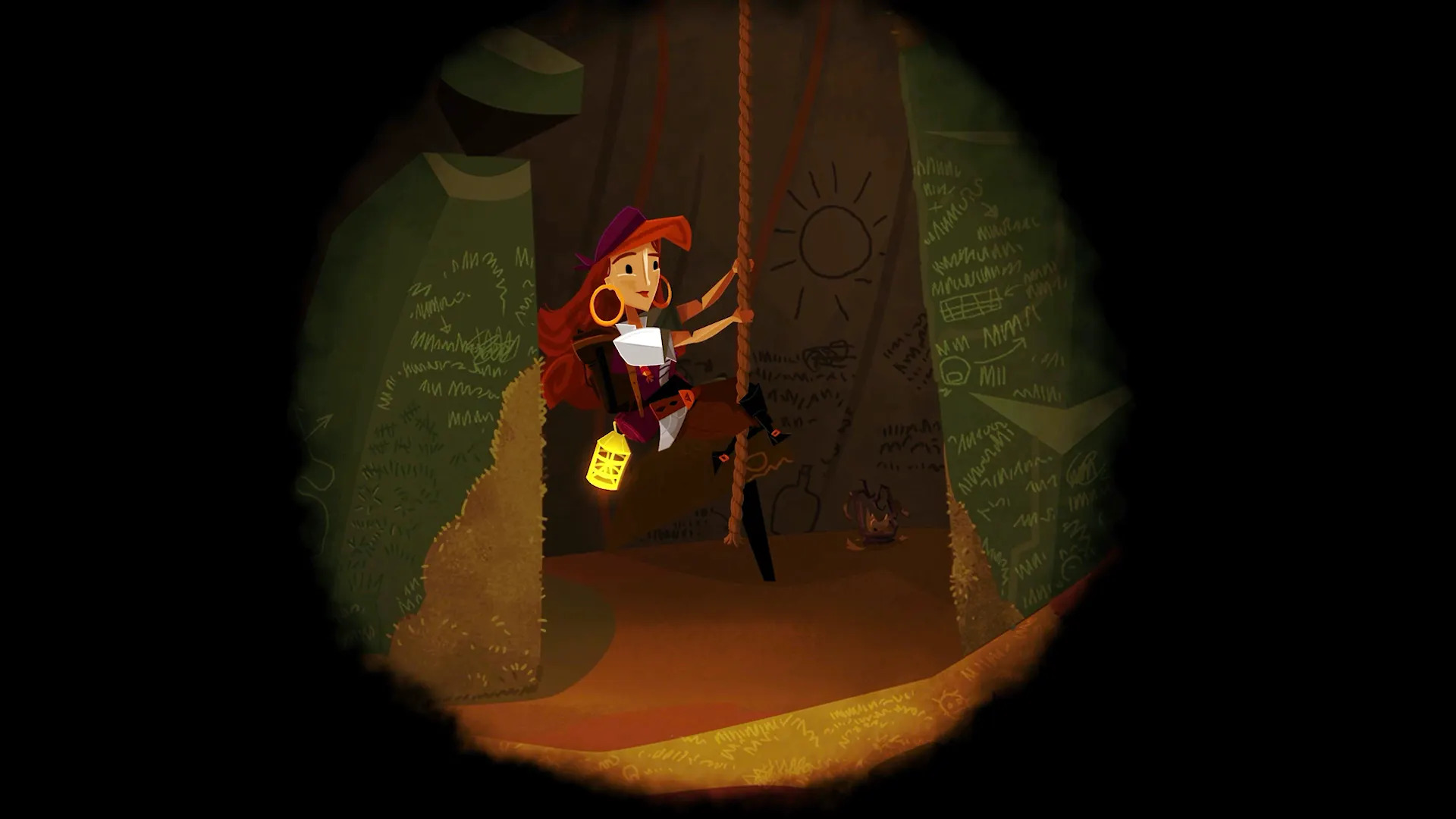
Speaking of artists, Return to Monkey Island is not a pixel art game. How would you describe the art style?Ron: We use the word “modern.” But I think that’s just because of the pixel art nature of Monkey 1 and Monkey 2. So we kind of describe it as modern. It’s probably not an accurate description of it, but it’s how we look at it.
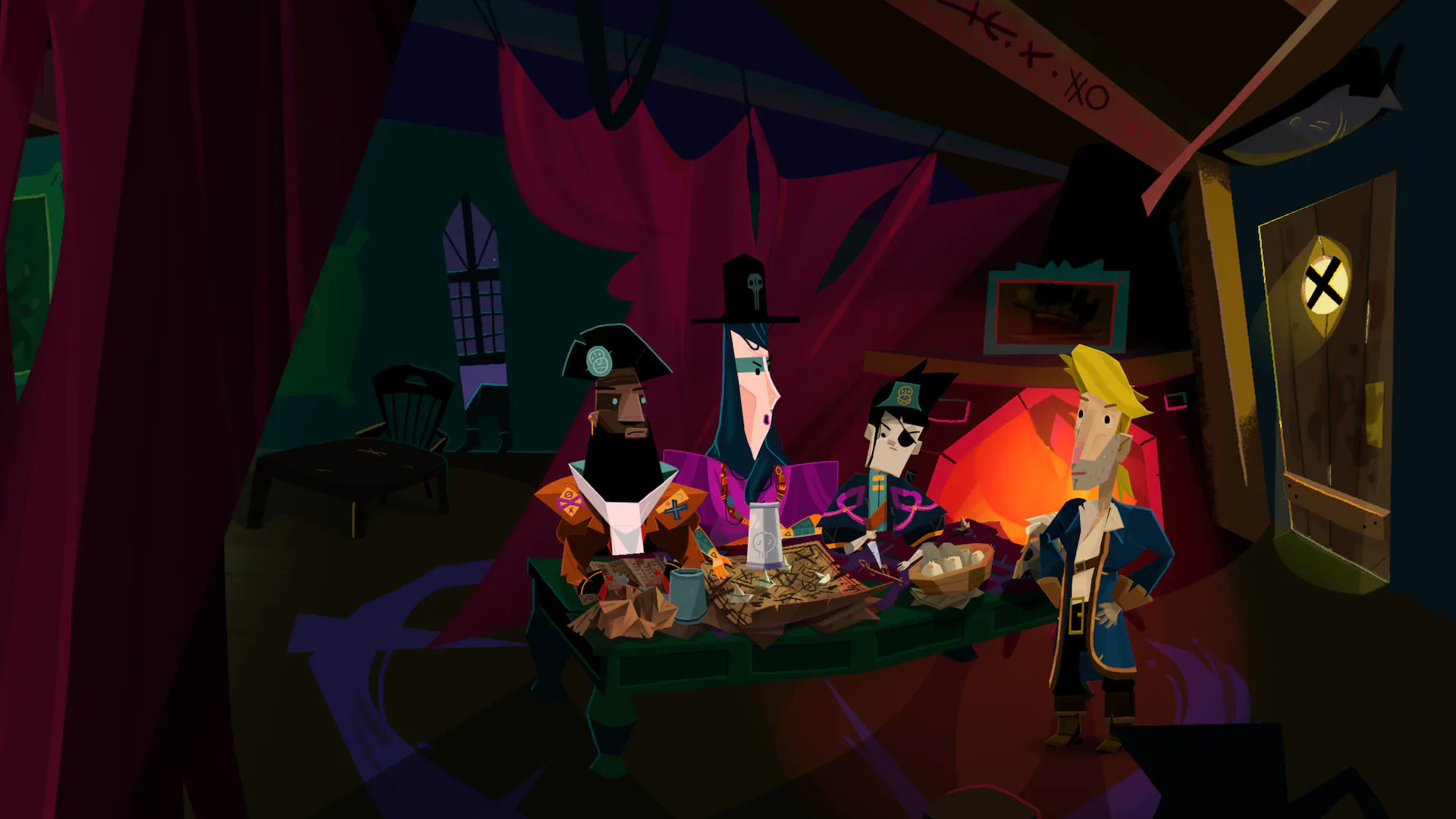
Dave: The word “storybook” has been thrown around in conjunction with the art a few times. I could see that.
So far, all we’ve seen is the little teaser that you put out last week, so there’s not a lot to react to yet. The game’s art director, Rex Crowle, has worked on LittleBigPlanet and Double Fine’s Knights and Bikes. Is he also a Monkey Island fan?Ron: Yeah, he had done a very blocky version of Guybrush, and he sent that to me a long time ago, 2007 or 2008. I remember he sent that to me, and I didn’t know who he was at all, just some guy sending me fan art. And I really liked it, so I made it my desktop for a long time. When I started thinking about this game, I remembered how striking that image was, and I wouldn’t want to make a game like that, but it was a striking image. So I started googling [his name] and he’s around; he did Knights and Bikes and did this other stuff that I didn’t know beforehand he was involved in. Then I just cold emailed him, out of the blue, and said, “Hey! Remember this thing you sent me?” And we had a conversation and we talked about Monkey Island, and his vision for what he saw that the art could be for it, and then we just slowly moved down that path with him.
Would you say that the art style you ended up with evolved from that first idea he had?Ron: It’s more than an evolution. We didn’t end up going with that style, but I just found it a striking image, and one of the things that I was looking for in the art for this game was to do something that hadn’t really been done before. The pixel art had been done before—we’re now thirty-five years from the last pixel art game version of it—[The Curse of Monkey Island] had its art style, [Escape from Monkey Island] had its own art style, [Tales of Monkey Island] had its own art style. So you really look at these games, and there have been more non-pixel games than there have been pixel games, at this point in time. And I wanted to embrace something new, and to try something new for the art style, and kind of continue that tradition, almost, of reexamining what the art was for [Monkey Island]. And Rex is a brilliant artist. Having him be able to take that and wrap his vision around this stuff has been very exciting.
Latest Gaming Articles
All Articles