



Plinbo: Blending luck and strategy in a roguelike take on Plinko

Plinbo features roguelike elements and incorporates luck found in Plinko slots. With a multitude of card and challenge combinations, every run presents a new strategic obstacle to overcome. Find the right combinations, and you might just beat the Plinbo machine.
Bringing a whole new dynamic to the roguelike genre, Plinbo allows you to mold your experience through decision-making, while being a feast for the eyes in terms of colorful visuals with a retro feel. We’ve got all the latest Plinbo news, so you know exactly what to expect when the game makes its debut.
What is Plinbo?
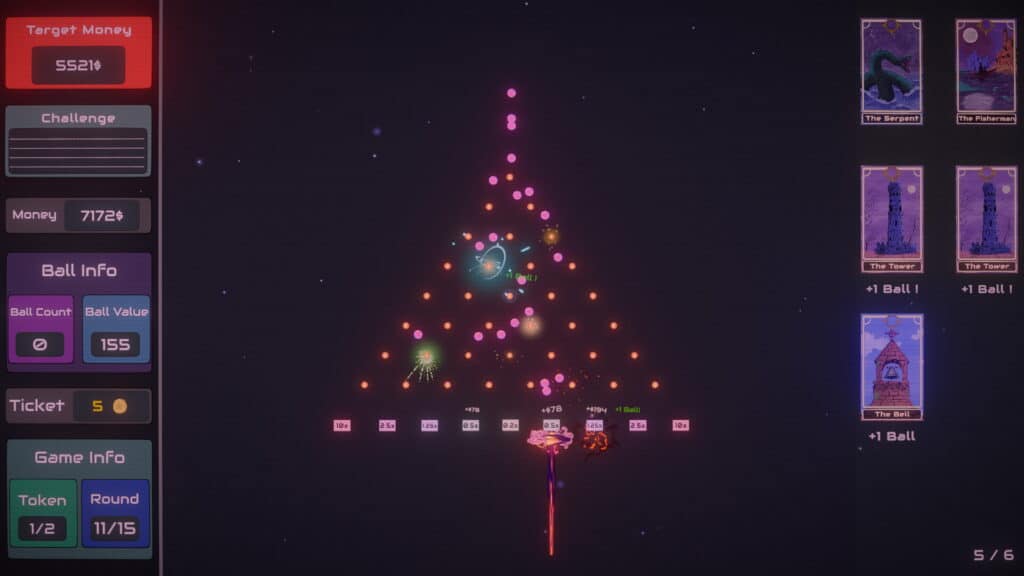
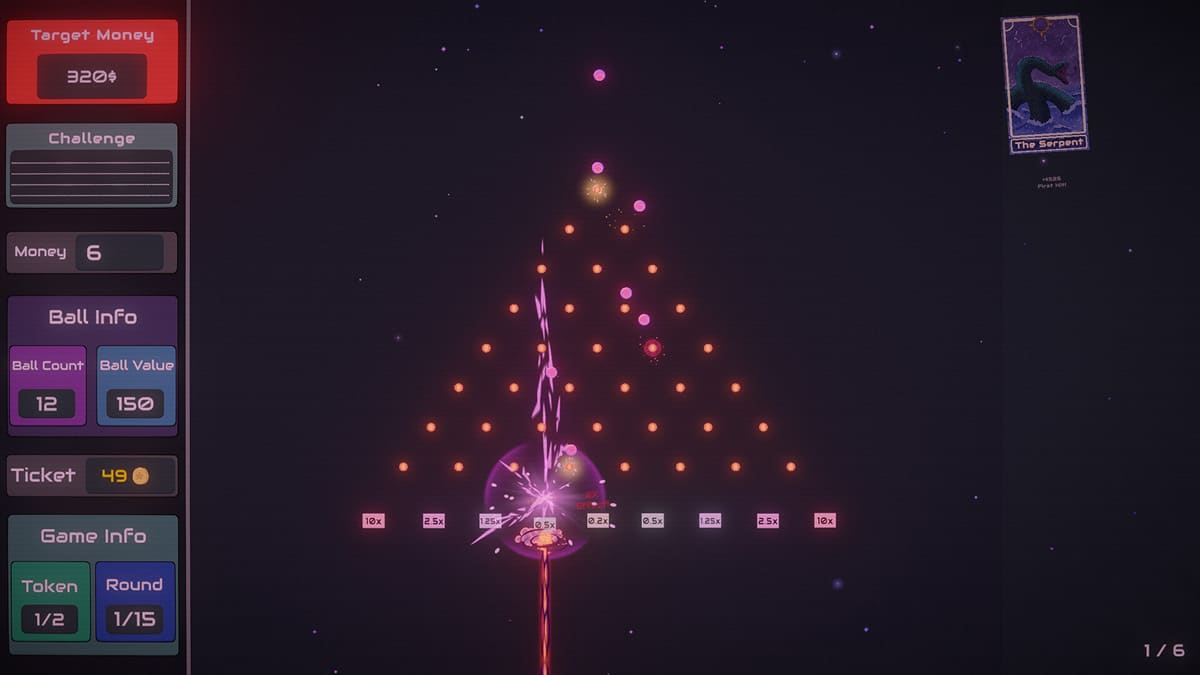
The UI in the Plinbo game is straightforward and easy to navigate. There’s your Target Money, which is a numerical goal you must reach, and it increases with every round. Your Round Money is your total score for the round, while Ball Count informs you how many balls will spawn, and the Ball Value determines the slot payout depending on the multiplier you hit.
Tokens indicate the number of machine runs you have per round to meet the assigned goal. Along the way, you will earn tickets to purchase buffs and try your hand at challenges. Simply hit your spacebar to drop the balls into the machine, and they will randomly fall into the multipliers below. The multipliers start small in the middle and increase horizontally, with the lowest multiplier being 0.2x and the highest being 10x.
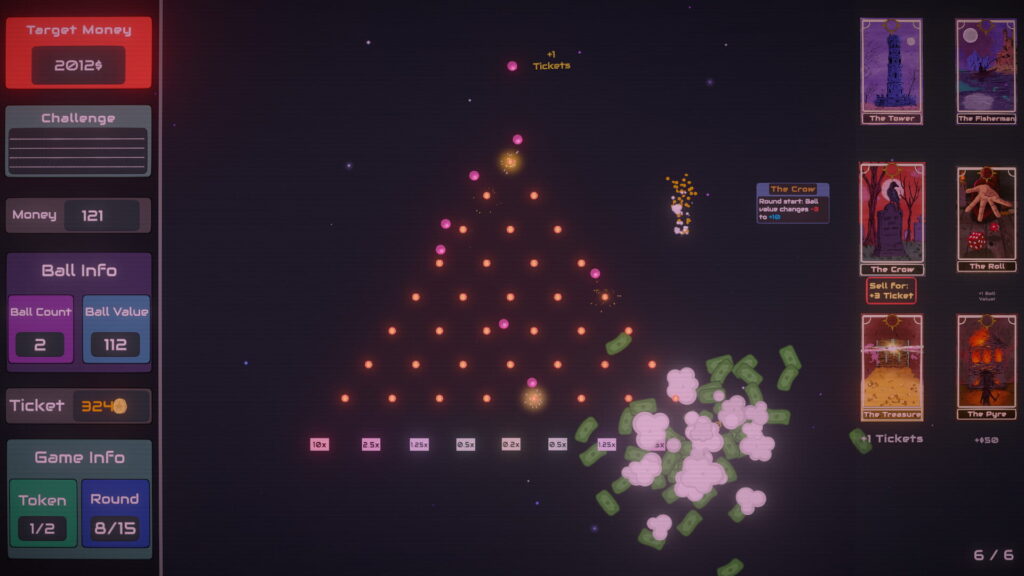
When you clear the round by meeting or exceeding the target score, you will be taken to the in-game store to spend your tickets. From the store, you can purchase cards that wield a variety of bonuses to assist you in reaching your goals and combat some of the randomness imposed by the machine. The Investor buff, for example, sees you gain plus 8% of your current balance at the end of a round, and the Extra Balls card hands you anywhere up to ten additional random balls.
The store will also present you with challenge cards that add more elements of risk and reward, such as the Key challenge that has a 5% chance to gain +10 tickets, and the Gamble challenge that gives a 20% chance for a plus 15 ball value. That’s if you receive the desirable challenge outcome, because purchasing the Gamble option even requires luck, as you can be hit with a “better luck next time” message and not receive the bonus at all, and you don’t get your tickets back. There are many Plinbo gambling challenges like this, including the Melon challenge, which has a 50% chance of halving or doubling your tickets, the outcome of which is decided as soon as you purchase the challenge.
If you aren’t happy with the shop selection, you can reroll the buffs and challenges, but the shop will refresh after every round. The buffs you purchase will remain with you throughout your run unless specified otherwise, but you can only have six of them at a time. Due to the sheer amount of possible combinations that can be used and adapted throughout your Plinbo gameplay, there are many ways in which you can stack these buffs to achieve the most powerful synergies.
As the Target Money increases, the game becomes harder. It is a roguelike after all. Even if the satisfying sounds and flurry of animations that come with the Plinbo gambling mechanics make you feel as if you’re hitting big, it can be difficult to get by. The end goal is to clear all the Target Money goals you have set. If you fail a round, there are no second chances, and you will have to restart from the beginning.
Who is the developer of Plinbo?

The Plinbo developer is Raphus & Co., an indie developer that also released another game, Queen’s Cards, in September 2025. Queen’s Cards is another roguelike deckbuilder, but it’s a tower defense game where you cast spells to defend your base. Plinbo is backed by publisher Rogue Duck Interactive, which has published a wide range of other indie titles, including city builders, cozy games, life simulators, and more.
When could Plinbo be released?
The Plinbo release date is penciled in for 2026. A specific launch date is yet to be confirmed, but the game will be playable on PC via Steam when it becomes available. It’s currently unknown whether a console port will be available.
How long is the Plinbo demo?
The Plinbo demo is relatively short and can be completed in under an hour, but this time may vary depending on how many times you fail to reach a Target Money goal and have to restart. The final Target Money figure you have to accumulate is $25,773. Even if you do beat the game, the number of buff and challenge cards in the demo, coupled with the layer of luck, provides enough replayability for multiple playthroughs.
An update to the demo released in November introduced 25 new challenges, 18 more buff cards, and 20 customized buffed balls. Plinbo fans have more content to look forward to before launch, as there are even more updates to come to the demo, including a pin customization system, two new levels, and two extra game modes.
FAQs
What game is Plinbo based on?
Plinbo is based on the gambling game, Plinko. You drop balls from the top of a board and watch them bounce randomly until they land in one of numerous slots at the bottom that each has a multiplier applied to it, representing the payout you receive. The higher the multiplayer, the bigger the reward.
What is the Plinbo release date?
Plinbo will launch on Steam in 2026, but a specific release date has yet to be confirmed.
Is Plinbo difficult?
Plinbo can be difficult because to progress through the rounds, you have to hit an increasing monetary score in a limited number of moves. Additionally, the multipliers thrown out by the machine are random and rely on luck, even if the buffs you acquire allow you to strategize.
Is Plinbo gambling?
Plinbo is based on Plinko, but real money isn’t used to gamble in Plinbo.
References
Latest Gaming Articles
All Articles