



Hal Barwood – Mata Hari


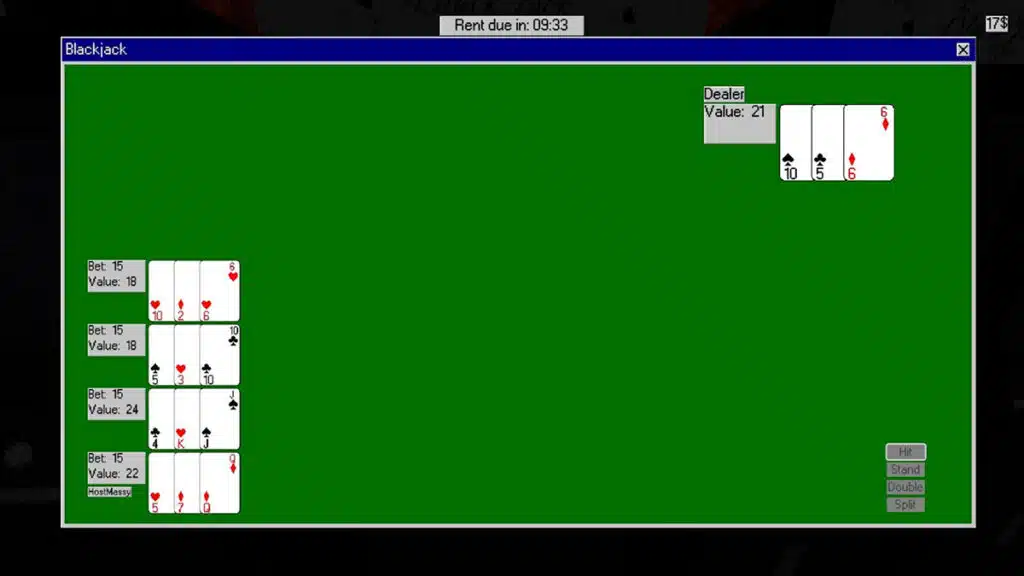
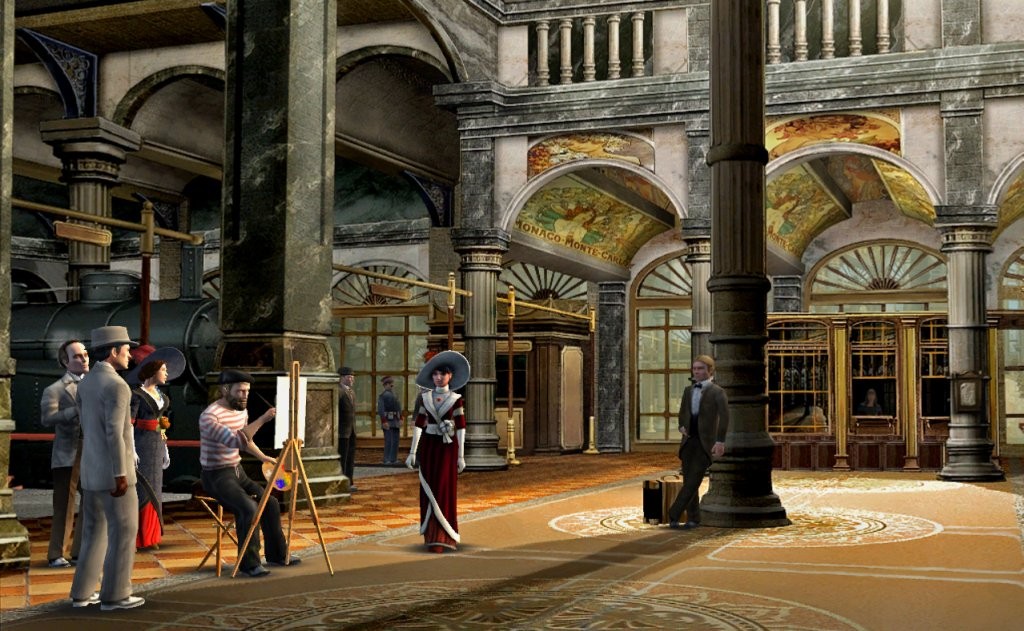
In addition to that, our minigames are — well, you asked about puzzles and how you can go online and solve them — a lot of puzzles are actually redoable. I’ll give you an example. We have a travel game where there’s six pairs of cities you can travel between, some of them much harder than others, but in every case you’re trying to get from one city down a set of tracks that you can choose to another city. There are agents working at the various stations and they’re following you. If they actually catch up with you, they set you back to the beginning.
Some of the nodes of the cities you go through to your destination are blocked or out of order, which changes from trip to trip. The overall idea is always the same but the actual tactics you’re going to have to use will be different each time. You’ll gradually get what are basically power ups. For instance, marking nodes as safe havens will prevent agents from going there. If you pick the right one, it’s very helpful to get through. Then you can get express tickets, which give you an extra turn. If I play that in the wrong spot, it won’t do me any good. But if I’m careful where I put that, and then I start my travels, I will be able to beat the agents. It gradually gets harder. First it’s one agent, then two, then three. It’s turn-based, it’s sort of a… semi-actual game. It takes moves and yet it’s very puzzley. Every time you look at it, it’s a new puzzle.
We wanted to have elements that feel dynamic, that make you feel that your experience is ‘my experience’.
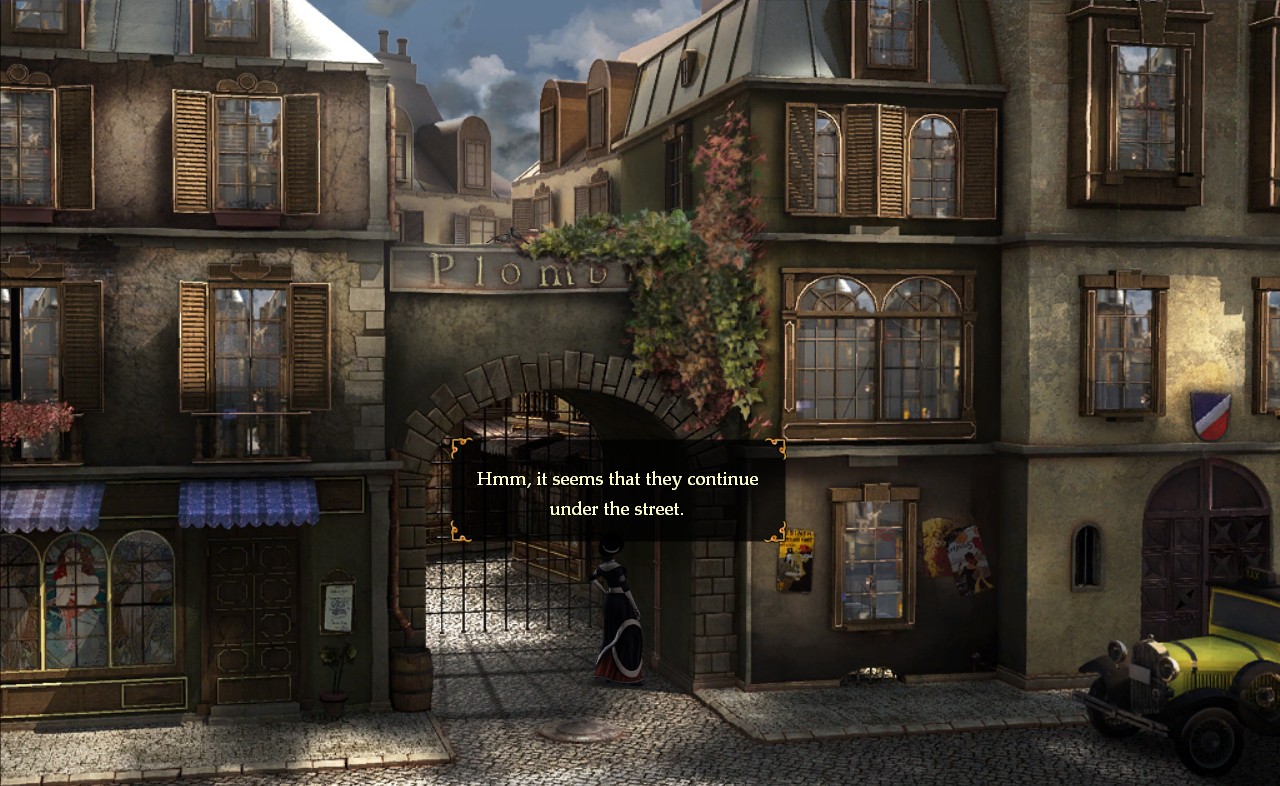
It is a pure adventure game, correct? There’s no action in it — or at least, not any obligatory action?
The only obligatory action is that — in a low-grade, fairly easy way — you have to master some rhythmic stuff when you are dancing. It will be fine. We hope it will be fun. And there are a number of other minigames.
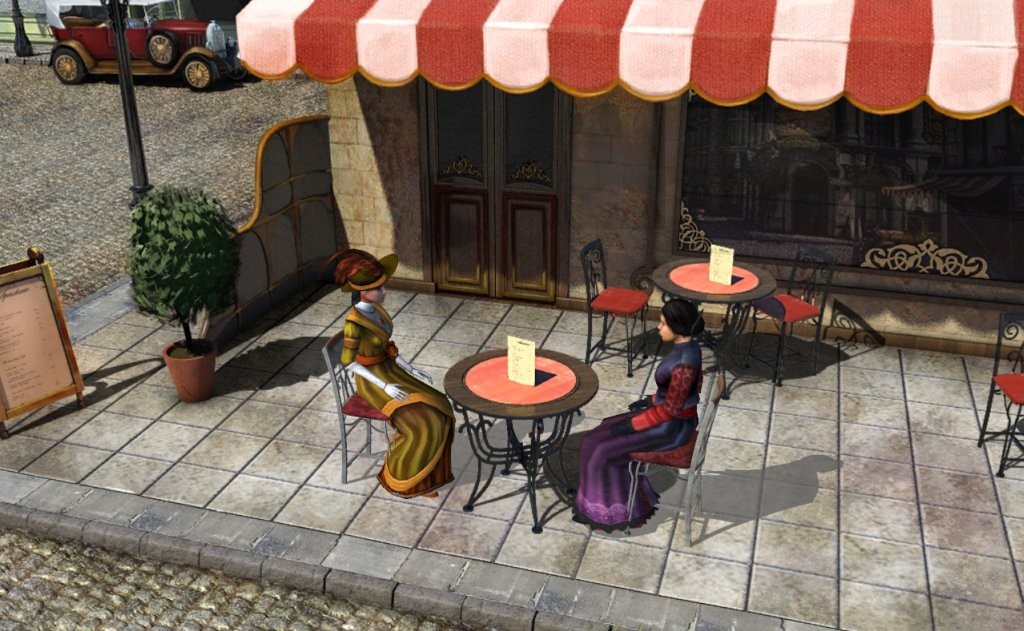
The early 20th century was a time of rapid technological change and advancement just like now. Things like airplanes, radios, and telephones were still very new — and they were all tools and objects of spying. So you have to learn how to use a telephone in the game and of course there are decoding minigames in which you have to decode messages. That’s another set of minigames. I think they’ll all be a little different for players.
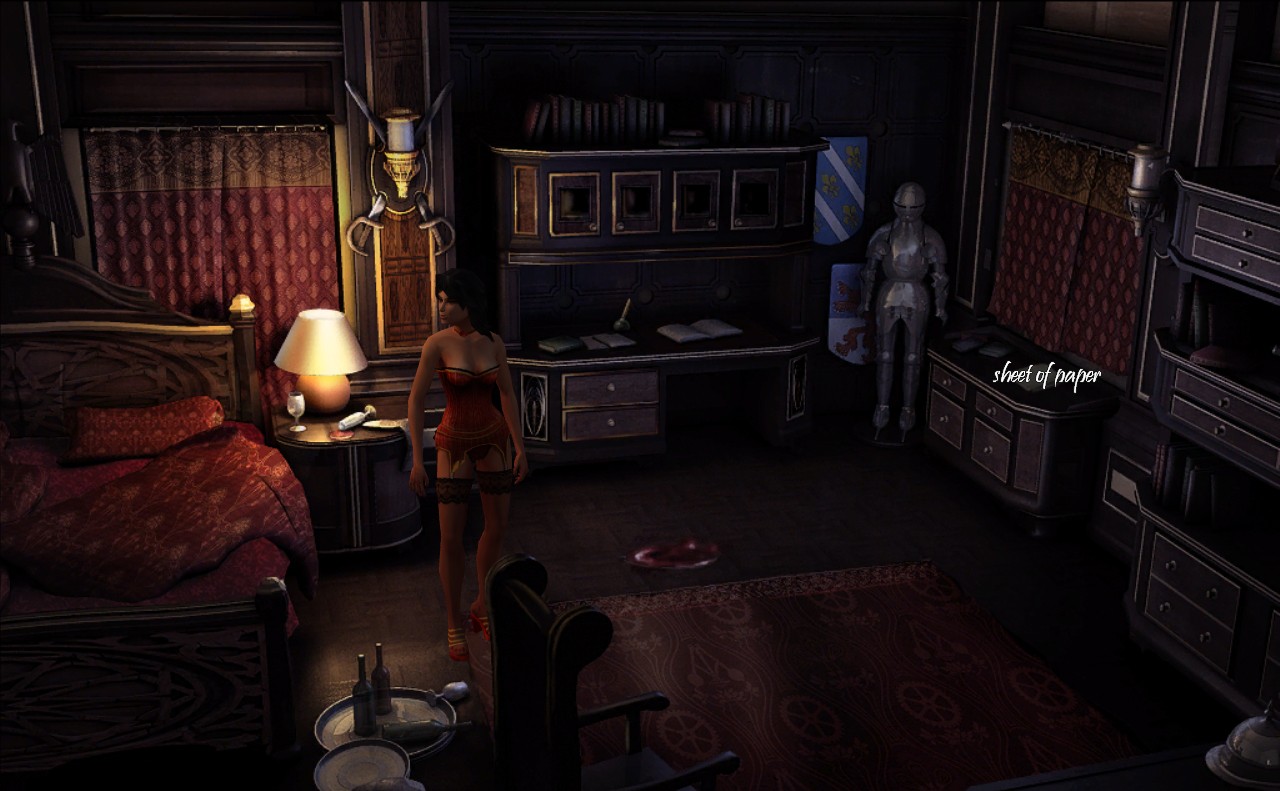
Sounds interesting. So who came up with the premise of the game? Did dtp develop it?
Here’s how it worked. I got an e-mail saying: would you maybe like to do a game with us? So I met with a guy named Marc Buro, he’s a producer at ftp. Marc met me at E3 and said, “we wanna do this spy game”. He was reluctant to tell me who it was really about, but eventually he said, “Mata Hari”. He also approached Noah, my co-designer from Indiana Jones and the Fate of Atlantis, but I don’t think he knew we were friends.
The last time Noah and I really collaborated was on Fate of Atlantis, but we’ve been friends for twenty years. We live about five miles apart in Marin County, California. When Noah and I were comparing notes we realized [that dtp had contacted them both], so we said, let’s see if they want to do it with us together. We went back to them and they thought it was a good idea. So the original idea was not that complicated. It’s “Mata Hari spying”. That’s what they came to us with. We cooked up the design around the story, and fleshed that out into a full game design, and now we’re writing the dialog for it.
It’s interesting that you’re co-developing it in America with 4Head Studios in Germany. The distance between you and the developers must be a challenge.
Well, only that your ears fall off from using a Skype headset all day. A lot of the design and a lot of their work goes up on a wiki. I’ve got a couple of machines at home: I’ve got the wiki up on one and I’m running skype on my other one, so we have conferences with the producer and the guys at 4Head, and with Noah down the road. We might spend hours talking online. It’s pretty active and this is also my fourth trip over to Germany. So we get to talk a bit face-to-face and be in the same timezone, but that’s pretty rare.
Okay, I’ve got to ask you: do you ever get sick of people asking you questions about Indiana Jones and the Fate of Atlantis? I always wondered that, because … I mean, do you mind people still bringing up things like the three paths after so many years?
(laughs) No, I’m very flattered. Listen, I had one of the greatest days of my life yesterday. I had to go over to the ANACONDA booth, which is the German brand dtp uses. I’m over there telling about the game and there was going to be this whole signing thing. So we go over and we’re doing it. And … look, I am so cool, that the booth babes wanted to have their picture taken with me. (laughs) I was like, “wow, this is the opposite of geekdom!”. Anyway, I’m not at all bothered about it.
It’s great that a lot of former LucasArts designers have gone back to making adventures.
Yeah, there’s quite a few of us. Bill Tiller is doing A Vampyre Story with Crimson Cow, Dave Grossman is busy doing Sam & Max at Telltale and — Ron’s game is going to be more of an RPG, I think. It’s an idea that’s been in his head for many years.

Anyway, it’s nice because I think Germany is sort of leading the way back.
Yes, it’s quite remarkable how many German publishers here at GC are publishing adventure games.
I hope it doesn’t lead to a collapse. I would guess the biggest threat to Mata Hari would actually be games like Memento Mori or Gray Matter, or whatever games are going to be next.
Right. Although you’d hope that the games also gradually expand the audience, with new people discovering the genre.
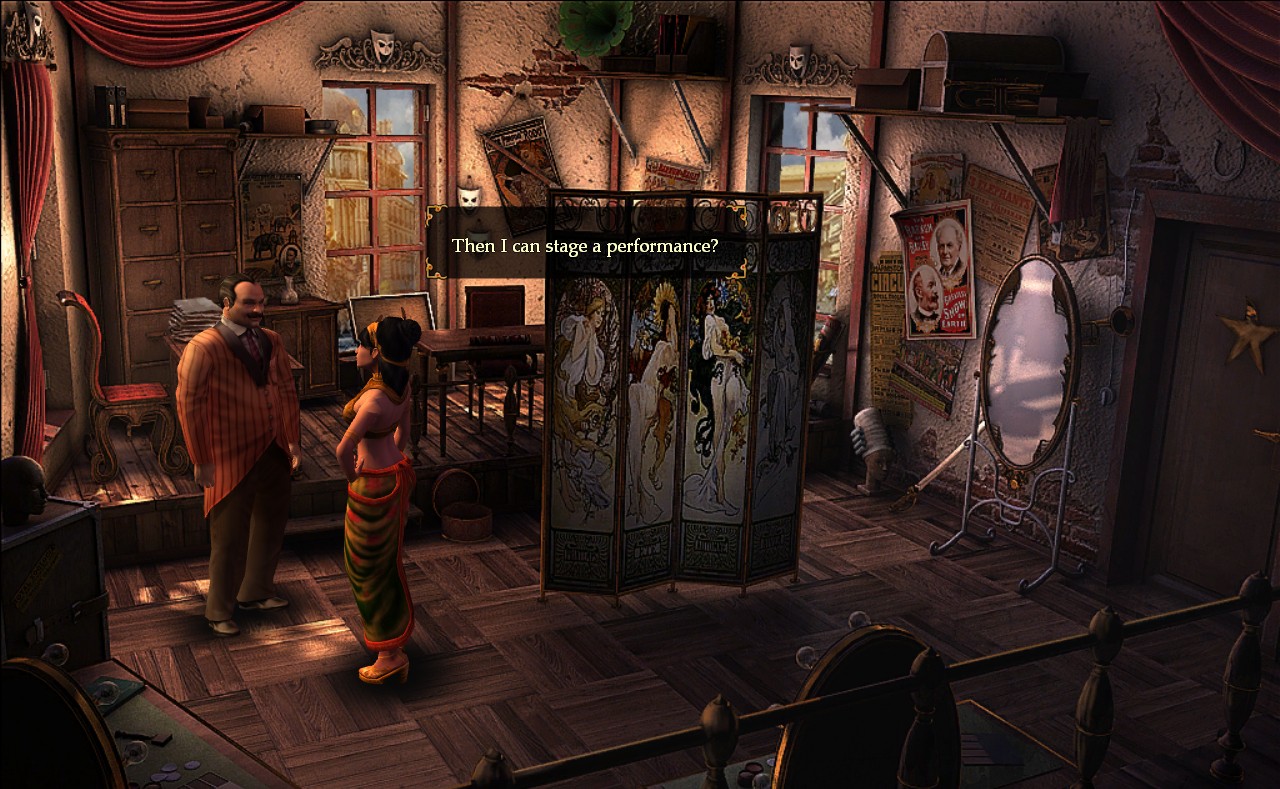
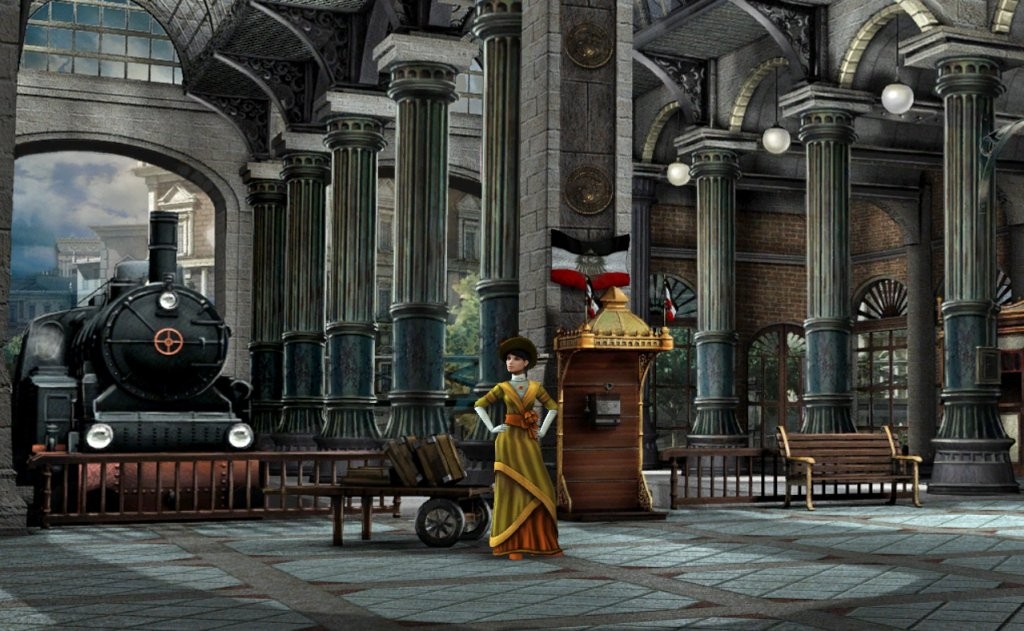
One of the things that killed the genre was that — well, back in the day that Fate of Atlantis came out, the genre was alive and well and Indiana Jones fit into that. But the truth is, that game was more in your head than it was on the screen. The Jones character was fifty pixels tall and was just this little guy running around the screen. It was the very first game LucasArts ever published with 256 colors — that was like, “wow!”. It was hard to feel that it was truly an engaging experience. Now we’ve got all this beautiful art, and I think that’s part of it. You can say “this is a character” now [points to characters on screen] and people will say “yeah, it really is”. I think that’s going to help lead the way back.
What do you think about the DS and the Wii?

I don’t know about the Wii. It’s true that the Wii has a broader base in general than consoles usually do, and Nintendo is very clever with that, but the DS is the way to go. Everybody has got them, and I know especially — at least in America — I have a lot of female friends who have DSes.
Yeah, same for me.
And a lot of games that are prominent on the DS are kind of thinking games. Brain Training games especially, but also Sudoku and Picross are all coming out on DS.
It turns out that there’s another connection that runs through casual games. I don’t know what it’s like here but in America it’s a huge phenomenon. I guess the term is silver gamers. There’s just a lot of older people who have discovered that they like to play these games. I think that’s a connection and the next step from there is adventure games. That builds an audience for us too.
And with that, our chat came to an end, as a camera crew that had been busily setting up their gear at the dtp booth was now ready for their turn to interview Hal. Mata Hari is set for release Q1 2008 in Germany, Austria and Switzerland, and later in 2008 for other territories, and we’ll continue to keep an eye on this promising title.
Latest Gaming Articles
All Articles