


Gamescom 2016 round-up: Part 2


Empathy
I wasn’t too sure what to expect from the first-person, exploration-heavy 3D adventure game Empathy at the Iceberg Interactive booth, and now that I do I can’t tell you any of the spoilerific things I’ve heard about the story. Broadly, though, it explores themes of social struggle and collapse along lines of politics, class and ideology.
Getting back to the ground a bit, the game starts in a laboratory room setting as you are trying to get some machines running properly under the guidance of the narrator. The latter starts out talking up the importance of what you’re about to do, but then stays oddly calm and unconcerned when you mess things up and cause one of the incidents underlying the plot. The story’s main conceit is that a number of failed grandiose experiments have affected people’s emotional states, which has caused a slow collapse of society through many kinds of internal strife. After the prologue, you explore society in its largely ruined state, not meeting any other people directly but seeing many things left behind.
There is also a consistently surreal element, with level design that doesn’t cross over into things that are actually impossible but does seek out the line. For instance, the first large area to explore is like a floating island, except that it is actually held up by an enormous statue. Further surrealness comes from “glitchy” visual effects when finding items that don’t seem to belong or getting badly hurt.
Gameplay-wise, Empathy is first and foremost an exploration game, focused on collecting so-called memory items. These items can be found lying around the places you explore, looking like a ghostly outline at first, until you solve a brief ‘synchronization’ minigame to align and bring them into the world properly. Doing this reveals a memory of the person each item belongs to, usually raising questions that will only be answered when you’ve found a whole set and the memories get put together in a scene you then experience first-hand. This in turn may give you hints on where to go next or even create changes in the world, letting you visit previously inaccessible areas.
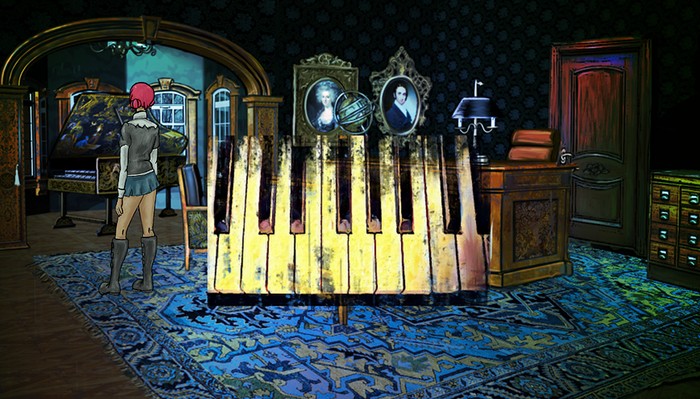
To aid you along if you get too stuck, you pick up a handy radar early in the game that helps you find some items needed to progress. However, beyond the story items the developers have added many more you’ll have to look for the hard way, feeling that further exploration should always be rewarded. Beyond exploration and memory-reconstruction, there will also be other gameplay in the form of actual items to pick up and use, logic/math puzzles, environment obstacles and occasional environmental hazards to avoid.
The graphics are set to be polished more before the game releases, and I must say this seemed like a good idea for some parts I observed. With a little more fine-tuning, however, there should be a number of captivating things to explore when Empathy comes out early next year.
The Lion’s Song: Episode 2 – Anthology
You may remember The Lion’s Song from the free first episode, where up-and-coming composer Wilma retreats to a mountain cabin to get some calm and inspiration to compose the titular musical piece.
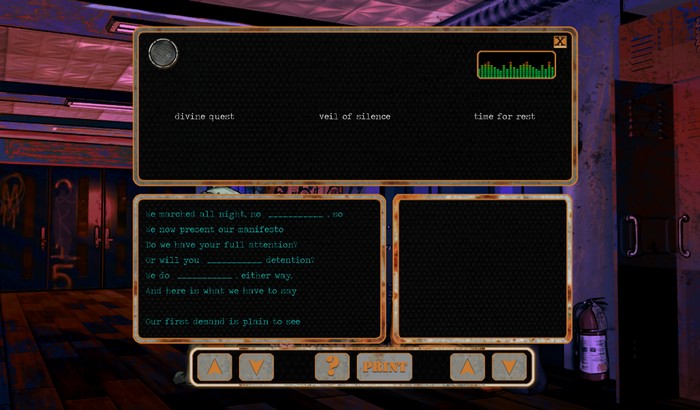
Leaving Wilma alone for a while, the second (and no longer free) episode involves the creative struggles of a new character, budding painter Franz Markert. The sepia-tinted art style is essentially the same as before, but walking animations and slightly smaller characters let you pace around your studio and visit salons in early 20th century Vienna to talk people into letting you do their portraits. This time, though, the gameplay is focused less on finding inspiring subject matter than the first episode and more on the execution.
This is handled through a “personality layers” game mechanic: while painting a client, you discuss their life and background with them in a dialog puzzle of sorts. Depending on the way the conversation goes, different aspects of the client’s personality manifest, each visualized with a particular posture. Bring out the same layer enough times and you “unlock” it, adding it to the painting. For the best result, you will want to unlock all of the client’s layers, or as many as you can at least. I personally couldn’t get a perfect result for either of the two clients I did in the demo, so there may be some replay value for perfectionists. If you can’t get them all you may also want to be picky in which layer you focus on, as your clients may appreciate the resulting portrait more if you catch their good side.
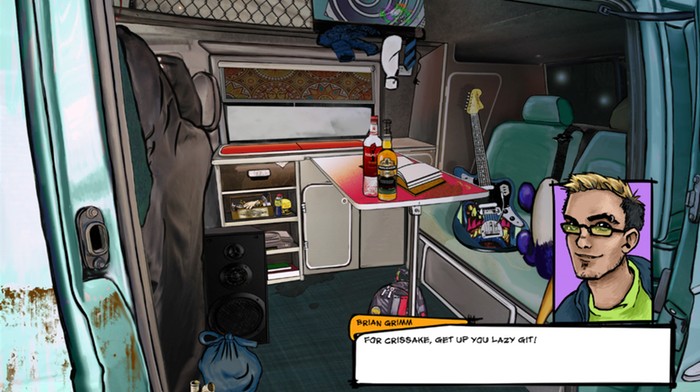
These personality layers also play an important part in the plot, as Franz can almost literally see these layers, appearing in his mind’s eye like some sort of impressionistic art. He cannot, however, look into his own personality in the mirror. This and some less comfortable symptoms will eventually cause him to discuss his condition with famed psychiatrist Sigmund Freud in an end sequence of mutual psychoanalysis.
There will also be small connections between this episode and the previous one. In a unique twist, these connections work both ways: if you play the second episode before the first, your successes can help inspire Wilma, who has some of Franz’s sketches lying around in the mountain cabin. If you are wondering how any of the second episode’s plot ties into the titular Lion’s Song, that should be revealed in the series finale, which will bring together the characters and storylines of the first three parts. There is no firm release date yet, but if earlier estimates hold, Anthology should come out sometime this year.
The St. Christopher’s School Lockdown
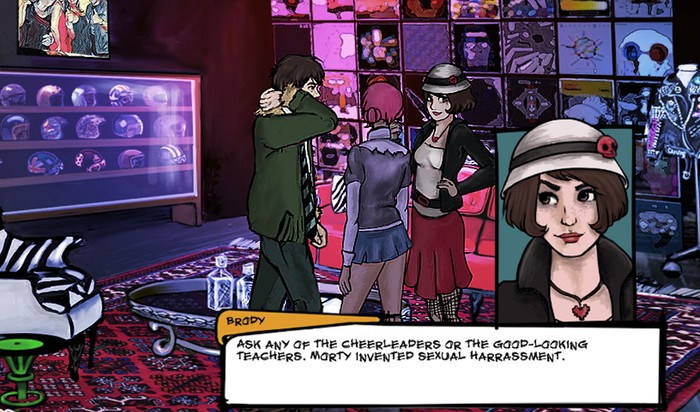
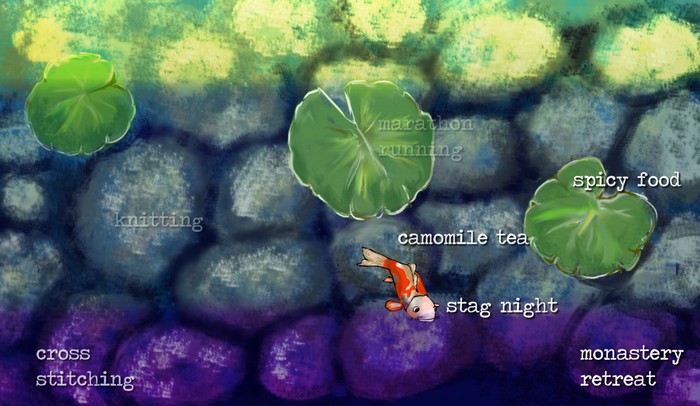
Due to some logistical issues in meeting with Classroom Graffiti Productions, I wasn’t able to spend much time looking at The St. Christopher’s School Lockdown, the indie adventure set in a prestigious British private school that’s been seized by its student body in a protest demonstration. Still, going over a couple of rooms in the demo with Roger Benoit showed me some promising things. The first to stand out was the large amount of writing going into even those few screens. One typical example was in a scene where you have to find a specific staff member’s mailbox: where other games might give generic lines for a few wrong choices, in this case there were distinct readable contents in each of the 60-ish available boxes. In the nearby kitchen, you can read various staff members’ favorite soup recipes and assorted notes, or interact with pointless things right down to the fridge magnets.
This philosophy extends to the rest of the game, where every character will have their own backstory, even those who only have a couple of lines throughout the game. A school yearbook will collect everything you know about them for you to look through at your leisure. More writing also means more choice, and every major puzzle will have multiple possible solutions to it.
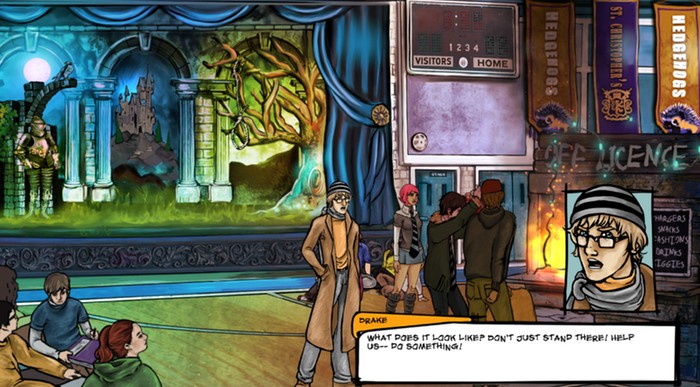
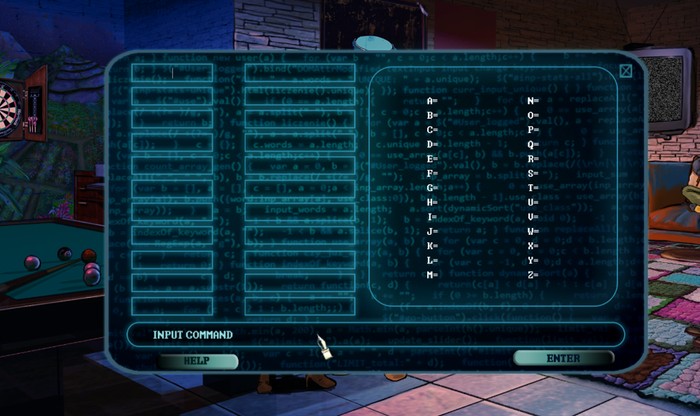
What stood out to me more than that was a game-mechanics thing. Kayleigh, the main character for the first episode, suffers from a form of bipolar disorder, and this has unique gameplay consequences. As dramatic things happen in the story, her mental state changes towards either the manic side or the overly mellowed-out side. When you swing too far in either direction, this in turn affects the visuals, the interface and even the options you have in your conversations and actions. You can regain your composure through a special minigame, or you can try to roll with it and explore the differences it makes (though the manic side creates an increasing amount of cursor jitter, so you will eventually be forced to take a timeout and get a hold of yourself).
The distinctive graphic novel style looks quite nice, though it takes some getting used to and some of the animations feel like they could have been a bit smoother. The game is still a work in progress, of course, but you can see it in its current state in the public demo now available for Windows, Mac, and Linux.
The remaining details aren’t completely worked out yet, but each of the first six episodes has a different playable character and its own special game mechanics. It’s been a long wait for the first, but the series debut is getting close now, with a target release of March 17 of next year.
Latest Gaming Articles
All Articles