



Fragments of Him

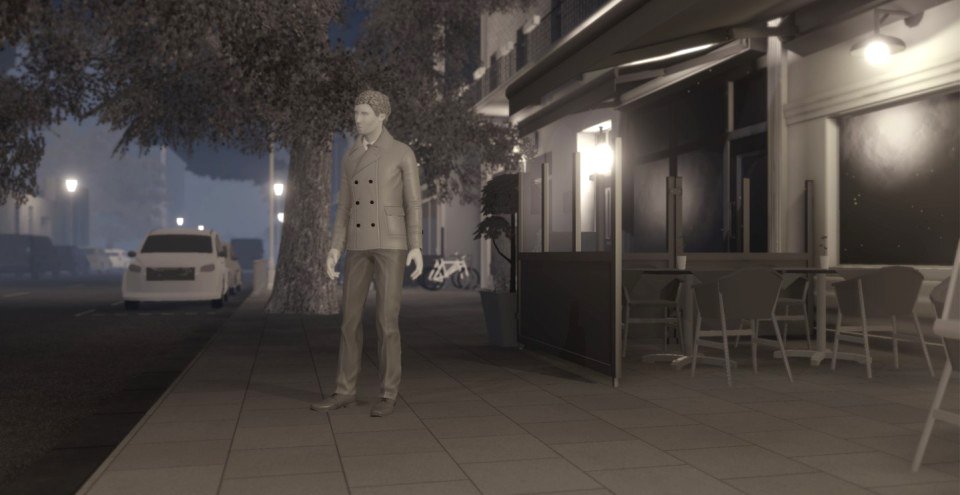
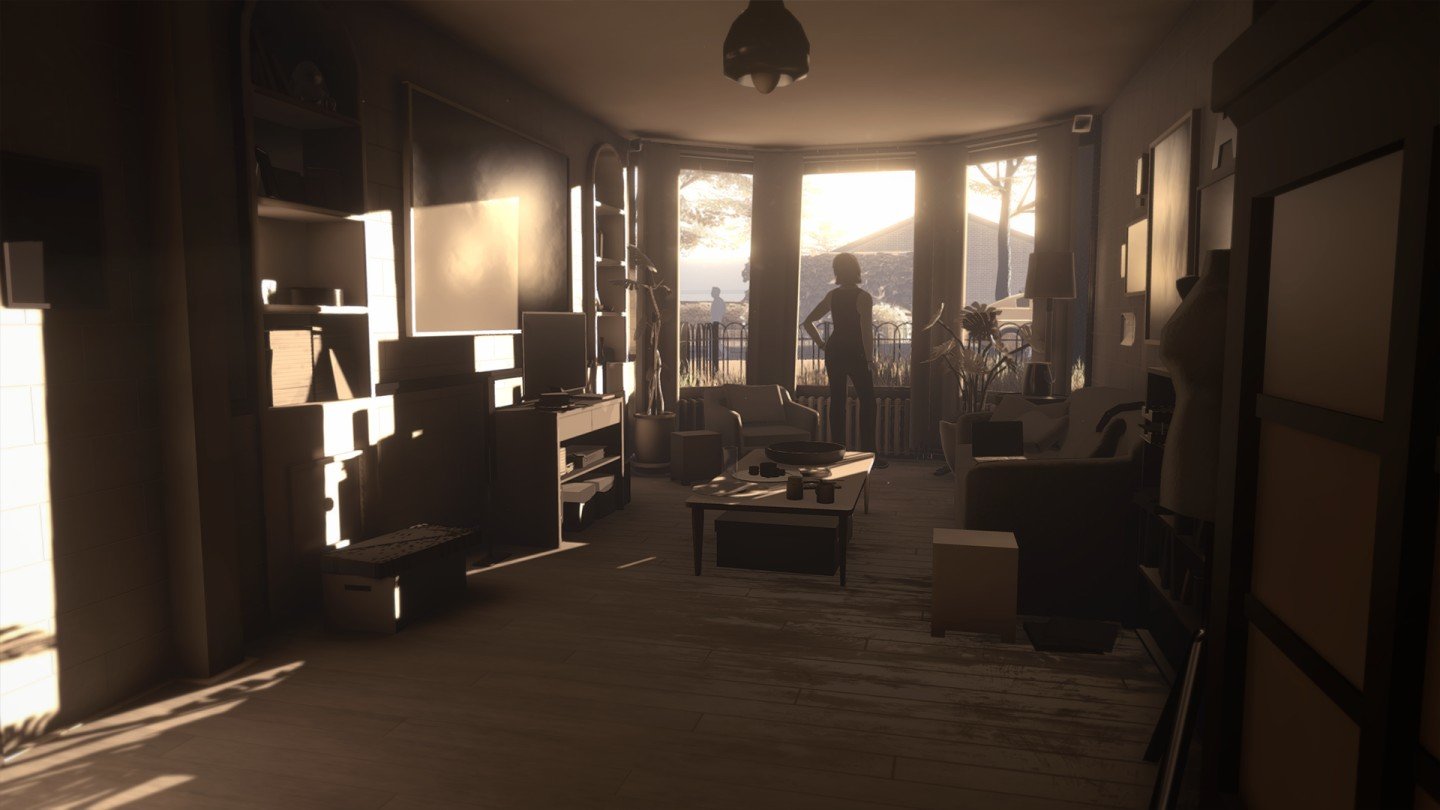
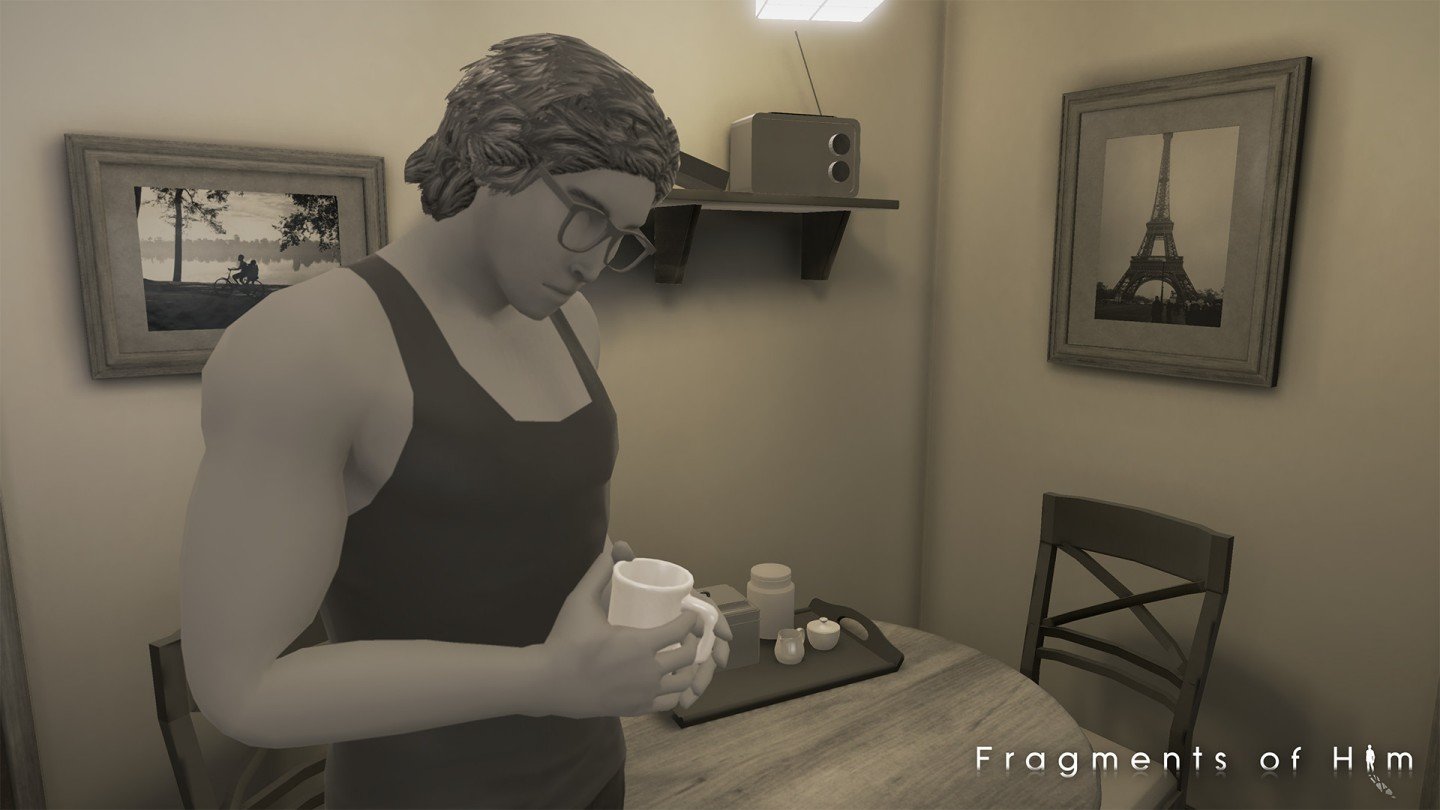
Some of these decisions may have been practical ways of dealing with a small team and small budget, but they just happen to support the theme of reliving one’s memories. “This game is a work of narrative design, and so everything in here is about narrative. The choices about the aesthetics… from the very first day I said I want to do this in simple, plain textures as much as possible, black and white,” Haggis says. “These are people going through very serious emotional experiences. I don’t want this to be bright and colorful, don’t want the colors to distract us from that experience.”
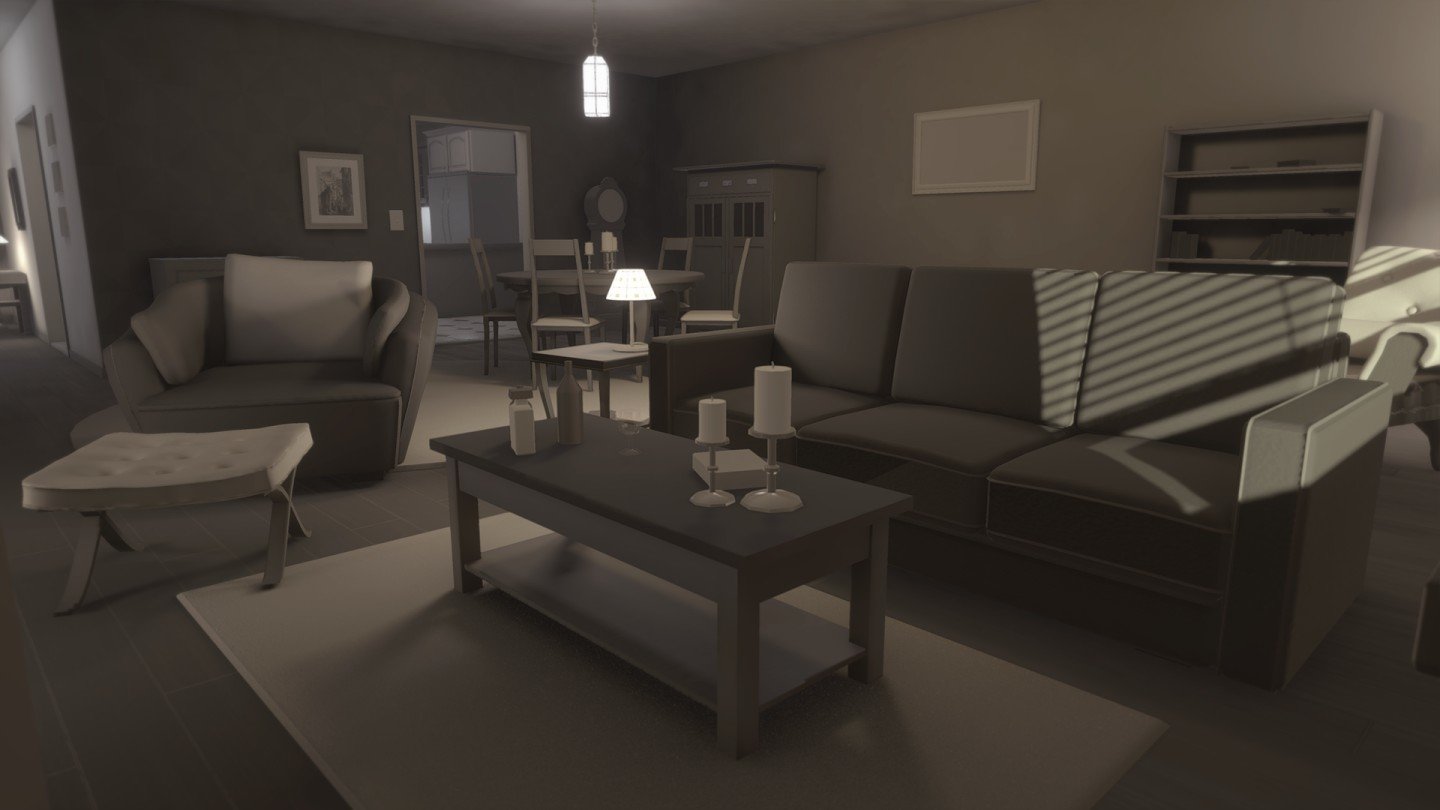
This attention to theme doesn’t extend only to choices about colors and character design. Every detail in this world has been deliberately placed to help tell Will’s story. “By choosing to have those table legs, I’ve told you a little about the people who live there. By choosing that style of lamp, I’ve told you a little about the people who live there. Everything about this is to compact as much about the lives of these people into this space as possible, so I don’t have to write you pages of dialogue,” Haggis says. “If you know who Will and Harry are [from] looking at their room, these are spaces we can use as visual language to tell you the emotions, the feelings, the nature of the character, the influences these people have in their lives.”
But while there may be narrative breadcrumbs crammed into every nook and cranny, Fragments of Him is not a hugely interactive story—at least, not in the way players of adventure games are used to. “You can’t save Will,” Haggis warns. “The things you can click on will be the same [from playthrough to playthrough]. There are choices within the dialogues—a lot of those choices are made by the computer for you, so you heard lines of dialogue [the first time], the next time you play some of those lines you’ll hear again, sometimes you’ll hear a different line. There’s one particular conversation where you can choose your path, but it will always end up in the same place. It’s about allowing a little bit of flexibility within the space of that [character’s] memory, within the space of what was possible in that reality. And always bringing it back to the heart, the emotional truth of what happened.”
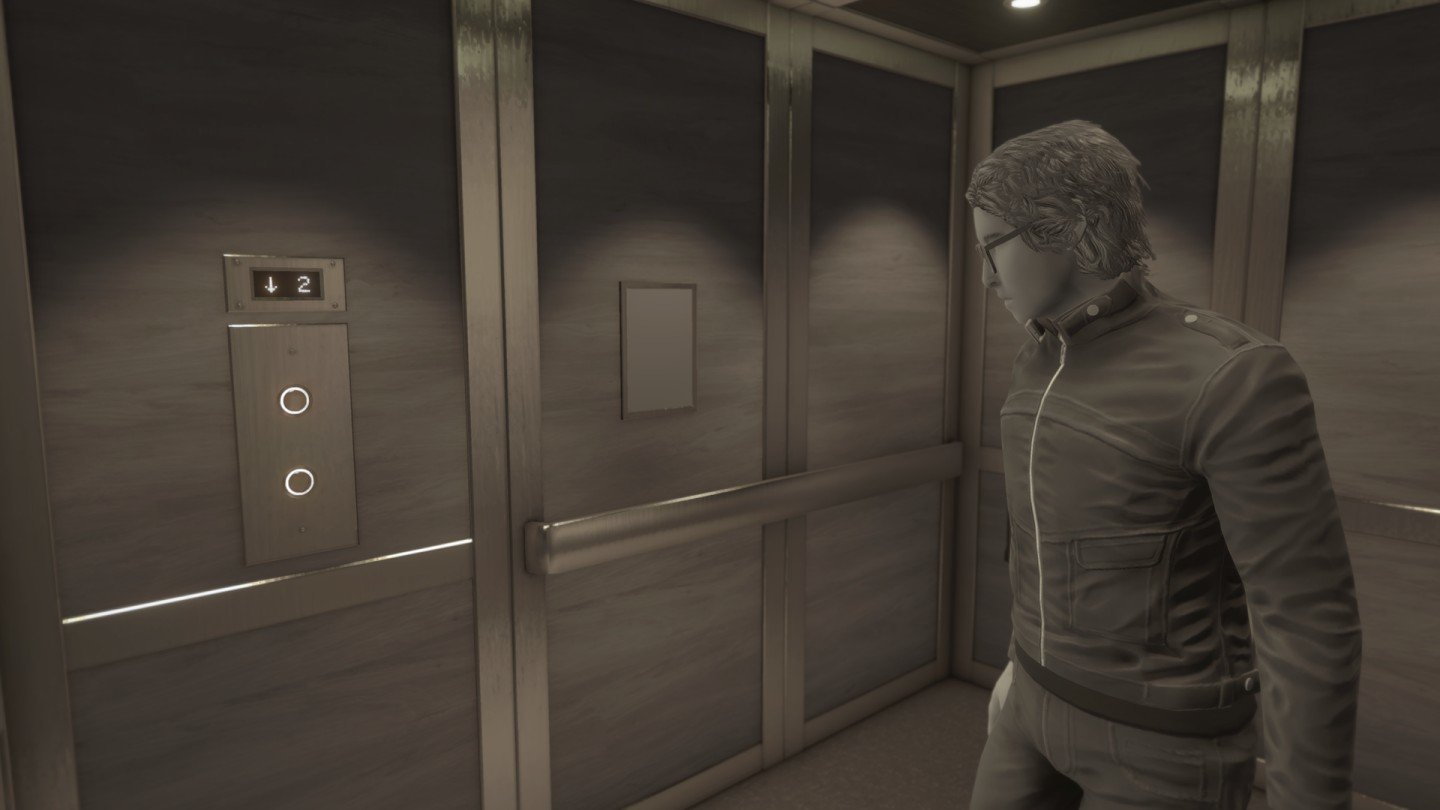
Haggis first experimented with Fragments of Him at a weekend game jam almost three years ago. “I had an idea about making a game about the end of a relationship, and I wanted to [explore] how games can deal with real life issues,” he explains. “The theme of the jam was minimalism. I had this picture of a man sitting alone in his apartment, all the objects have been stripped away, and the question was, why would you take everything out of your life? And the answer was that all his objects bring up memories that are too painful to face up to. From that point onwards, you go forward and backwards in time to find out how he reached that state, what happened before.”
The result of that weekend game jam—a vignette focused on Harry’s experience after losing his partner—had an unexpected impact on the people who played it. “We had emails from all across the world telling us ‘This is beautiful, I’ve just been crying my eyes out, thank you so much for making this.’ And those kinds of stories kept on coming for the next six months. People were writing to us saying, ‘My father died a couple months ago, I’m not at the end of this process yet, but playing this game has made me see that there [will be] a point at which the love I felt doesn’t hurt me every time I think of it.’ And so—even though it was a gay relationship—we did find that the emotions, the truth and honesty of grief and also of love, is a universal thing speaking to lots of people in lots of different ways.”
Though it shares elements with another recent project about heartache, Fragments of Him started development long before Haggis played That Dragon, Cancer. “I really respect what [Ryan and Amy Green] have done, taking such a raw part of their life [the illness of their son] and turning it into an experience that other people can share and hopefully be inspired by,” Haggis says. “Personally, I was more inspired many years ago when I played Dear Esther the first time—the Half-Life 2 mod; I played it at that stage, before it got remade. Just the absolute stripping away of all gameplay mechanics to the most basic thing of just walking along, and still managing to create something that was moving, still creating something that was powerful.”
Which brings us back to the question of whether Fragments of Him, with its total emphasis on narrative and extremely minimal interactivity, should be considered a game or something altogether different. Haggis suggests that a better way to describe it is “a night out at the theater … you can go see the same show tomorrow, slightly different, but you basically see the same show.” Though he does think interactivity—putting the player in these characters’ shoes—is critical for delivering the emotional impact of the story he’s trying to tell, the inability to change the outcome is also important: “We had a lady play this at gamescom a couple years ago; she played the very first demo we made, and towards the end she said ‘I want to be able to throw myself out the window. My character’s very sad, I should be able to throw myself out the window.’ That’s not his story, that’s not what he would do. That’s what you as a player would do. The player goes, ‘Oh yeah, suicide, that’s the easiest way out of this problem,’ [but] this is a journey. You don’t solve a journey by taking a shortcut, you go on the journey. You have to go on this journey with [these characters].”
Why should we, though, when that journey is clearly so sad and painful? “I think that all of us, if we live long enough, will have this happen to us sometime—that moment of a person that we love just being gone—and I think it’s important that games can deal with this kind of thing,” Haggis says. “It’s an important part of the expression of commonality that all humans have, to be able to explore these things through our creative medium. And games are a creative medium—alongside paintings, alongside books, alongside theater. Games can explore these things, too.”
Latest Gaming Articles
All Articles