



Following Freeware – August 2015 releases

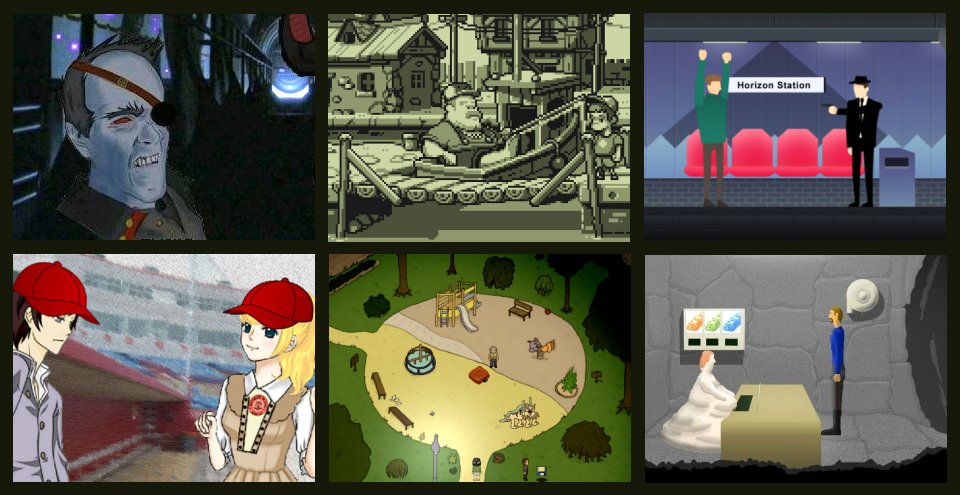
This month, three different games offer multiple player characters. You can build an adventuring party in a bizarre baseball-oriented game, play both detective and suspect in a mystery involving strange powers and a foreboding door, or take on three apparently disparate roles in a genteel minimalist tale. For those preferring single protagonists, you can play a boy rescuing his toy from a giant fish, a clumsy stock person accidentally releasing an evil alien, or a robot seeking to maintain galactic peace. Alternatively, you might take on a dark view of a classic cartoon character, as Donald Duck finds himself destitute. All these await in this month’s round-up of releases from the freeware scene.
Steve’s Selections
The Closer
Whilst still a young baseball player, your position as bullpen closer for New York seems secure. The team is in the sixth game of the World Series, and all you have to do is strike out Carlos Rodriguez to win. Your trademark slider pitch should do the trick, having bamboozled every batter that has faced it. But then the unthinkable happens: Rodriguez figures out your master pitch, and hits it for a home run. With the series now tied, you have only 24 hours to learn a new pitch for the final game. It’s a good thing the team’s coach knows where to find an intellectual bookshop downtown.
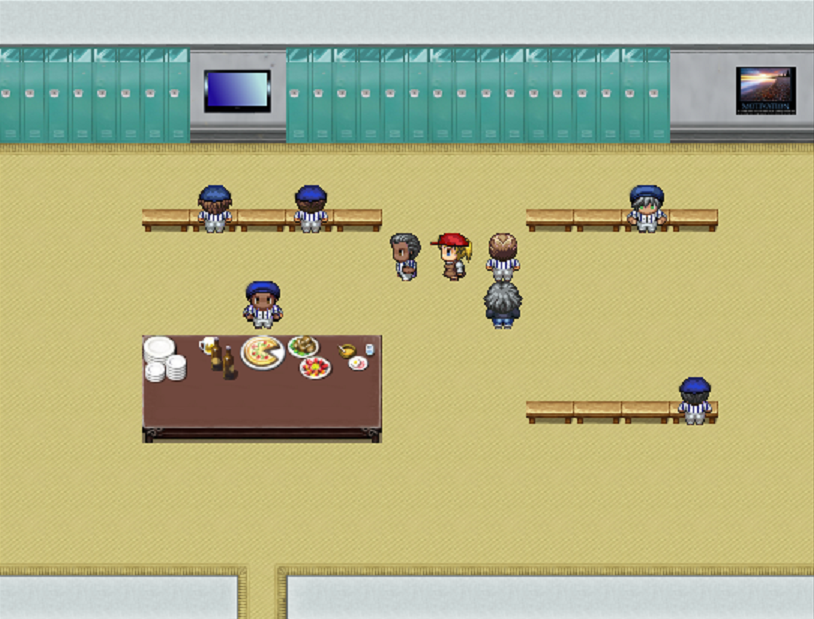
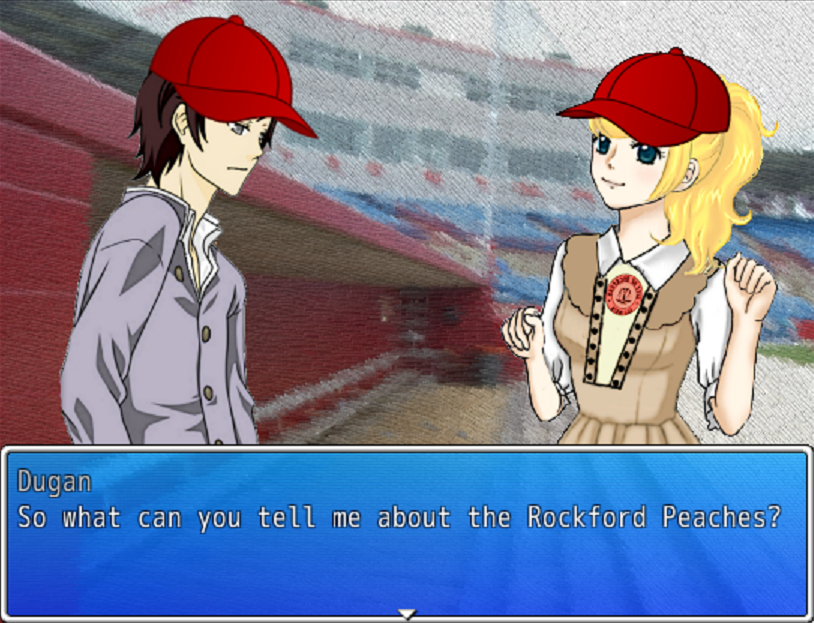
In The Closer, Woodsy Studio start with a sporting premise that soon changes into a surreal meta-game. The graphics use a top-down retro RPG style, though with a moderately high level of detail. The individual characters have heads about the size of their bodies, but can be distinguished by their outfits and skin colour. You and the coach will start off at the locker room, but your quest will take you to a philosopher’s home, Twitter headquarters, and even alternate realities. You will pick up and lose companions on the way, with a maximum of four characters following you around as you go. Animation is fairly simple, but includes some background effects, such as the heavy rainfall downtown. When in conversation, detailed portraits of the characters speaking display on-screen, which are also used in the menus. The sound mimics the classic role-playing games that this adventure is patterned after. There are simple footstep noises and the score comprises a variety of 8-bit tracks, with dramatic music used for moments of tension.
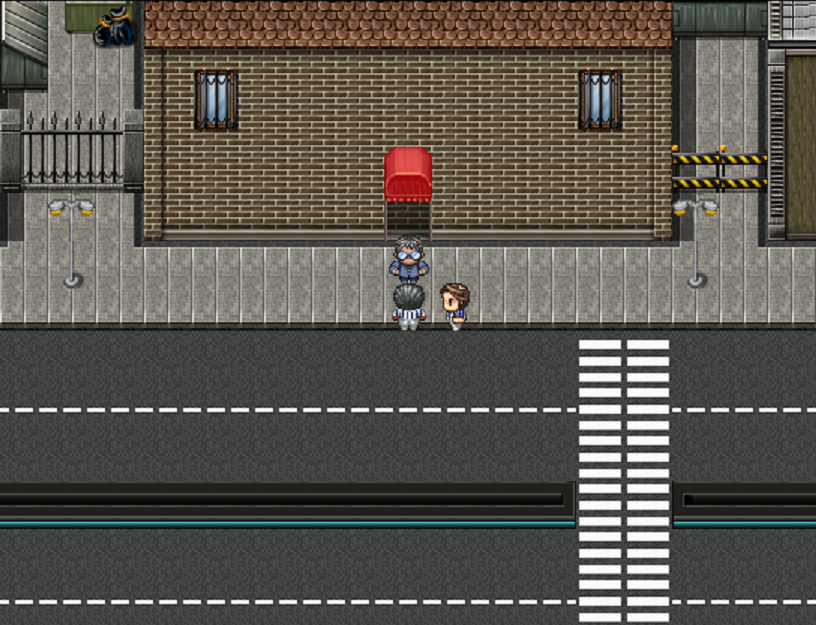
The initial part of the game seems fairly mundane. Using the arrow keys you move around, interacting with Z. But once you go in search of your new pitch, things take a decidedly odd turn. The coach insists that crosswords are the best way to learn pitches, and takes you to an intellectual bookshop. Here you meet a philosopher who encourages you to play a spoof Japanese erotic visual novel based on A League of Their Own. Whilst nothing graphic is shown, the themes being mocked here make this game unsuitable for children. Soon you will find yourself entering this and other computer game worlds in person, and discover that more than the World Series is at stake. A recurring activity is fighting, though you “fight” with baseball pitches and philosophical arguments instead of weapons. Entering one presents you with a turn-based RPG battle scene in which you select your “attacks” from menus. Whilst presented as battles, these fights are either unwinnable for story reasons, or are puzzles that require working out the right combination of attacks to use. There is also a simple shooting game at one point. Between these sequences, you will need to engage in diligent exploration and talk to all characters to progress the story along. The other characters who join your quest will usually guide you as to what you need to do next.
The Closer can be downloaded from the developer’s website.
The Seventh Door
A man wakes to find himself on a rooftop with no memory of how he got there, the rooftop itself seeming almost unreal to him. Collapsing from a sudden headache, he finds himself arrested for murder. Under lock and key, he discovers that he has the power to project his spirit to take over others and uses this power to make his escape. Meanwhile, a detective investigates a murder where a strange illustration of a door, marked with the number seven, was scrawled on a nearby wall. He was sure they had someone in custody, but the headaches he has been having make it hard to remember details. As both men pursue their investigations across town, other forces seek to cover up some dangerous experiments. Just what lies beyond the seventh door?
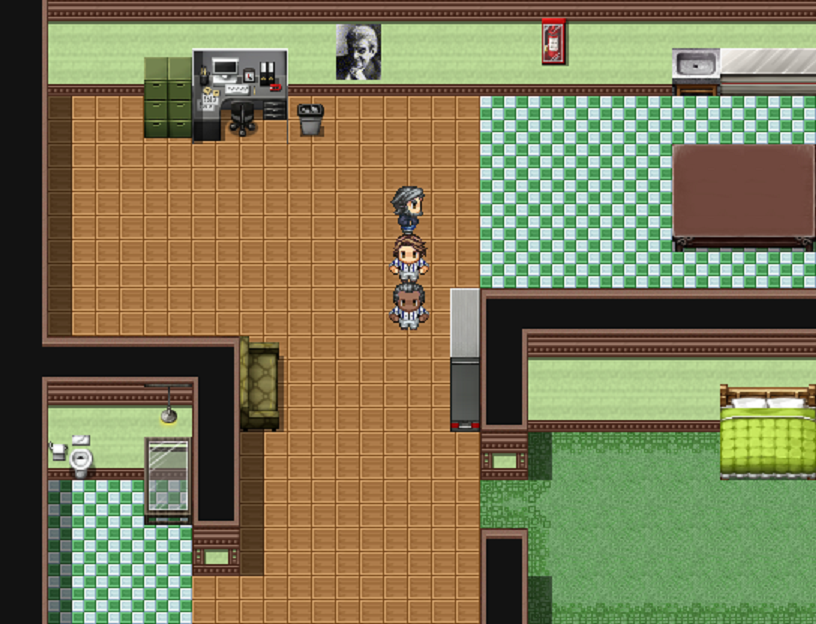
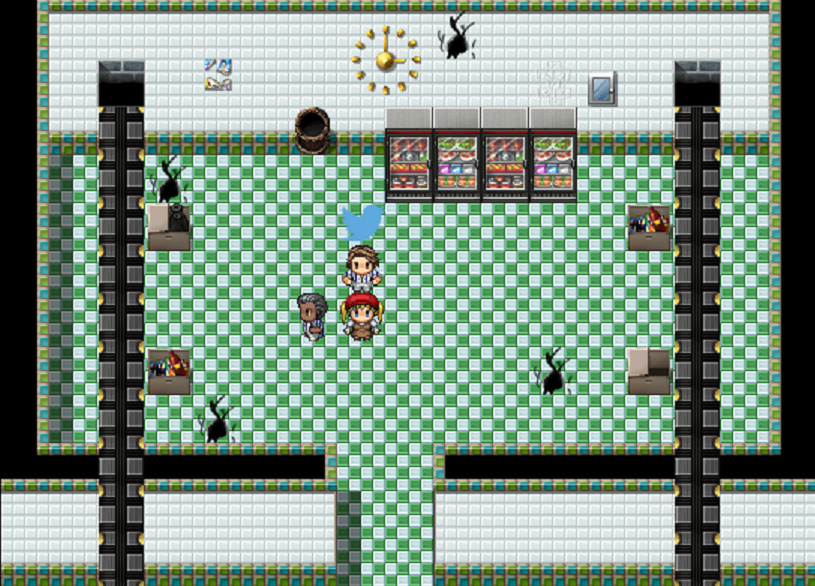
Famas Community took an interesting approach to game creation when they put together The Seventh Door. Rather than writing the outline beforehand, the game was made in sections. One person made the opening scene, then passed their work on to another member. The new designer reviewed this part, created their own follow-up scene and then passed it along. As each creator was allowed to diversify the graphics as they saw fit, there are some differences in the game’s look. Most have adopted variants of the top-down classic RPG look, with the proportionately-drawn main characters kept the same throughout. The backgrounds range from a hand-drawn playground scene to a blocky series of back alleys and a garishly decorated hotel. There is also a car section with some highly irregular shapes. The sounds also vary somewhat, with some segments going for dramatic music appropriate to the story, another a jaunty driving song, and one section that is just backed by disturbing whispering.
The setup was not suited for a coherent story, so it is very much to the developers’ credit that it does hold together well. It is a dark tale of illegal experimentation and corruption, with the titular seventh door hiding a surprise twist. The details can get a bit confusing, with the recap near the end really helping to tie things together. Each section is quite short, with the playable protagonist switching from section to section. The two main characters are the mystery man from the roof and the detective, though there is also a brief flashback played as the murder victim. You will collect clues at a crime scene, sneak around a hotel, and flee across rooftops. Keyboard controls are used throughout, with interaction normally achieved by pressing Z; other keyboard controls for specific sections are detailed as required. There is an arcade-style sequence where you need to dodge cars, helped immensely by a hint provided upon losing your allotted three lives. Using special powers, including possession and mind-reading, also sometimes requires timed button presses. Otherwise, the majority of gameplay involves exploration and use of a small inventory to progress. There are three endings available, the choice of which is based on a decision made in the closing scenes, though one is only available if you collected a specific item earlier on.
The Seventh Door can be downloaded from the developers’ website.
Providence
An aged man spends his days in a small flat, listening to classical music and feeding his caged bird. A small boy lives out on a remote farm with his parents, a peaceful life until the stranger came by. A nondescript man in a black suit performs assassinations for his boss who lives in a remote mountaintop retreat. Three different people. Three different stories. But these three stories are intertwined with one another, and only by seeing them to the end will you discover how they influence one another.
In creating Providence, Eight Bit Skyline have adopted a fairly minimalist style. Objects are made up of geometric blocks, mostly a single solid colour but with some variation of shade to lend depth. Though lacking in fine detail, the shapes are enough to allow players to get an accurate view of the environment. Individuals are also presented in a limited way, with clothes largely consisting of single blocks of colour and faces devoid of all features except hair. Despite the lack of features, the properly-proportioned human characters are realistically animated throughout. Sound effects are equally simple in nature, such as the ding of a doorbell or swish of a sliding door. The musical background is exclusively provided by the works of Chopin, either directly as background music or played on records by characters in-game.
Control is handled through keyboard, with the arrow keys used for moving around. When standing next to an interactive object or person, a caption appears on-screen. Tapping the space bar makes you attempt to interact with that hotspot. You will also acquire items stored in a small inventory at the bottom of the screen. Each object is assigned a number in the order it’s acquired, and pressing that number attempts to use it. You will progress through a series of scenes, switching between the three protagonists from scene to scene. Most puzzles are fairly simple in nature, many simply requiring you to interact with a particular character or use a specific item correctly. The tale is somewhat melancholy in nature, and whilst having no graphic content it is likely to be unsuitable for the young. The story unfolds naturally through gameplay and dialogue, with the connection between the three characters revealed in the closing scenes.
Providence can be downloaded from Game Jolt.
Latest Gaming Articles
All Articles