



What the Cyberpunk 2077 endings mean for Cyberpunk 2 & Edgerunners S2

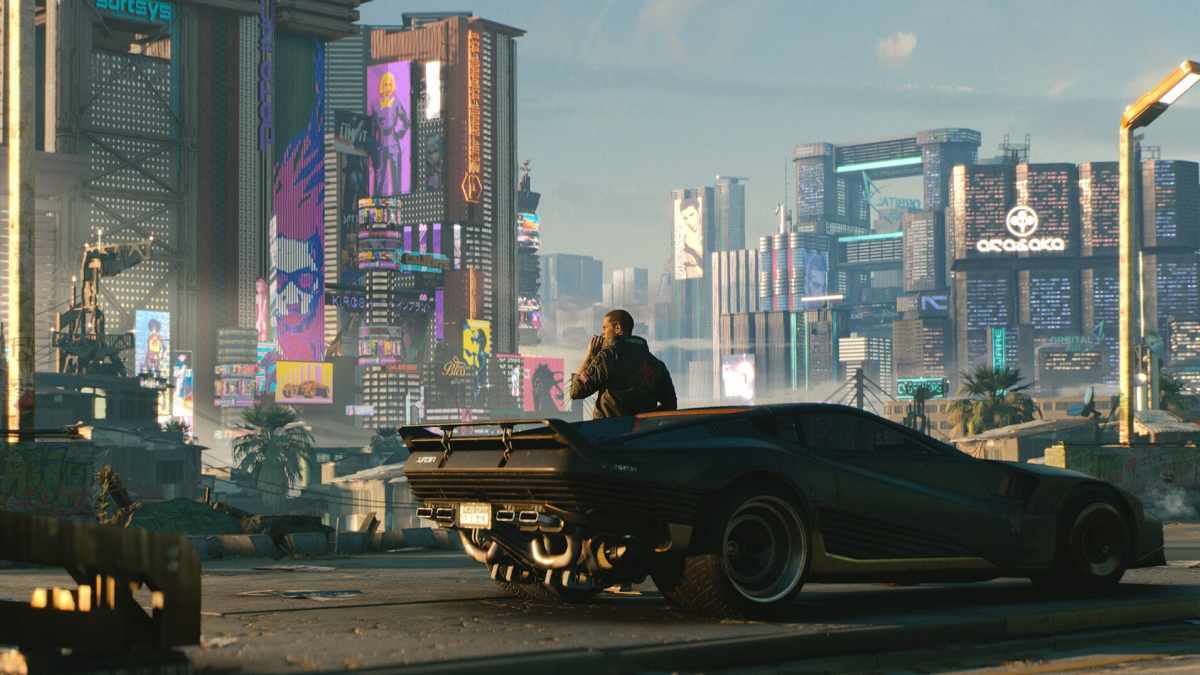
Many games have multiple choices that have consequences on the game’s ending, but no title makes you sit with your actions quite like the Cyberpunk 2077 endings. After a whole lot of action, combat, and rebellion, V’s fate is separated into different endings, all of which make you question whether survival is enough.
With confirmation that CD Projekt Red is already developing a Cyberpunk 2077 sequel (Cyberpunk 2), the endings from the original story have new implications. They’re not merely conclusions to this story, but could be a sign of what’s to come in the next entry of the Cyberpunk franchise.
Cyberpunk 2077 endings explained

Here are the main Cyberpunk 2077 endings and how Cyberpunk 2 could branch off from them.
The Star ending
At its core, Cyberpunk 2077 gameplay is all about trying to buy more time to work towards a way to save V from a biochip that’s destroying their brain. There’s one ending in Cyberpunk 2077 that is often seen as the best when it comes to hope for V, the Star ending.
You lead a clan to storm the Arasaka tower, killing Adam Smasher in the process and managing to get out alive. You reach Mikoshi, where V and Johnny say their goodbyes as Johnny leaves for beyond the Blackwall with Alt. As for V, they are told by Alt that there is no cure. V decides to live the rest of their life with Panam and the Aldecaldos, being almost adopted by the group as family.
The Aldecaldos and V leave Night City behind, still maintaining hope that they will travel to find somebody who can cure V. While it’s unknown if their efforts are successful, V will die with a newfound family and sense of purpose away from Night City.
In this ending, freedom for V means cutting ties with Night City completely. In some ways, the Star ending sets up Cyberpunk 2’s new main location, described by the developers as “Chicago gone wrong.” The Cyberpunk 2077 sequel could explore how far corporate influence reaches, and whether true freedom is even possible to achieve. The next protagonist could already live in a city that’s already completely ruined by corporate control, therefore representing what comes after a rebellion.
The Sun ending
V becomes the Night City Legend they always wanted to be, taking Rogue’s old spot as the top merc at the Afterlife. V gets into contact with Mr. Blue Eyes, a mysterious character with powerful associates, and is hired to do a heist. V leads a crew on a heist against Crystal Palace. Successfully pulling it off allows V to reap the rewards of wealth, fame, and status once held by Johnny Silverhand.
Although V becomes the legend they’ve always wanted to be, Cyberpunk 2077 characters that become legends don’t change the system; they become part of it. The Sun ending isn’t as heroic as it seems on the surface, surrendering yourself to Night City and showing how characters can become part of what they once fought against.
The sequel’s protagonist could live in the shadow of those legends, potentially navigating a world that idolizes them. This raises the question: What happens when everyone wants to be the next V? The Cyberpunk 2077 sequel could deconstruct what it means to truly be a main character in a world where fame is currency, while stories of V could go beyond Night City and inspire new mercs or provide further opportunities for corporations to cash in.
If this is the case, Cyberpunk 2 players may encounter NPCs who think they know V’s story from distorted or glorified accounts, while corporations could turn it into propaganda. The next protagonist may struggle to decipher what’s real, adding another complex layer to a world already plagued by corruption.
Temperance ending
V dies by moving on and crossing the Blackwall with Alt, with Johnny Silverhand taking over V’s body to get a second chance at life. With the opportunity for a new life, Johnny decides to leave Night City behind. Where Cyberpunk 2077 gameplay is concerned, it’s the most Cyberpunk-esque ending, totally giving up your body and identity to the digital realm.
If the Cyberpunk 2077 sequel builds on what’s on offer in the Temperance ending, the game could delve into digital consciousness and what it means to live as an AI or a string of data. Imagine Night City itself has a memory, the NPCs inside it are former humans living as code, and you have to navigate a world where physical and virtual realities co-exist, but differentiating between them is a challenge in and of itself. (Perhaps when CD Project Red said they would “preserve” the DNA of 2077 in Cyberpunk 2, they meant in a literal sense).
The Devil ending
V betrays Johnny Silverhand and sides with Arasaka. Johnny doesn’t get to reunite with Alt, meaning his engram is erased. V is put in a secret lab in an Arasaka space station, where scientists perform brain surgery to attempt to save V.
In the process, V suffers irreversible damage and can select to either have their consciousness uploaded to Arasaka’s storage, imprisoned in the custody of a corrupt corporation, or return to Earth to live out the short burst of life they have left. Like many Cyberpunk 2077 endings, the Devil ending shows that no matter how hard you try, the power and influence of corporations whose only concern is themselves will always prevail.
What Arasaka’s technological capabilities and influence over consciousness in the Devil ending could mean for a Cyberpunk 2077 sequel is the opportunity for the exploration of corporate immortality. Corporate executives live forever, resulting in corporations almost becoming mythological—think of Gods that rule over politics, society, and personal freedom that ends up as just an illusion.
If Cyberpunk 2 were to follow a Devil ending route, the world may feel less hopeful and more authoritarian, a tonal shift from Cyberpunk 2077.
Cyberpunk 2077: Phantom Liberty endings explained

Thanks to the Cyberpunk 2077 DLC, there is an ending where V survives.
The Tower ending
Solomon Reed sticks to his promise and takes V to Langley to cure them. V enters a two-year coma as a result of the surgery to remove the biochip, which was a success, and allows V to survive. The tradeoff is that the medical work damages V’s body so badly that they can no longer use cybernetics, and their time as a merc is over. After waking up in the year 2079, V finds that their friends have moved on, and they must live life back on the streets of Cyberpunk 2077’s Night City alone.
This Cyberpunk 2077 Phantom Liberty ending shows that despite those two years V was in a coma, the world remains indifferent, and life goes on without you, no matter your status. That sense of loss in terms of relevance and identity could be an emotional angle in Cyberpunk 2. It’s highly unlikely that V will appear in Cyberpunk 2, but there could be more of a focus on personal impact in the sequel. Society and technology move fast, and there are opportunities to dive into how people are haunted by the past, but have to survive in a world that has already moved on.
How does Cyberpunk: Edgerunners Season 1 end?

The conclusion of Season 1 sees numerous Cyberpunk Edgerunners characters meet their makers. Lucy and Falco are the last of the Edgerunners seen alive. Smasher shot Falco’s arm off, but he was able to escape with Lucy. What happened to him remains unknown.
What does this all mean for Cyberpunk 2 and Edgerunners Season 2?

Lucy was able to escape, but there’s a risk that Arasaka won’t stop looking for her. The plots in relation to Arasaka, Militech, and the cyberskeleton never fully concluded in the first season, leaving the door wide open for Cyberpunk Edgerunners Season 2. If Cyberpunk 2 were to take inspiration from the animated series, the emotional impact of Night City and the importance of relationships could play a role in surviving its trials and tribulations going forward.
FAQs
Is Cyberpunk 2077 a hit or a flop?
Cyberpunk 2077 had a disastrous launch, but updates turned the game around into a financial success and a fan-favorite RPG.
Do you fight Adam Smasher in all endings?
No, you don’t fight Adam Smasher in the Temperance ending of Cyberpunk 2077 or in the Phantom Liberty DLC.
Does V live in any ending?
V lives in the Tower ending of Cyberpunk 2077: Phantom Liberty.
Is there an Edgerunners season 2?
Yes, a continuation of the series was confirmed in July 2025 when it was officially announced as Cyberpunk: Edgerunners 2.
Is Cyberpunk 2 Project Orion?
Yes, Cyberpunk 2 initially went under the codename Project Orion.
Latest Gaming Articles
All Articles