



The 10 Best Adventure Games of All Time

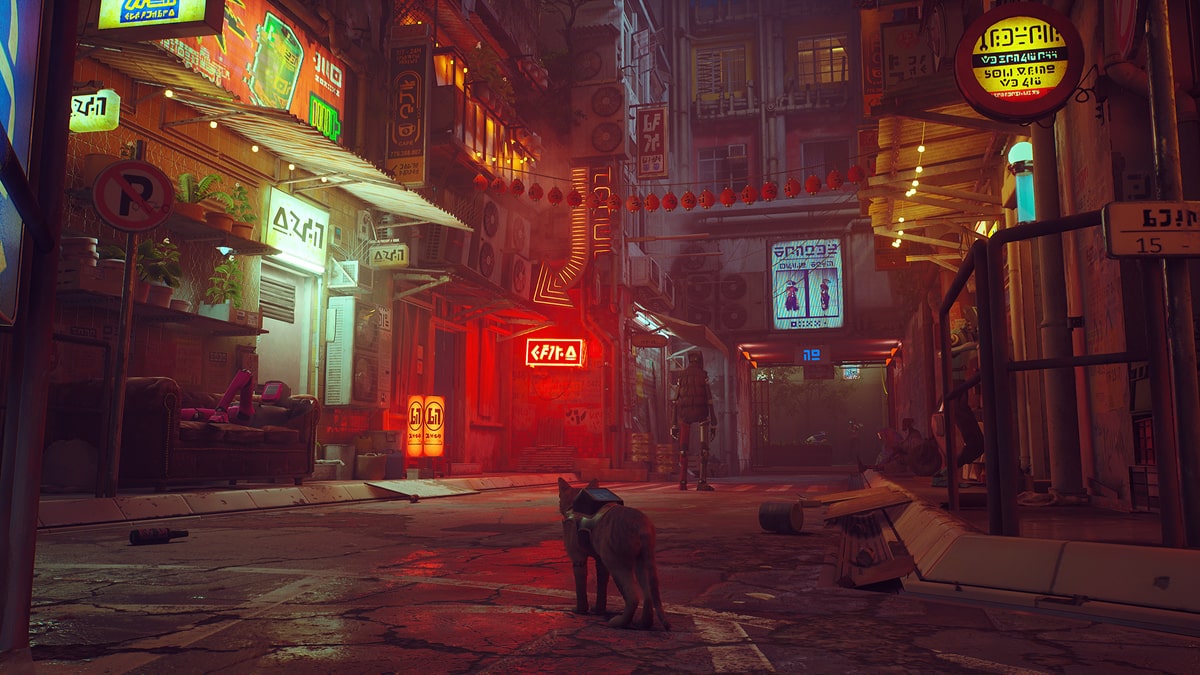
The best adventure games of all time pull you into worlds you don’t want to leave — whether that’s a ghost ship shrouded in mystery, a post-apocalyptic Western, or a neon-lit city explored through the eyes of a stray cat. We’ve logged hundreds of hours across PC, console, and mobile to build this list: 10 titles that define the genre across every platform and era, from point-and-click legends to open-world epics. Our picks are based on narrative depth, puzzle quality, world design, and lasting community impact — and whether you’re a veteran hunting a classic you missed or a newcomer figuring out where to start, you’ll find your next obsession here.
| Game | Genre | Platform(s) | Release Year | Best For | Difficulty |
|---|---|---|---|---|---|
| Stray | Action-Adventure | PC, PS4, PS5, Xbox One, Xbox Series X/S, Switch, Mac | 2022 | PS4 & PS5 players; atmosphere-first adventurers | Easy |
| Return of the Obra Dinn | Mystery-Puzzle Adventure | PC, Mac, PS4, Xbox One, Switch | 2018 | PC/Steam players; deductive-reasoning fans | Hard |
| Anchorhead | Interactive Fiction | Browser (free), PC, Mac (Steam) | 1998 | PC players; Lovecraftian horror enthusiasts | Very Hard |
| Red Dead Redemption 2 | Action-Adventure / Open-World | PC, PS4, Xbox One | 2018 | PS4/PS5 (BC) players; story-first open-world fans | Medium |
| The Curse of Monkey Island | Point-and-Click Adventure | PC, Mac | 1997 | PC players; classic LucasArts fans | Medium |
| The Legend of Zelda: Breath of the Wild | Action-Adventure / Open-World | Nintendo Switch, Wii U | 2017 | Switch players; open-world exploration fans | Medium |
| Journey | Indie Adventure / Artistic Exploration | PS3, PS4, PC, iOS | 2012 | iOS/mobile players; emotional, wordless adventure seekers | Easy |
| The Walking Dead | Episodic Narrative Adventure | PC, Mac, PS3, PS4, Xbox 360, Xbox One, Switch, iOS, Android | 2012 | iOS & Android players; story-driven choice fans | Easy |
| Life is Strange | Episodic Narrative Adventure | PC, Mac, Linux, PS3, PS4, Xbox 360, Xbox One, iOS, Android | 2015 | PC/Steam & mobile players; emotional narrative fans | Easy |
| Portal | Puzzle-Adventure / First-Person | PC, Mac, Linux, PS3, Xbox 360, Switch, iOS, Android | 2007 | PC/Steam players; spatial-reasoning puzzle fans | Medium |
How We Chose the Best Adventure Games of All Time
Every title on this list was evaluated against five weighted criteria. Here’s what we measured and why each factor matters:
- Narrative depth (30%): A great adventure game lives or dies by its story — we prioritized titles where the writing, characters, and emotional stakes create genuine investment that endures long after the final scene.
- Puzzle quality (20%): The best puzzles feel woven into the world rather than bolted on — we looked for games where solving challenges feels like a natural extension of exploration and story rather than an obstacle course.
- World design and atmosphere (20%): Immersive environments that reward curiosity are central to the genre — we favored games where every location, object, and detail adds texture to the experience.
- Mechanical innovation (15%): Adventure games that push the genre forward — introducing new ways to interact, explore, or make choices — earn higher marks because they expand what the genre can do.
- Lasting impact and community reception (15%): Critical scores, awards, and long-term community love all signal that a game transcended its moment — we weighted titles that still drive conversation and discovery years after release.
Evolution of Adventure Games
Adventure games have one of the richest histories in gaming. The genre traces its roots to the 1970s, when Will Crowther’s Colossal Cave Adventure (1976) pioneered text-based exploration — players typed commands into a prompt and imagined the world from prose alone. The 1980s brought graphical point-and-click interfaces, and by the early 1990s, LucasArts had defined a golden age with titles like Monkey Island, Day of the Tentacle, and Grim Fandango — games celebrated for sharp writing, inventive puzzles, and player-friendly design. The early 2000s saw the genre contract as 3D action games dominated, but independent studios kept the flame alive. Telltale’s The Walking Dead (2012) sparked a modern renaissance, proving that choice-driven narrative games could move millions. Today, the adventure genre spans walking simulators, open-world epics, and interactive fiction — broader, more experimental, and more emotionally ambitious than ever before.
10 best adventure games of all time
Stray
At a glance: Genre: Action-Adventure | Platform: Windows, PS4, PS5, Mac, Xbox One, Xbox Series X/S, Nintendo Switch | Release Year: 2022 | Best For: Players who crave atmospheric world-building and creative puzzle design
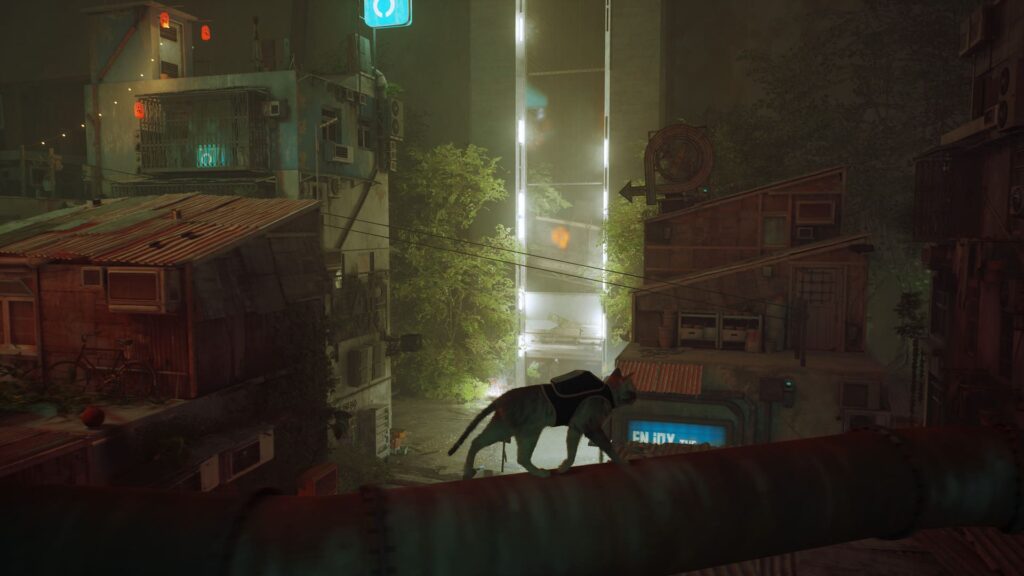
Set in a decaying, neon-drenched cybercity sealed beneath a dome, Stray puts you in control of a lost cat navigating a world populated entirely by robots. Your goal: find your way home — but the city’s mysteries run far deeper than they first appear.
Gameplay blends fluid feline movement with environmental puzzle-solving and light stealth sequences. You’ll scratch walls, knock objects off ledges, and work alongside a tiny drone companion named B-12 to communicate with the city’s robotic inhabitants and unlock the secrets buried beneath its streets.
What sets Stray apart is its perspective — experiencing a richly detailed human-built world through the eyes of a cat creates a sense of scale and curiosity that few adventure games replicate.
The game earned widespread critical acclaim on release, holding an 84 on Metacritic and winning multiple awards including Best Indie Game nominations at The Game Awards 2022 — and the internet’s collective love for its cat mechanics made it a genuine cultural moment.
Worth playing if you like: Journey, Inside, Little Nightmares, or any adventure game that leads with atmosphere over action.
PS5 players: Stray runs natively on PS5 at a smooth 60fps — making it one of the best adventure games on PS5 for a visually polished, buttery-smooth experience. If you’re hunting for top-tier PS5 adventure games, this is a must-have.
Return of the Obra Dinn

At a glance: Genre: Mystery-Puzzle Adventure | Platform: Windows, Mac, Xbox One, PS4, Nintendo Switch | Release Year: 2018 | Best For: Players who love deductive reasoning, atmospheric storytelling, and unconventional art styles
In Return of the Obra Dinn, you’re an insurance investigator sent to assess a merchant vessel that has drifted into port — alone, years after it vanished at sea. Every crew member is dead or missing, and it’s your job to determine the fate of all 60 souls on board.
Your primary tool is a pocket watch that lets you step into the exact moment of each crew member’s death, freezing time so you can examine the scene and piece together who died, how, and at whose hands. Progress comes not from combat or dialogue trees but from pure deduction — cross-referencing a crew manifest, sketched portraits, and overheard conversations to lock in your conclusions.
What makes Obra Dinn genuinely singular is its 1-bit monochromatic art style — a bold design choice that transforms every death scene into something that feels like a woodcut illustration come to life, lending the game an eerie, timeless quality no other title has matched.
The game earned a Metacritic score of 87 on PC and swept awards season, winning the BAFTA Games Award for Game Design in 2019 — cementing solo developer Lucas Pope’s reputation as one of the most inventive minds in the genre.
Worth playing if you like: Outer Wilds, Her Story, Disco Elysium, or any mystery-driven experience that treats players as intelligent investigators.
Steam Deck players: Return of the Obra Dinn is officially Verified on Steam Deck — controls translate naturally to the handheld layout, and the monochromatic art style looks striking on the Deck’s screen. If you’re building out your best adventure games PC/Steam library on the go, this is a verified must-play.
Anchorhead

At a glance: Genre: Interactive Fiction / Text Adventure | Platform: Browser (free), Steam (Windows, Mac) | Release Year: 1998 | Best For: Players drawn to Lovecraftian horror, rich prose, and deeply layered mystery
Anchorhead is one of the most masterfully written pieces of interactive fiction ever created — a Lovecraftian descent into a fog-choked New England coastal town where your character and her husband have just inherited a crumbling family estate. What begins as an unsettling move soon unravels into something far darker, as the town’s history and the estate’s secrets intertwine with ancient, cosmic horror.
As a text adventure, every action is typed as a command — explore rooms, examine objects, talk to locals, and piece together a conspiracy that spans generations. The writing is exceptional by any standard: atmospheric, precise, and genuinely frightening in ways that most graphical horror games never achieve. The puzzle design is intricate and deeply embedded in the narrative, rewarding players who pay close attention to every detail.
What sets Anchorhead apart from other interactive fiction is the sheer density of its world — nearly every location, object, and character adds texture to the story, making exploration feel genuinely investigative rather than mechanical.
It holds a place as one of the highest-rated works in the Interactive Fiction Database and has remained a benchmark title for the genre for over two decades — proof that prose and player agency, combined with care, can outpace any graphical spectacle.
A note for newcomers: Anchorhead is a demanding experience — the puzzles are unforgiving and the game doesn’t guide your hand. Think of that as a feature, not a flaw — the challenge is part of what makes solving it so satisfying. A walkthrough kept nearby won’t diminish the story; it’ll make sure you actually get to experience all of it.
Worth playing if you like: Zork, Planescape: Torment, Disco Elysium, or any story-first experience where words do the heavy lifting.
Red Dead Redemption 2

At a glance: Genre: Action-Adventure / Open-World | Platform: Windows, PS4, Xbox One | Release Year: 2018 | Best For: Players who want a slow-burn, story-first epic with a living, breathing open world
Set in a fading American frontier at the dawn of the 20th century, Red Dead Redemption 2 follows Arthur Morgan — a senior member of the Van der Linde outlaw gang — as the era of outlaws draws to a close and the walls close in on everything he’s known. It’s a prequel, a tragedy, and one of the most emotionally resonant stories ever told in a video game.
At its core, RDR2 is an open-world action-adventure: you’ll ride across sprawling landscapes, take on story missions, hunt wildlife, engage in shootouts, and interact with a world that reacts dynamically to your choices and reputation. The Honor system tracks your moral decisions, shaping how towns, strangers, and even Arthur’s journal entries reflect the man you choose to be.
What sets RDR2 apart from virtually every open-world game that came before or after it is the sheer density of its simulation — NPCs have daily routines, weather shifts dynamically, and the world feels less like a game map and more like a place that exists whether you’re in it or not.
Released to near-universal acclaim, RDR2 holds a Metacritic score of 97 on PS4, won numerous Game of the Year awards for 2018, and remains a benchmark for narrative ambition in open-world design that developers still reference today.
Worth playing if you like: The Witcher 3, Disco Elysium, Ghost of Tsushima, or any story-driven open-world adventure where the journey matters as much as the destination.
PS5 players: There is currently no native PS5 version of Red Dead Redemption 2, but the game runs via backward compatibility on PS5 — and it plays beautifully. If you’re browsing for the best PS5 adventure games, this is still a must-add to your library.
The Curse of Monkey Island
At a glance: Genre: Point-and-Click Adventure | Platform: Windows, Mac | Release Year: 1997 | Best For: Players who love sharp wit, inventive puzzles, and classic LucasArts-era storytelling
In The Curse of Monkey Island, hapless pirate-wannabe Guybrush Threepwood accidentally traps his beloved Elaine in the form of a golden statue — and must navigate the sun-soaked Caribbean, double-dealing pirates, and a voodoo-fueled curse to set things right. It’s the third entry in the series, but its hand-painted visuals and fully voiced cast made it a landmark moment for the genre.
Gameplay follows the classic LucasArts point-and-click formula: explore locations, collect items, and combine them in creative — often absurd — ways to solve puzzles. The interface is clean and intuitive, but the puzzles themselves demand lateral thinking and a willingness to experiment, rewarding curious players with some of the most cleverly constructed solutions in adventure game history.
What makes The Curse of Monkey Island uniquely stand out is its tone — the script is genuinely funny, blending groan-worthy puns with sharp meta-humor and surprisingly heartfelt moments, all delivered through voice performances that still hold up nearly three decades later.
The Monkey Island series is considered one of the defining pillars of the point-and-click golden age, and Curse in particular is routinely cited by developers as a foundational influence — its DNA visible in everything from Grim Fandango to Sea of Thieves.
Worth playing if you like: Grim Fandango, Day of the Tentacle, Thimbleweed Park, or any adventure game where clever writing and inventive puzzles do the heavy lifting.
The Legend of Zelda: Breath of the Wild
At a glance: Genre: Action-Adventure / Open-World | Platform: Nintendo Switch, Wii U | Release Year: 2017 | Best For: Players who want total freedom to explore a gorgeous, physics-driven open world at their own pace
A century after a great calamity swept Hyrule, Link wakes with no memories and a kingdom in ruins — with the imprisoned Princess Zelda holding Calamity Ganon at bay through sheer will alone. The story is lean by design, but the world it drops you into is anything but: a vast, weather-swept Hyrule filled with secrets, ruins, and stories told through exploration rather than cutscenes.
Breath of the Wild strips the traditional Zelda structure down and rebuilds it around player freedom — from the opening plateau, you can go anywhere, climb anything, and approach every challenge using the game’s deep physics and chemistry systems however you see fit. Shrines replace dungeons as bite-sized puzzle chambers, and the ability to cook meals, tame horses, and craft your own path through the world gives even routine exploration a satisfying loop.
What makes BotW genuinely singular is how it rewards curiosity above all else — the question “I wonder if I can…” almost always has the answer “yes,” and that sense of emergent possibility redefined what open-world adventure games could be.
The game swept awards season in 2017, winning Game of the Year at The Game Awards and earning a 97 on Metacritic — and its influence on open-world design is still visible in virtually every major release that followed it.
Worth playing if you like: Tears of the Kingdom, Elden Ring, Horizon Zero Dawn, or any open-world adventure that prioritizes exploration and player agency over a linear quest structure.
Loved your time in Hyrule? Tears of the Kingdom (2023) is the direct successor — if you love BotW, Tears of the Kingdom deepens every system, layering new building mechanics and expanded lore onto the same open world you already know.
Journey

At a glance: Genre: Indie Adventure / Artistic Exploration | Platform: PS3, PS4, Windows, iOS | Release Year: 2012 | Best For: Players seeking an emotional, wordless adventure that lingers long after the credits roll
In Journey, you play as a robed figure crossing a vast, ancient desert toward a distant mountain — no dialogue, no map, no explicit objectives. The story unfolds entirely through environment and movement, tracing a deeply human arc of discovery, struggle, and transcendence that hits differently depending on where you are in life when you play it.
Gameplay is deceptively simple: glide across sand dunes, collect glowing cloth fragments to extend your scarf, and navigate environmental puzzles at a meditative pace. The controls are fluid and expressive, and thatgamecompany designed every interaction to feel meaningful — even the act of singing to activate ancient mechanisms carries emotional weight. If another player happens to be nearby in the same session, they can join wordlessly; but the solo experience is equally complete, and that’s the point.
What makes Journey uniquely stand out is how much it achieves without a single word — it communicates loss, wonder, and connection purely through art direction, movement, and Austin Wintory’s Grammy-nominated score, proving that games can operate as pure emotional experiences.
It holds a Metacritic score of 92 on PS3, won multiple BAFTAs, and became the first video game soundtrack ever nominated for a Grammy — cementing Journey as one of the most culturally significant indie releases of the last two decades.
Worth playing if you like: Stray, ABZÛ, Gris, or any atmospheric adventure where the mood, movement, and music carry the story more than words ever could.
Mobile players: Journey is available on iPhone via the App Store, and it translates beautifully to mobile — the touch controls feel intuitive, and the game’s flowing movement and minimal UI make it one of the best adventure games for iOS. Whether you’re playing on a commute or relaxing at home, it’s a seamless experience on Apple devices.
The Walking Dead
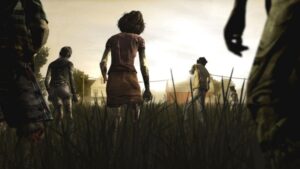
At a glance: Genre: Episodic Narrative Adventure | Platform: Windows, Mac, PS3, PS4, Xbox 360, Xbox One, Nintendo Switch, iOS, Android | Release Year: 2012 | Best For: Players who want emotionally devastating storytelling and moral choices with real consequences
Set at the outbreak of a zombie apocalypse, The Walking Dead follows Lee Everett — a convicted felon given a second chance — as he takes under his wing a young girl named Clementine after her parents go missing. What unfolds across five episodes is one of the most gut-wrenching survival stories ever told in an adventure game, built on small moments of human connection against an unforgiving backdrop.
Telltale’s formula places choice at the center of everything: dialogue decisions, split-second moral dilemmas, and the knowledge that the people you protect — or fail to protect — shape the story in ways you’ll feel long after the credits roll. The point-and-click mechanics are straightforward, keeping the focus squarely on character and consequence rather than mechanical challenge.
What makes The Walking Dead uniquely stand out is how it weaponizes your attachment to its characters — Telltale didn’t just adapt a comic book, they built a new emotional language for interactive storytelling that the industry is still drawing from.
The game won over 90 Game of the Year awards for 2012, holds an 89 on Metacritic, and is widely credited with launching the modern wave of narrative-choice adventure games — its influence runs directly through everything from Life is Strange to Disco Elysium.
Worth playing if you like: Life is Strange, Detroit: Become Human, Disco Elysium, or any story-driven adventure where your choices carry genuine emotional weight.
Mobile players: The Walking Dead is available on both iOS (App Store) and Android (Google Play), and its episodic format is a natural fit for mobile sessions — pick up an episode, put it down, and come back whenever. The touch controls handle the point-and-click gameplay well, making it one of the best adventure games on mobile for both iPhone and Android users.
Life is Strange

At a glance: Genre: Episodic Narrative Adventure | Platform: Windows, Mac, Linux, PS3, PS4, Xbox 360, Xbox One, iOS, Android | Release Year: 2015 | Best For: Players who love emotionally driven stories, time-manipulation mechanics, and choice-based consequences
Set in the fictional Pacific Northwest town of Arcadia Bay, Life is Strange follows Max Caulfield — a photography student who discovers she can rewind time — as she reunites with her estranged best friend Chloe and unravels a mystery surrounding a missing classmate. The story escalates from quiet, coming-of-age drama into something genuinely unsettling, blending teenage life with supernatural dread in ways that few games have matched.
Across five episodes, gameplay revolves around exploration, dialogue choices, and Max’s rewind mechanic — which lets you undo decisions, experiment with conversations, and reshape outcomes in real time. The mechanic isn’t just a gimmick: it’s woven into puzzles, emotional moments, and the game’s core theme of consequence, making every choice feel reversible and yet somehow still weighty.
What makes Life is Strange uniquely stand out is how it captures the specific texture of young adult anxiety — the fear of saying the wrong thing, of losing someone, of not being able to fix what’s broken — and translates it into a mechanic that lets you try anyway.
The game holds an 85 on Metacritic, earned a BAFTA nomination for Best Story, and sparked a franchise now spanning multiple sequels and spin-offs — with Life is Strange: Double Exposure (2024) returning Max for a brand-new mystery and proving the series’ cultural staying power.
Worth playing if you like: The Walking Dead (Telltale), Oxenfree, Firewatch, or any narrative adventure where the emotional stakes hit harder than the action.
Steam players: Life is Strange is available on Steam for Windows, Mac, and Linux — and Episode One is free to download, making it one of the best entry points on the platform for new players. With overwhelmingly positive reviews, it’s a standout title for any best adventure games PC/Steam collection.
Portal

At a glance: Genre: Puzzle-Adventure / First-Person | Platform: Windows, Mac, Linux, PS3, Xbox 360, Nintendo Switch, iOS, Android | Release Year: 2007 | Best For: Players who love spatial reasoning, dark humor, and tightly designed puzzle experiences
Set inside the sterile, deteriorating test chambers of Aperture Science, Portal casts you as test subject Chell — guided through increasingly dangerous physics puzzles by GLaDOS, an AI whose cheerful corporate tone masks something far more sinister. The story is minimal by design, drip-fed through environmental detail and GLaDOS’s darkly comic monologues, but it builds to a finale that’s become one of gaming’s most celebrated moments.
The core mechanic is the portal gun: a device that lets you place two linked portals on surfaces and travel instantly between them. What begins as a simple concept becomes a framework for some of the most inventive spatial puzzles in the medium — momentum carries through portals, letting you build speed, redirect objects, and solve chambers in ways that feel genuinely revelatory the first time you figure them out.
What makes Portal uniquely stand out is its precision — in just three to four hours, it introduces, develops, and resolves a mechanical idea with a completeness and wit that most games three times its length never achieve.
Portal holds a Metacritic score of 90 on PC, is consistently ranked among the greatest games ever made, and its ending song “Still Alive” became a cultural touchstone — proof that a short, perfectly crafted experience can outlast sprawling blockbusters in the memory.
Worth playing if you like: Portal 2, The Talos Principle, The Witness, or any puzzle-adventure that respects your intelligence and rewards creative thinking over brute force.
Steam players: Portal is available on Steam for Windows, Mac, and Linux — and it’s one of the highest-rated puzzle-adventure games on the platform. Whether you’re diving in for the first time or revisiting Aperture Science, it’s a seamless Steam experience and a cornerstone of any best adventure games PC/Steam list.
Mobile players: Portal is available on both iOS (App Store) and Android (Google Play). The mobile port holds up well — touch controls handle the portal mechanics cleanly, and performance is smooth on modern devices. If you’re searching for the best adventure games on mobile that double as genuine puzzle challenges, Portal belongs on your shortlist.
Honorable Mentions
Our top 10 covers the essential picks, but the adventure genre runs deep. These titles didn’t quite crack the main list — but every one of them is worth your time.
Grim Fandango (1998)
Tim Schafer’s noir masterpiece casts you as Manny Calavera — a travel agent for the dead — navigating a corrupt Land of the Dead inspired by Aztec mythology and 1940s film noir. Its sharp script, unforgettable characters, and elaborate puzzle design defined LucasArts at its creative peak. The 2015 Remastered edition brought updated controls and audio, making it easier than ever to experience one of the most celebrated adventure games ever written.
Disco Elysium (2019)
Disco Elysium is an RPG-adventure hybrid that strips out combat entirely and replaces it with the most elaborate dialogue and skill system in the genre — your character’s inner thoughts literally argue with each other as you investigate a murder in a crumbling harbor city. It’s dense, politically charged, and unlike anything before or since. The Final Cut (2021) added full voice acting, elevating an already extraordinary piece of interactive writing into something genuinely unmissable.
What Remains of Edith Finch (2017)
This brief but devastating walking simulator tasks you with exploring the Finch family home and uncovering the stories of relatives who each met an unusual end — each told through a radically different gameplay vignette. It holds a 88 on Metacritic and won a BAFTA for Best Game in 2018, remarkable for a game you can finish in two hours. Few experiences in gaming communicate grief and wonder as economically or as powerfully.
Oxenfree (2016)
Night School Studio’s debut follows a group of teenagers who accidentally open a ghostly rift on a mysterious island, blending supernatural horror with genuinely naturalistic teenage dialogue delivered through a real-time conversation system that never pauses the world while you choose what to say. Its atmosphere is tense and melancholy, and the story rewards multiple playthroughs as choices cascade in unexpected directions. Oxenfree II: Lost Signals (2023) is a worthy sequel if you want more.
Kentucky Route Zero (2013–2020)
Released in five acts over seven years, Kentucky Route Zero is a magical-realist adventure following a truck driver making a final delivery along a mysterious underground highway — more tone poem than traditional game, with minimal puzzles and maximum atmosphere. Its surrealist Southern Gothic world and quietly radical approach to narrative make it one of the most artistically distinctive games ever released. If you’re willing to meet it on its own terms, it’s a profound and lasting experience.
Firewatch (2016)
Set in the Wyoming wilderness during the summer of 1989, Firewatch puts you in the boots of a fire lookout named Henry — whose only human contact is a voice on a walkie-talkie named Delilah — as a seemingly routine summer takes a strange and unsettling turn. The writing is warm and witty, the environment is stunning, and the character work between Henry and Delilah is some of the best in the genre. It won’t challenge you mechanically, but emotionally it leaves a mark.
Myst (1993)
Myst redefined what games could look like when it launched in 1993 — its pre-rendered environments were unlike anything players had seen — and its influence on the puzzle-adventure genre cannot be overstated, with virtually every room-escape and environmental puzzle game owing it a debt. You arrive on a mysterious island with no instructions and no hand-holding, piecing together its history through exploration and logic alone. The 2021 remake brings it to modern platforms with updated visuals while preserving what made the original so hypnotic.
Planescape: Torment (1999)
Widely regarded as the greatest RPG-adventure ever written, Planescape: Torment follows an immortal amnesiac called The Nameless One through a bizarre multiverse city as he searches for answers to one central question: “What can change the nature of a man?” The combat is almost incidental — this is a game of extraordinary prose, philosophical depth, and moral complexity that holds up as literature. The Enhanced Edition (2017) is the definitive way to play it today.
Outer Wilds (2019)
Outer Wilds is a mystery-exploration game set in a handcrafted solar system caught in a 22-minute time loop — you die, the loop resets, and you carry only your knowledge forward, gradually piecing together the fate of an ancient civilization. It’s one of the most praised games of the last decade, holding a 85 on Metacritic and winning Best Game at the BAFTA Game Awards 2020. Go in knowing as little as possible — the discovery is the entire experience.
A Short Hike (2019)
Don’t let its tiny scope fool you: A Short Hike is a joyful, perfectly paced open-world adventure about a bird named Claire hiking to the top of a mountain peak to get cell service — and every detour, side conversation, and optional discovery along the way is a small delight. It takes around 90 minutes to complete and leaves you feeling genuinely warm. Created solo by Adam Robinson-Yu, it’s a reminder that adventure games don’t need to be epic to be unforgettable.
New Adventure Games to Watch in 2026
The adventure genre never stands still. These four titles — released recently or arriving in 2026 — represent the frontier of what’s possible: fresh mechanics, bold storytelling, and worlds worth getting lost in.
Cairn
At a glance: Genre: Climbing Adventure | Platform: PC (Steam), PS5, Xbox Series X/S | Release Year: 2025 | GameSpot Score: 9/10
Cairn is a survival climbing game that turns every ascent into a tense, deliberate puzzle. Developed by Sidequest Studios, it tasks you with scaling a treacherous mountain using a fully physical rope system — each anchor placed, each grip chosen, carries real consequence. GameSpot awarded it a 9/10, calling it one of the most tense and rewarding adventure experiences in years. What makes Cairn stand out is how it translates the psychological weight of mountaineering into moment-to-moment gameplay: there are no checkpoints to cushion failure, only the satisfaction of reaching the next ledge through patience and skill. If you’ve ever wanted a game that makes exploration feel genuinely dangerous, Cairn belongs on your radar.
Split Fiction
At a glance: Genre: Co-op Action-Adventure | Platform: PC, PS5, Xbox Series X/S | Release Year: 2025
From Hazelight Studios — the team behind It Takes Two — Split Fiction is a co-op adventure that throws two writers into the worlds of their own stories, shifting genres and mechanics every few hours as their narratives collide and diverge. One moment you’re in a cyberpunk cityscape, the next a magical realm of floating islands — and the game never repeats the same idea twice. It earned widespread critical acclaim on release, celebrated for its relentless creative ambition and a co-op design philosophy that makes every section feel built for two. If you have someone to play with, this is one of the most inventive adventure experiences of 2025.
Avowed
At a glance: Genre: First-Person RPG-Adventure | Platform: PC, Xbox Series X/S | Release Year: 2025
Obsidian Entertainment’s Avowed brings the richly built world of Eora — familiar to fans of Pillars of Eternity — into a first-person action-RPG format built around reactive choices and deep lore. Set in the Living Lands, a region plagued by a mysterious blight, you play an envoy whose investigation unravels political conspiracies and moral ambiguities at every turn. Obsidian’s strength has always been in the writing, and Avowed delivers: companions are complex, dialogue paths carry meaningful consequences, and the world rewards players who read every document and talk to every NPC. For adventure fans who want narrative density alongside real-time combat, it’s one of 2025’s most rewarding RPG-adjacent picks.
Clair Obscur: Expedition 33
At a glance: Genre: Turn-Based RPG-Adventure | Platform: PC, PS5, Xbox Series X/S | Release Year: 2025
Sandfall Interactive’s debut title arrived in 2025 as one of the year’s most talked-about surprises. Set in a painterly Belle Époque world where a mysterious entity called the Paintress erases years from existence each cycle, Clair Obscur: Expedition 33 follows a group of fighters on what may be humanity’s last expedition to destroy her before the next stroke falls. The turn-based combat is kinetic and precise, demanding active parries and well-timed counters, while the world design draws from European art movements to create environments unlike anything else in the genre. Its emotional story and stunning visual identity have drawn comparisons to classic JRPGs — but it is unmistakably its own thing, and one of 2026’s most compelling adventure-adjacent titles to experience.
FAQ: Best Adventure Games
What is considered an adventure game?
Following on from the potential Portal debate, the definition of an adventure game is particularly broad. You’ll notice when browsing the adventure game tab on a platform like Steam that there are games of all subgenres and styles included under this umbrella.
Generally, adventure games should meet the following criteria:
- They should be story-rich
- The game world should be immersive, rewarding exploration
- There should be puzzles to solve
Outside of this, adventure games can fall into a plethora of subcategories. You can find an action-adventure Western, for example, or a horror-themed puzzle adventure. Some adventure games even follow an interactive fiction or visual novel format, placing more of an emphasis on storytelling than gameplay mechanics.
Not sure which type suits you? Here’s a quick breakdown of the major adventure subgenres:
- Point-and-click: The classic form — you navigate environments by clicking, collect items, and solve puzzles through inventory combinations, as seen in Monkey Island and Grim Fandango.
- Narrative / walking simulator: Story and atmosphere take center stage with minimal mechanical challenge, prioritizing emotional immersion over puzzles — think What Remains of Edith Finch or Firewatch.
- Action-adventure: Combat, movement, and real-time interaction combine with exploration and story, as in Red Dead Redemption 2 and The Legend of Zelda: Breath of the Wild.
- Interactive fiction: Text-driven or dialogue-heavy experiences where player choices branch the narrative, ranging from classic text adventures like Anchorhead to modern choice-driven titles like Disco Elysium.
- Puzzle-adventure: The puzzle mechanic is the core loop — spatial, logical, or deductive challenges drive progress, as in Portal and Return of the Obra Dinn.
Latest Gaming Articles
All Articles