



AdventureX 2019 round-up: Part 1

Having reached its ninth year, AdventureX has continued to go from strength to strength. This was the first time the event required paid admission, with all tickets selling out within five hours. Come the weekend of November 2-3, an enthusiastic crowd descended on the British Library Knowledge Centre, including at least two attendees in cosplay. A variety of talks took place over the two days, including a presentation on Beneath a Steel Sky and its impending sequel Beyond a Steel Sky from industry veteran Charles Cecil, another with marketing tips for developers from Hannah Flynn of Failbetter Games (Sunless Skies), and an informative chat between Jon Ingold and Meg Jayanth, publisher and writer of Inkle’s 80 Days. Time for silliness was also scheduled, with an anarchic quiz ending Saturday and audience participation comedy “The Dark Room” bringing the whole event to a close.
But the expo wasn’t just back-to-back talks and presentations. There were plenty of gaps in the itinerary for friendly chats and the chance to play a wild assortment of games being exhibited. The introduction of QR codes on every game table, with a unique picture and prizes available for collecting them all, resulted in even greater crowds than normal venturing between display stations. My colleague Laura Cress and I worked through those crowds to bring you news about as many games as we could fit in. Following are the titles I saw firsthand, with Laura’s still to come in the second part of our AdventureX 2019 coverage.
Lair of the Clockwork God
Having had some wild and wacky adventures in the past, Ben and Dan’s views on games have drifted apart. Whilst Ben still embraces the mid-1990s adventure genre, Dan has embraced the woke and worthy culture of modern 2D platformers often used by indie developers seeking to make a point. But when they both find themselves in a remote jungle seeking a flower said to cure cancer for their ill friend Matt, can their two differing approaches to the world combine to achieve this goal?
Whilst Lair of the Clockwork God is a spiritual successor to Ben There, Dan That and Time Gentlemen, Please!, it is very much intended as a standalone experience. The graphics have a mildly retro 2D stylised look, with Dan being squat with giant hands and Ben a beanpole carrying a bag on a stick. The music is done in an over-dramatic space opera style, with speech represented only as garbled grunting. Using a standard controller for the demo, I operated one character at a time, with a tap of a shoulder button switching between them to access their unique abilities.
Dan’s mechanics are of the basic platformer type, moving at speed and jumping to reach higher platforms or pass over obstacles. Ben only strolls gently around but can call up a verb coin when near an interactive item. The powers of both are required to navigate the dangerous environment they find themselves in. Dan can bring down jungle creatures by jumping on their heads but only Ben can combine the remains, along with some other items, to create a useful device. Whilst the premise is partly serious, the game exhibits the trademark humour shown in the developer’s previous titles, with both platforming and adventure game tropes ripe for mocking.
You can follow the game’s progress on the developer’s website while waiting for the PC version to launch on Steam in early 2020, followed by ports on other devices later on.
Crowns and Pawns: Kingdom of Deceit
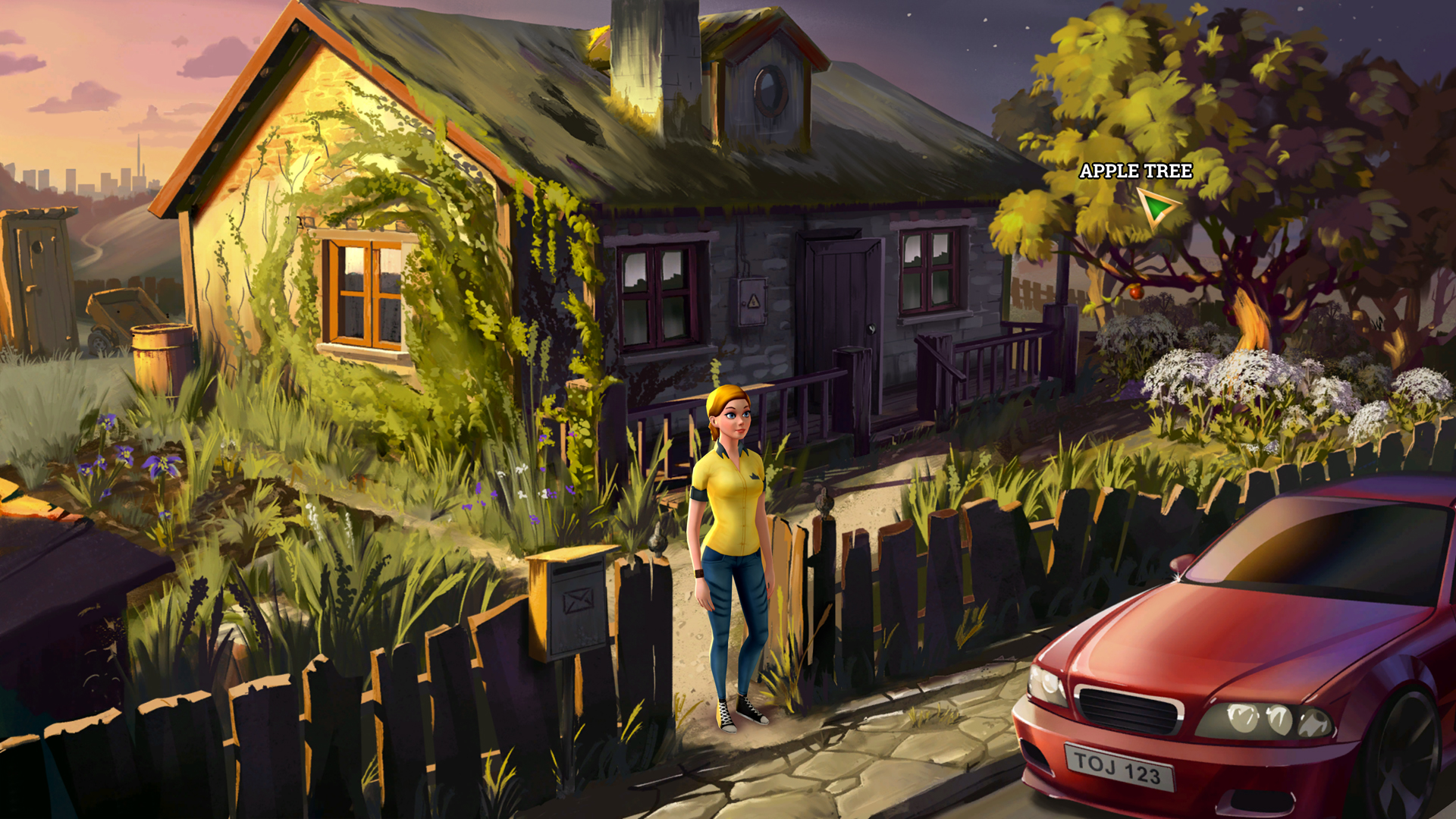
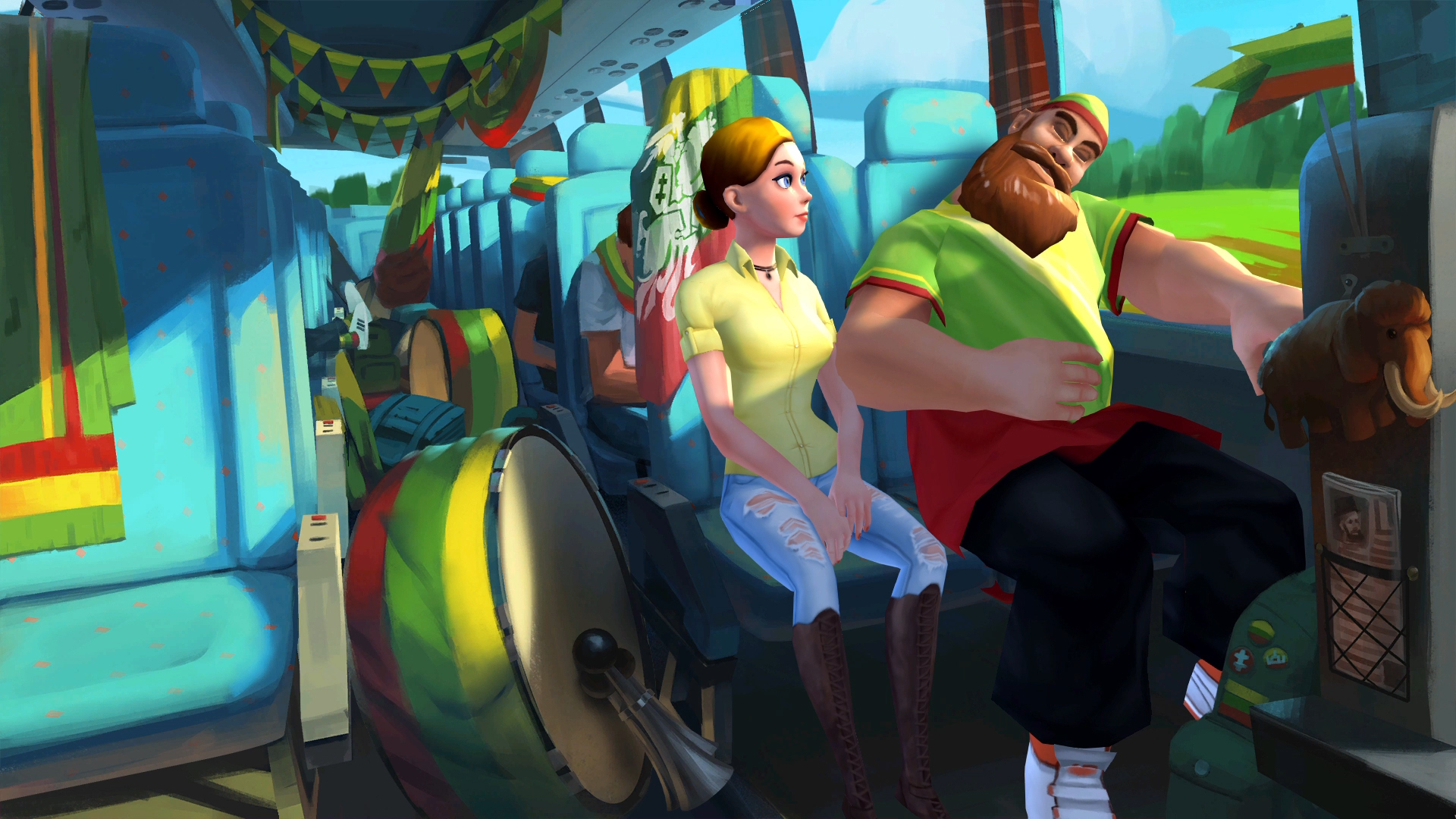
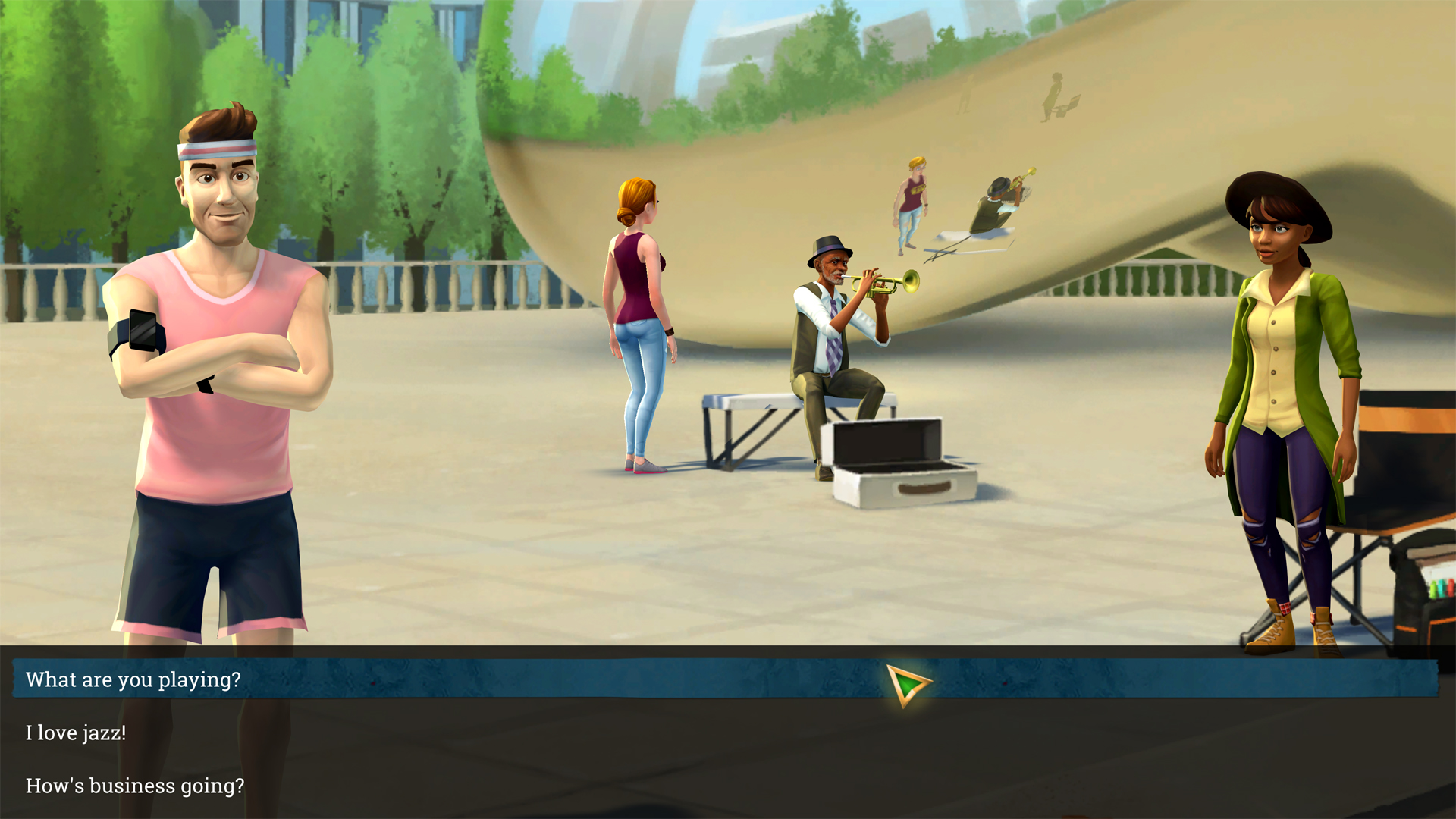
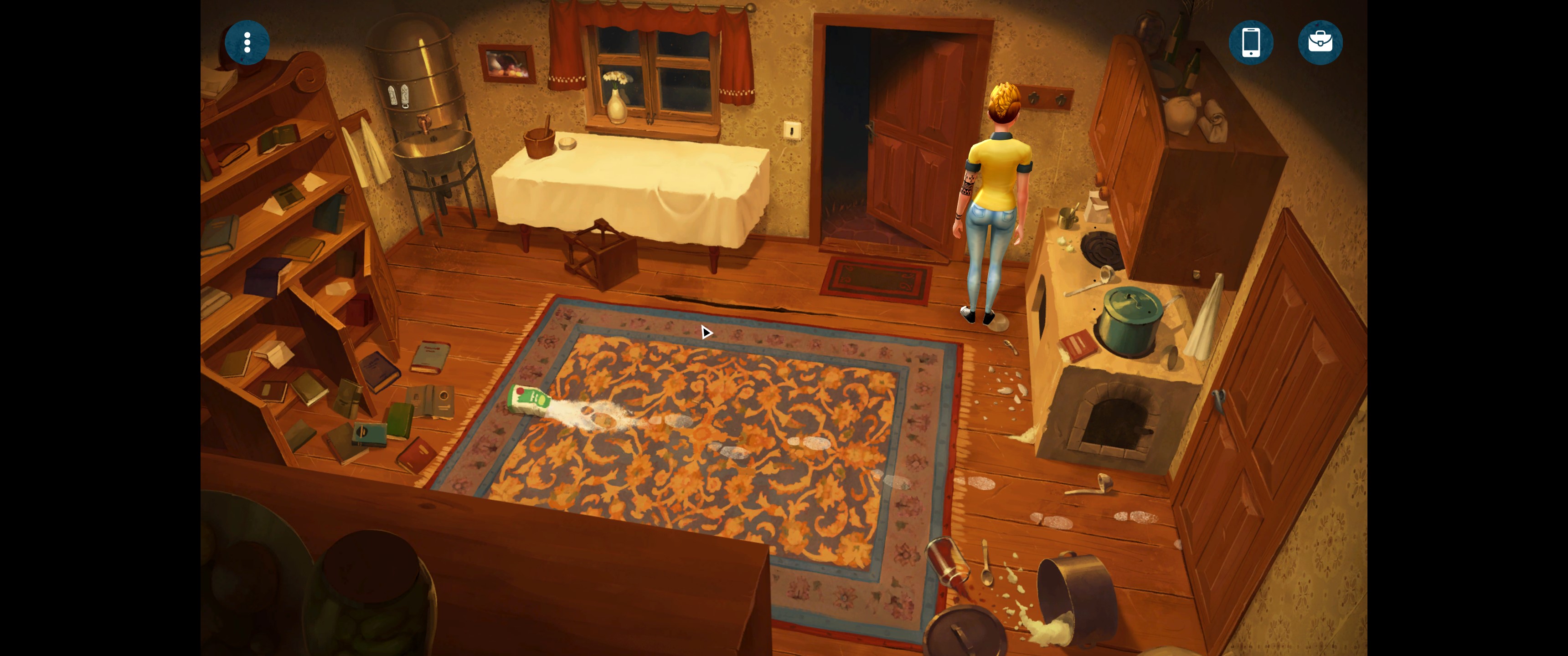
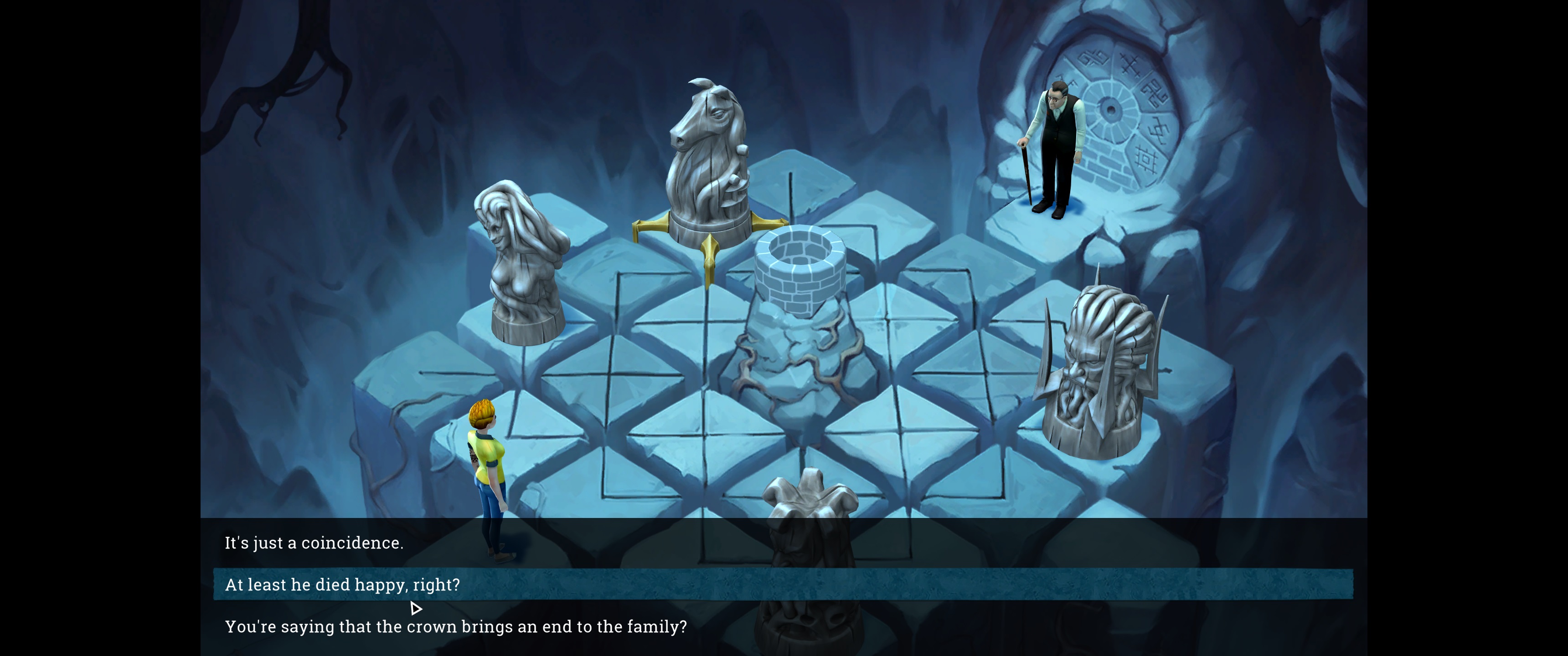
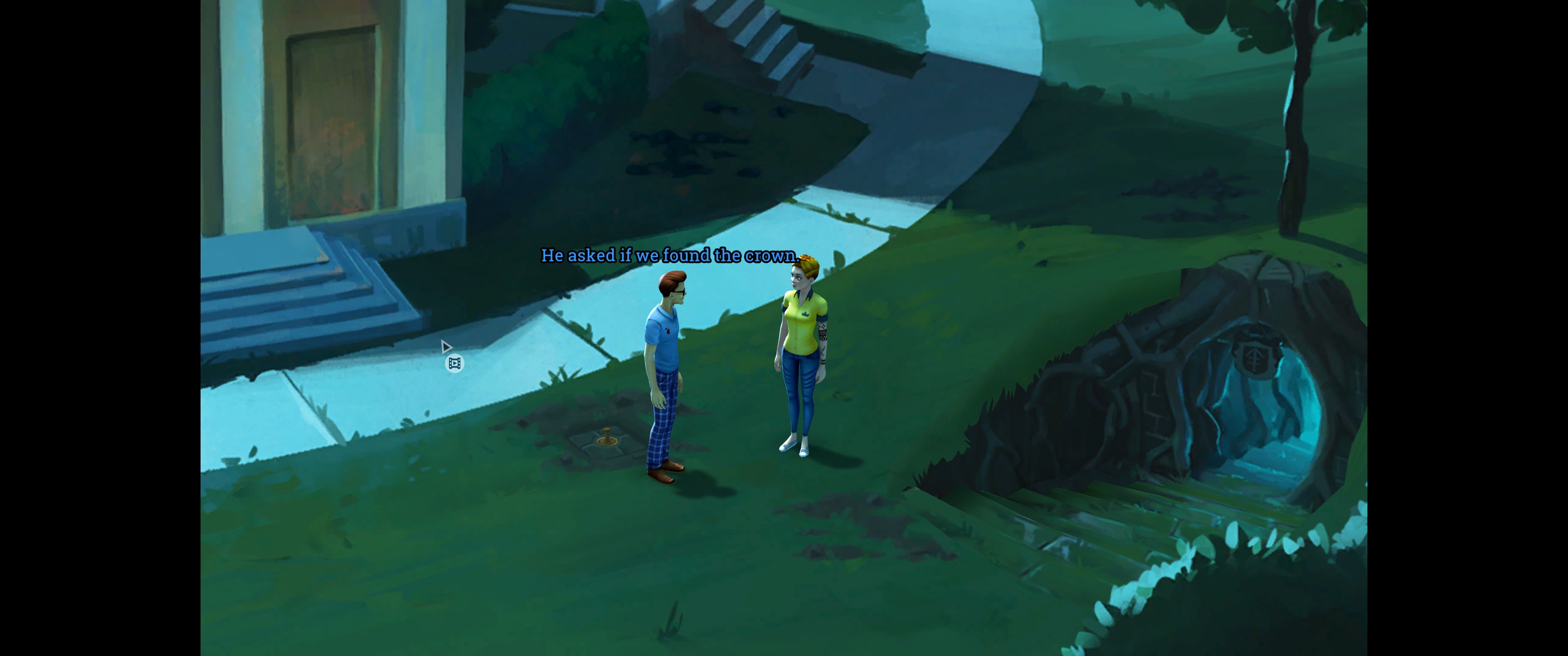
Home in Chicago, Milda receives news that her grandfather has died and named her as his heir. Upon traveling to Europe to collect her inheritance, she soon finds that there is more to this bequest than simply a house and its contents. Milda discovers that she has also inherited a mysterious family secret and that there are others who will stop at nothing to wrest that secret from her.
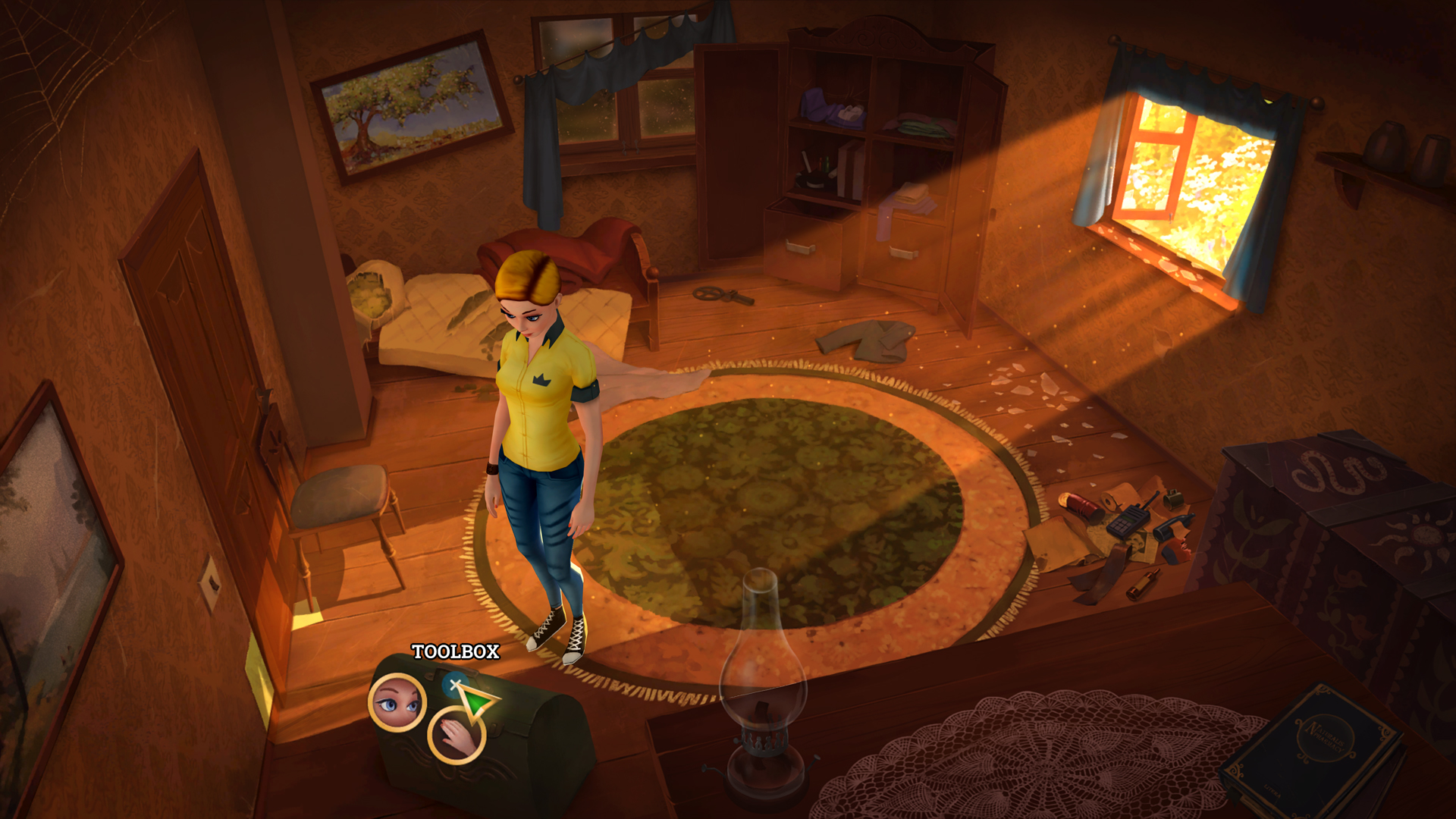
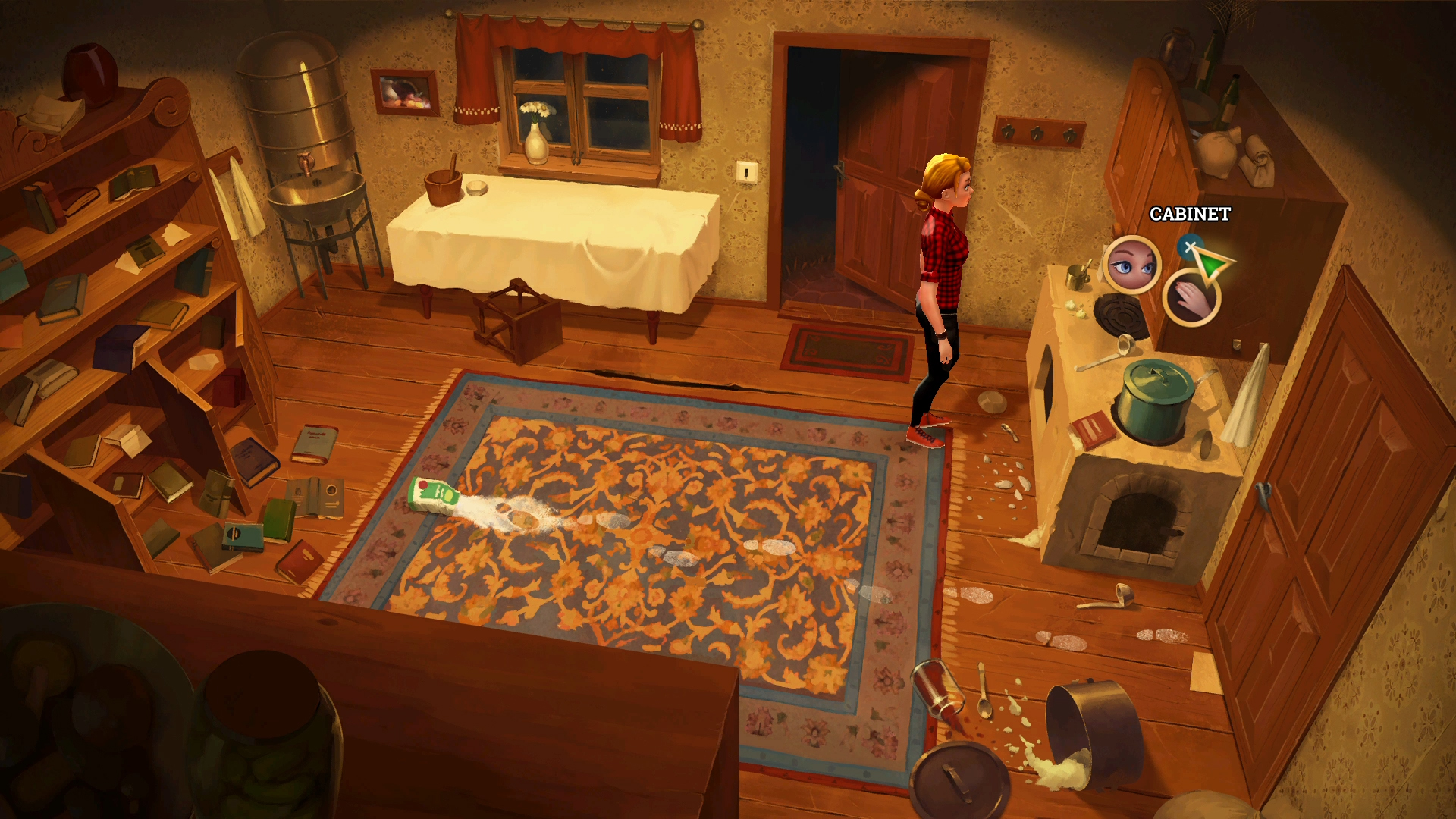
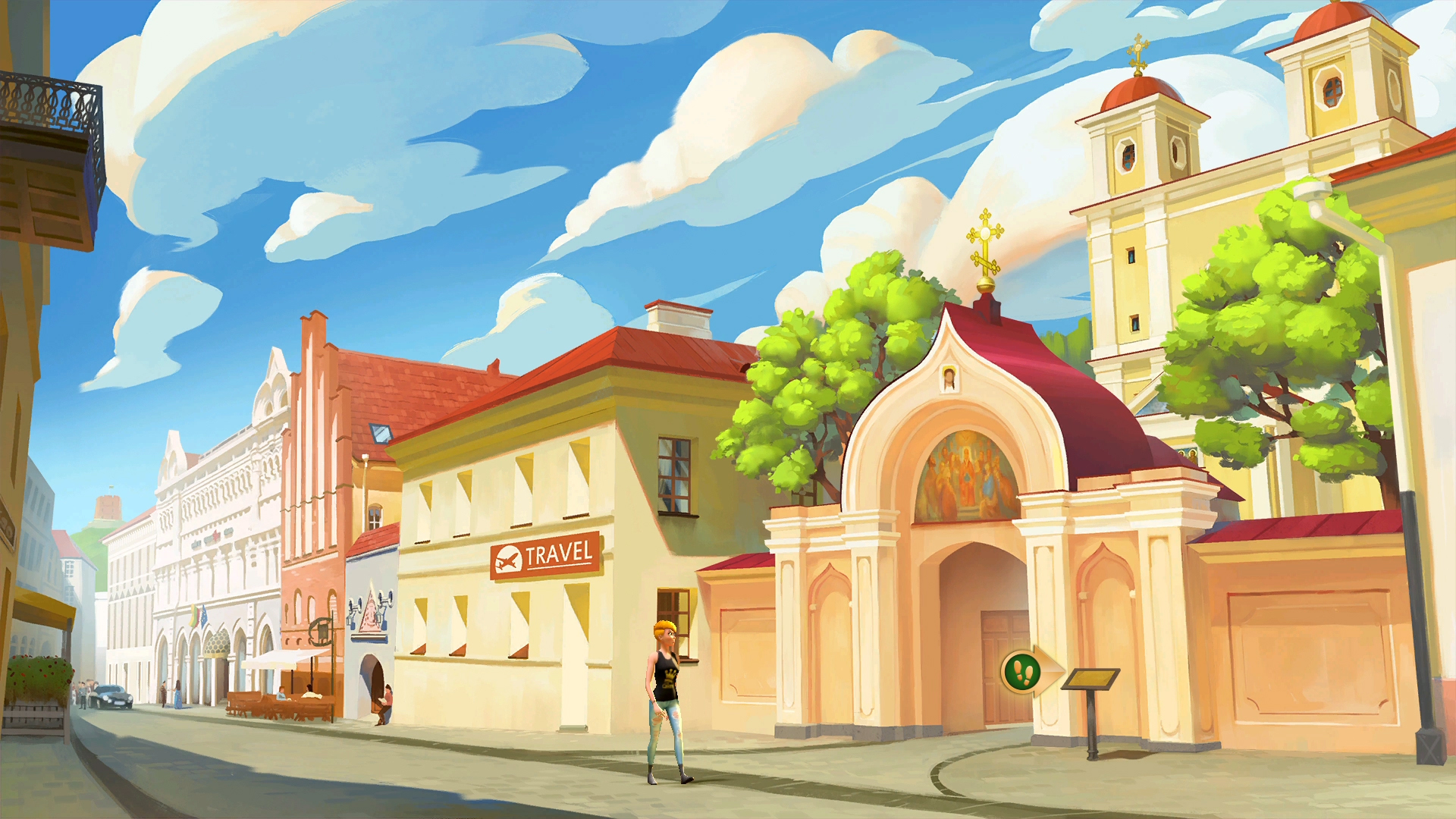
The demo for Tag of Joy’s Crowns and Pawns takes place early in the game with Milda turning up at her grandfather’s house. The 3D graphical presentation is a mostly realistic third-person look, with only some slight exaggeration in Milda’s own features. Controls are point-and-click, with each area having a single fixed-camera view and a number of options appearing when you click on interactive objects. The action I saw was backed up with a gentle piano piece while the ambience was enhanced by insect noises in the garden and other environmental noises arising from interactions.
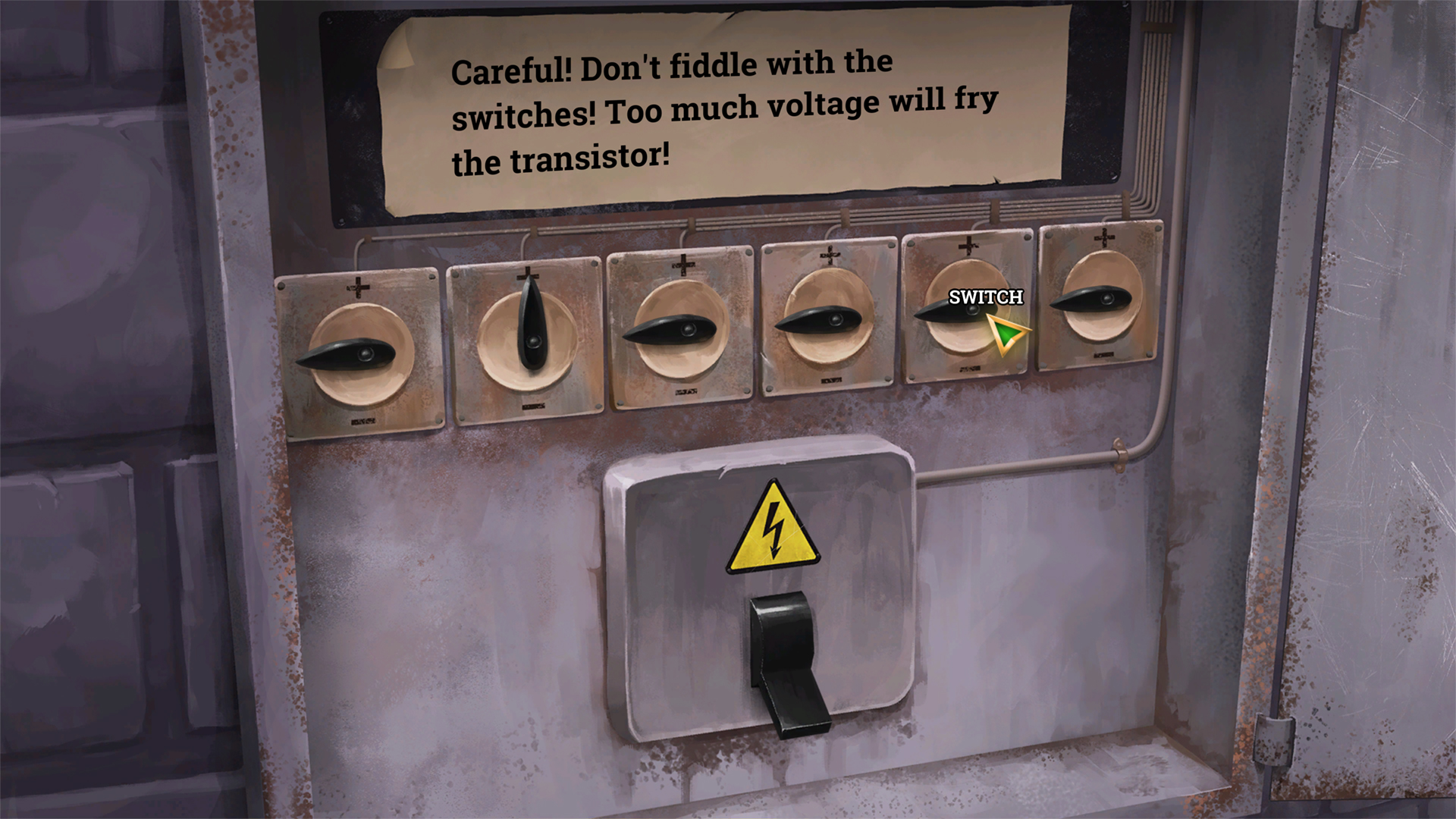
The first challenge I faced was simply to restore power to the lights, but I quickly found myself searching out and using inventory items in a variety of ways. I also encountered the first hint of conspiracy surrounding the family secret, as a noise in a nearby room proved to be the sound of an intruder fleeing the premises. The demo culminated in the discovery of a secret message from Milda’s grandfather and a riddle to open a hidden box.
The aim is to launch the game for PC on Steam in mid-2020, followed by Xbox and Switch ports after that. More information can be found on the official website in the meantime.
Mutropolis
By the post-apocalyptic 50th century, many of the wonders of today have become lost to the passage of time. Seeking to reclaim some of that lost history, a group of archaeologists are excavating a new site. Initial results are promising with artifacts dating back over 3,000 years indicating the find is pre-cataclysm. However, the most interesting discovery of all is a mysterious door. With project leader Totel stymied by the strange designs on its surface, it is up to junior expedition member Henry Dijon to find a way of opening it. If he could just find his trusty trowel.
The demo for Pirita Studio’s Mutropolis took place entirely within a cave, though this location alone comprises a few screens. The hand-painted graphics are presented in a bright cartoony art style with smoothly animated characters. Henry and his companions have exaggeratedly thin limbs and simplified features, but each has their own unique appearance, the protagonist’s ginger-bearded hipster look contrasting strongly with the dark-garbed and sarcastic Cobra. After an industrial music opening, the action was backed by a gentler tune complemented by background sounds such as the creak of a straining rope.
Control is handled solely through the left-mouse button, with the scroll wheel moving the inventory on- and off-screen. Early on you acquire a Geological Dater, a device that allows you to scan objects to find out how old they are. Using this, Henry soon discovers a problem with the strange door, and you will have to engage in an extensive search, together with some cunning sleuthing, to find the tools needed to open it. The demo ended on a momentous discovery beyond the door pointing towards the legendary Mutropolis.
This game should be available on Steam by the end of the year for Windows, Mac and Linux. To learn more, head on over to the developer’s website for additional insight into the game and its eclectic cast of characters. Better yet, you can check out both a demo for the game and short prequel called “Mars Episodes” on the itch.io page.
Haiku Adventure
A Japanese poet had started to become disillusioned with life in his old age. Then he found new purpose when it was revealed to him that a volcano was on the verge of erupting, which would destroy the natural environment he holds dear. Accompanied by a human kami spirit, a poetry master, he sets out on a grand quest to secure the help of other spirits in preventing this disaster.
The demo for Small Island Games’ Haiku Adventure covered a hunter’s hut, a cave and a rocky area at the base of a mountain. Inspired by traditional Japanese woodcuts, the classically-styled drawings are enhanced by subtle animations, including the swaying of paper lanterns in the breeze and the twitching tails of wolves. These images are surrounded by a border that make the scenes appear to be illustrations sitting on an artist’s desk, an effect further enhanced when a realistic hand appears to record notes when you discover inspiration for your poetry. Simple string music backed by gentle echoing tones fit the setting well.
Using intuitive point-and-click controls, the gameplay also embraces magical realism with the main character’s love of the natural world playing a central role in puzzles. Using spirit abilities such as clicking on a thunderstorm to direct its power, I needed to work with the instinctive behaviours of creatures I encountered instead of simply forcing them aside. Whilst still in development at the moment, the final challenge of each chapter will be to compose a haiku to aid a local spirit. Many interactions over the course of the demo caused the poet to note inspirational words and concepts arising from them. These will then be combined to create a poetic spell that meets the spirit’s needs.
Whilst they do not have a firm release target in mind just yet, the developers hope to complete Haiku Adventure sometime in 2020. You can follow news on its progress in the coming months through the game’s website.
30 Birds
Many years ago, the giant bird Simurgh created a city of huge floating lanterns. Since that time Simurgh has not been seen and the city has become prone to corruption. Enter a girl with strange powers, named Ziggurat. It is her destiny to locate the legendary thirty birds scattered about and with their assistance bring back Simurgh to save the city.
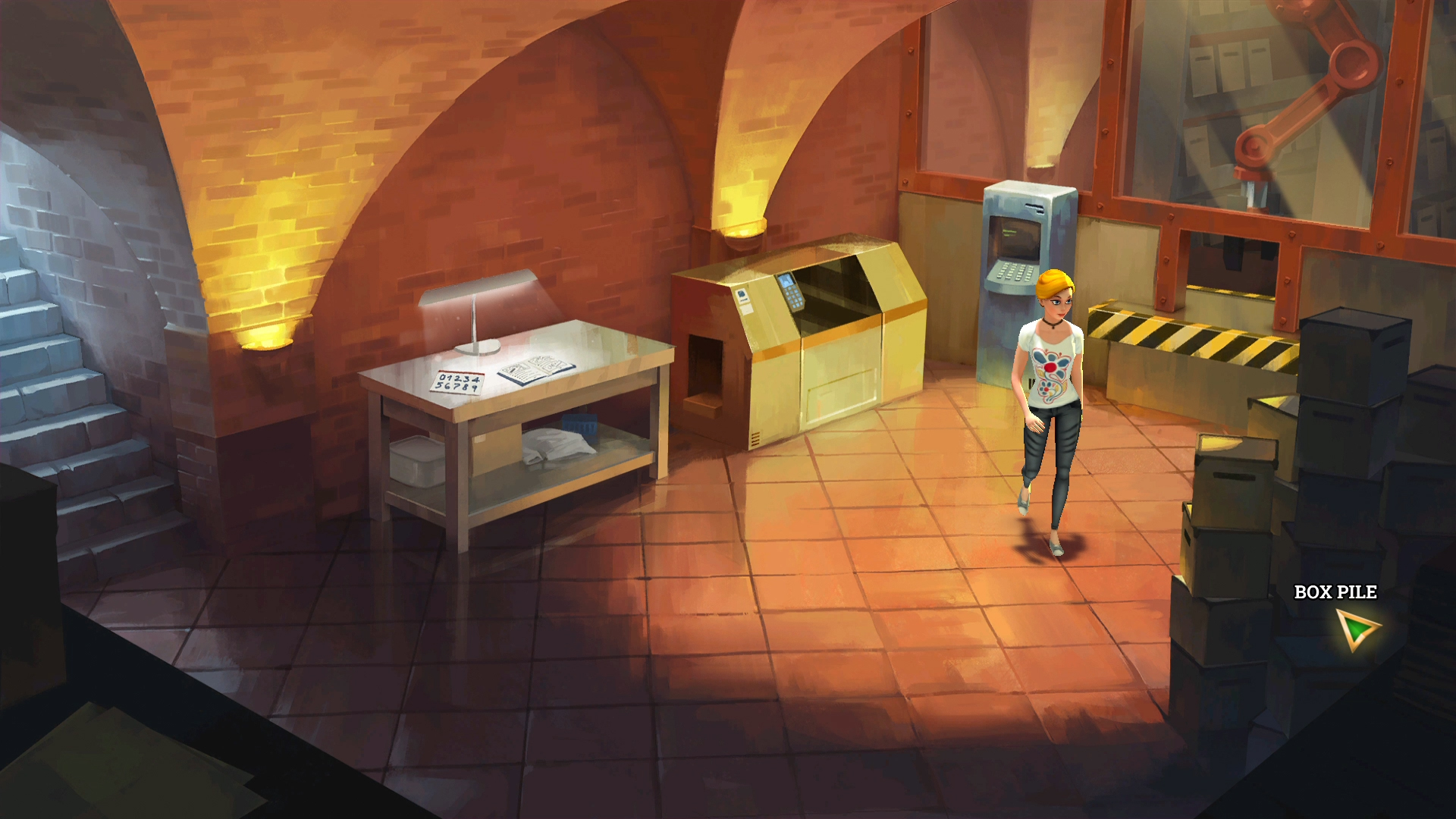
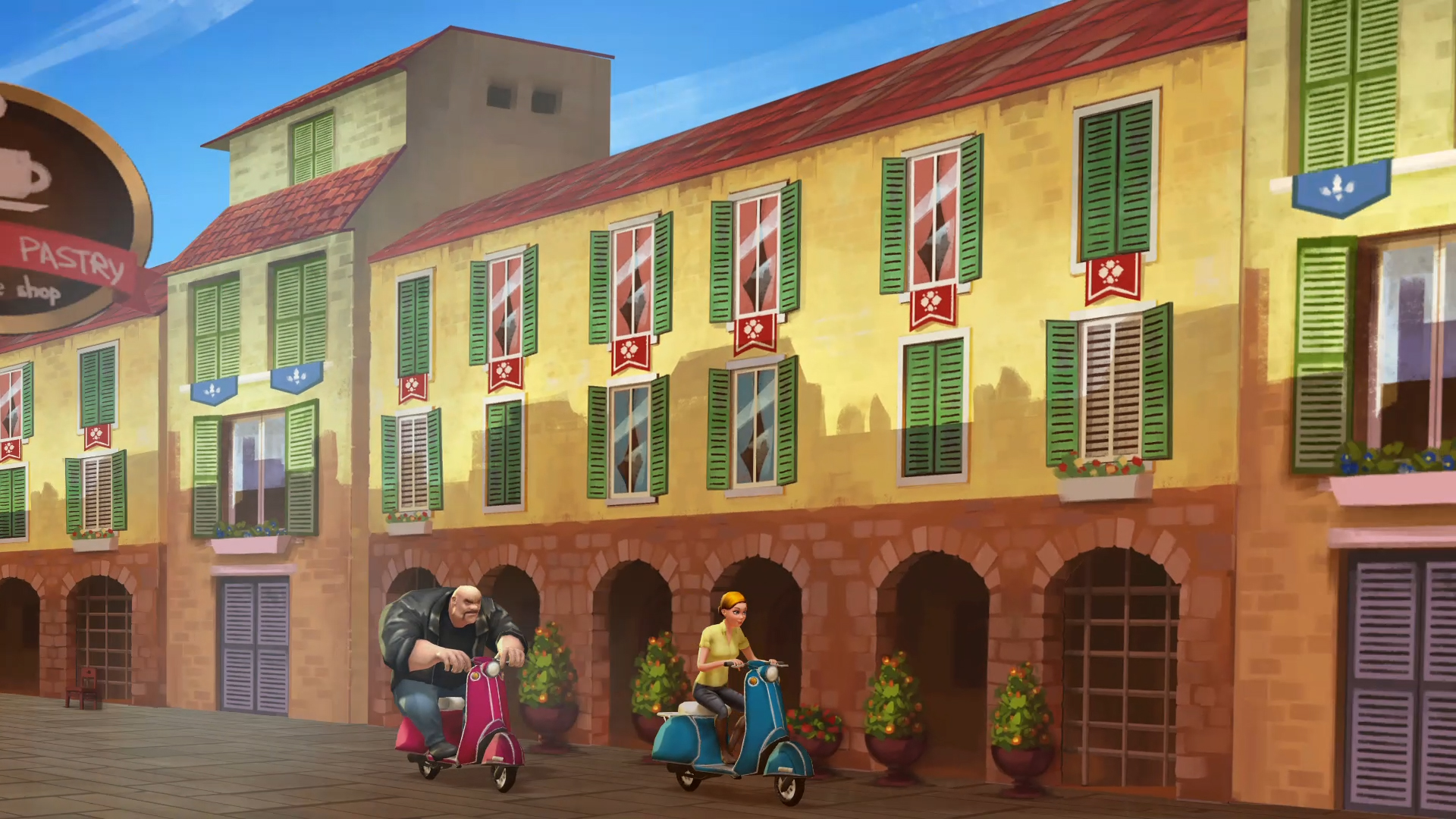
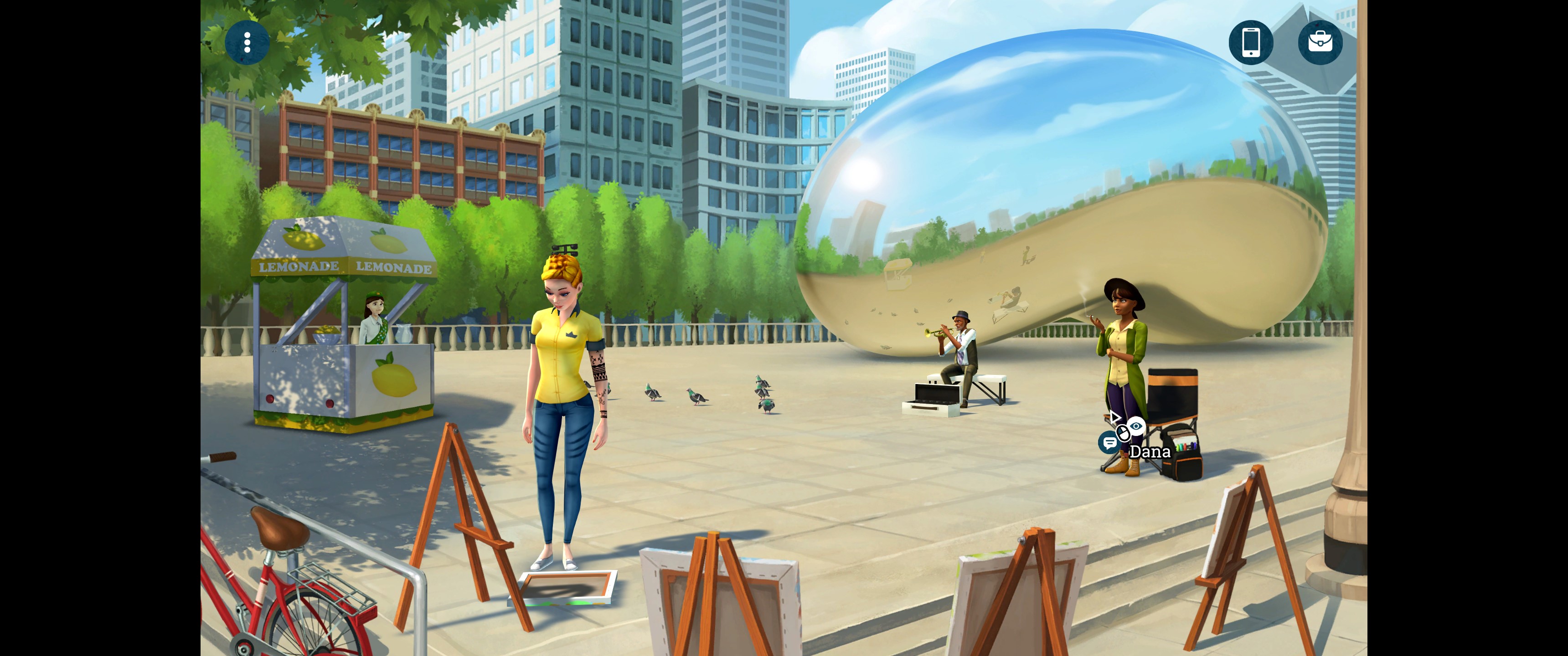
Ram Ram’s 30 Birds draws its story from Persian mythology, with the painterly art style coming from the same source. Backed by soft ambient music and birdsong, the city appears to be literally built on the surface of giant lanterns, with the graphics mimicking the brightly coloured designs you would find on them. The lantern shape also plays a part in movement, with the whole city seeming to rotate as you pass over the “corner” of one of the lanterns. Inset panels are displayed when you enter the interior of a building.
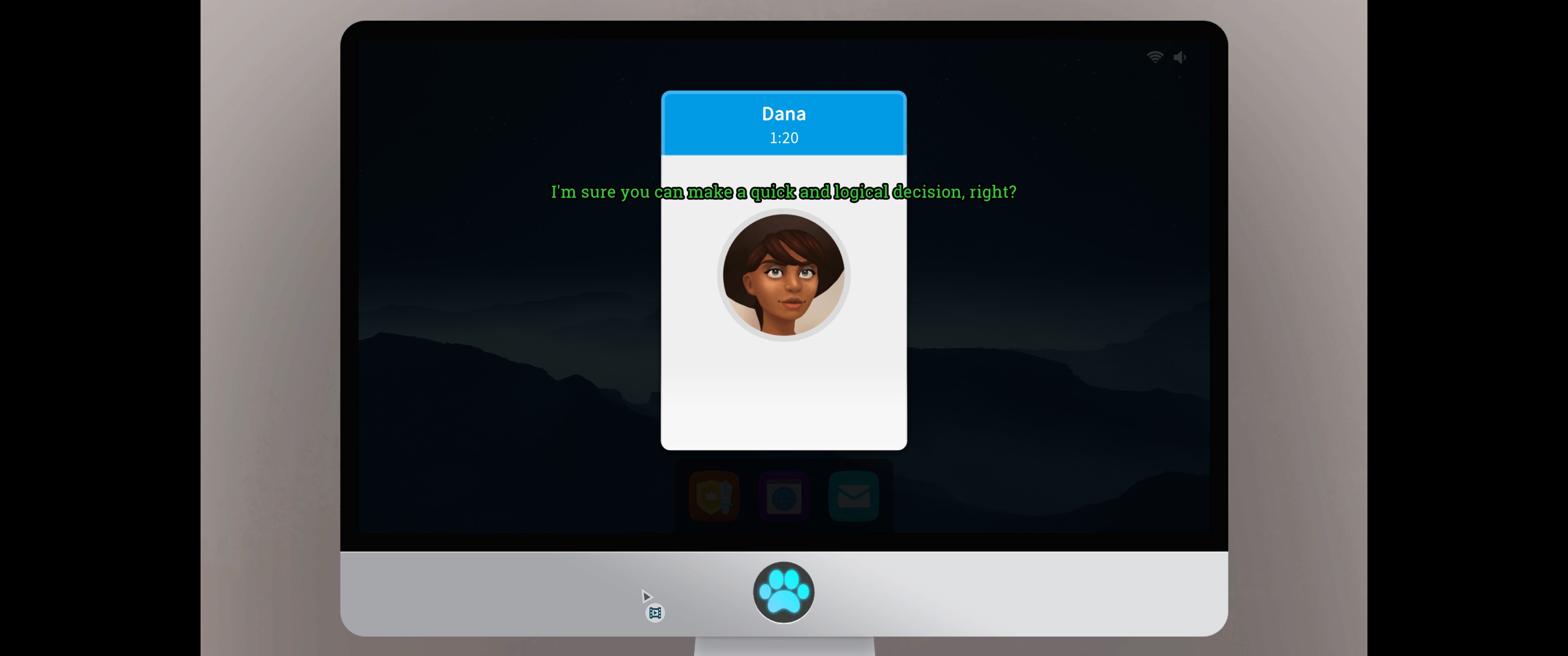
A standard game controller was used during the demo, my main quest being to obtain a replacement telephone. This involved using magical sound manipulation powers to create a distraction and break an acoustic lock. The new telephone had an app specifically for communicating with the thirty birds, each being added as a contact when you find them. The sound manipulation puzzles were represented by patterns changing on-screen with my actions.
The game is aiming for a mid-2021 release for the PC, Xbox One and Switch. To follow its progress, you can sign up to receive newsletter updates on the official website.
a-part-ment: a separated place
Nick Connor is not a happy man. His girlfriend of four years has just dumped him, and as he now wanders the apartment where they shared so much time together, he keeps digging up memories of their past. With nearly everything having some association with the relationship, Nick finds himself lost in recollections of their time as a couple and the lives of those close to them.
For the main part of The Elsewhere Company’s a-part-ment, the presentation uses a first-person, fully-realistic 3D format. In this manner you explore the apartment, accompanied by a mellow guitar and synthesiser soundtrack. Movement is controlled by keyboard, with the mouse used to look around and interact. Focussing on empty comic panels in the demo on the walls caused the apartment lights to dim, revealing glowing individual objects scattered around the rooms. Interacting with these objects prompted a reminiscence of a particular aspect of the relationship, each object filling in its respective empty panel.
When a set of panels was complete, the action shifted to a separate vignette. These are presented in different art styles, including stark black-and-white and rough unfinished sketches. I played through two such scenes. In one I switched to third-person view to take on the role of a small girl chasing fireflies through a forest. Catching each firefly caused a brief part of a fairy tale to appear in text, with both the forest and the tone of the tale growing ever darker as I progressed. In the other I explored a neighbouring apartment whose inhabitant is tormented by a persistent drip from a faulty tap in a section designed to show how much my life impacted those around me.
A-part-ment is expected to be released on Windows, Mac and Linux next spring. To find out more and even pre-order the game directly from the developers, be sure to drop by the official website.
Ord.
With the evolution of gaming over the years, computer games have tended to grow more and more complex, both aesthetically and technologically. It was thus most surprising to find that Mujo James and Stuffed Wombat’s Ord. had gone about as far in the opposite direction as possible. The opening screen contained only three words. In large white type at the top of a black screen was the word “Alarm,” accompanied by two choices, “Wake” and “Snooze.”
This seeming simplicity, however, belies a narrative experience that proves more complex than it first appears. Selecting one of the two opening options produces a three-word description of your action (accompanied by echoing tones for each word appearing) followed by another binary choice. Whilst the options at any given time are always limited to two, the branching paths stemming from them soon lead to a wide variety of minimalist stories. In one I found that having too much coffee at breakfast is a profoundly bad idea. In another I somehow found myself in a dungeon facing down a goblin. The latter demonstrated that even the graphics could be more than they appeared, as the words dimmed as if falling into shadow as I entered this dark domain.
The game boasts a huge variety of endings, with your unfortunate demise being the usual result. The replay value is further enhanced by adding elements of randomisation, with some choices having more than one possible outcome.
If you want to check out this surreal series of “tiny text adventures” for yourself, Ord. is available now on Steam for Windows, Mac and Linux, and a short demo can be found on the game’s official website.

In Other Waters
On the remote planet Gilese 667, Dr. Ellery Vas went searching for her lost friend and colleague but soon found herself in trouble. Trapped twenty metres underwater, she takes refuge in an old automated diving suit. As the systems of the suit power up, Dr. Vas finds that she is unable to control the suit herself. Instead she must hand the controls over to what she believes to be an AI built into the system. As they explore the ocean depths together, what strange new wonders will they encounter?
Jump Over the Age’s In Other Waters is presented in a somewhat abstract fashion, representing not what the protagonist sees around her but rather the console of the diving suit. The colour palette is largely limited to shades of blue for the background and yellow for the console. The background music consists of low tones like underwater whale song, with actions resulting in noises such as bubbles being blown out to create a movement jet.
At first the only active feature is the map, which shows a representational depiction of a circular area around the suit, with landscape features marked only as lines while plants and creatures appear as dots of various sizes. After a mostly one-sided conversation – your only options being yes and no – the rest of the console lights up, introducing both a number of passive elements like the power gauge and additional active ones like the navigation system. All the controls are operated via the left mouse button, mostly through simple clicks with the occasional drag mechanic. You can navigate the suit to specified points on the map, and click on other features to gather data about them that becomes more detailed the more you scan. In certain situations you can also collect samples, which can be used to manipulate creatures and plants or to enhance the suit’s systems.
The game is currently on pace for a spring 2020 release on Steam, and in the meantime you can follow its progress on the developer’s website.
after HOURS
Lilith Grey sits curled up in her apartment. Sexual abuse when she was younger has left her struggling to relate to others and she now suffers from Borderline Personality Disorder. Even communicating by text is difficult for Lilith, who is beset by bouts of anxiety. When she cannot even decide how she feels about herself, how can she move on?
Latest Gaming Articles
All Articles